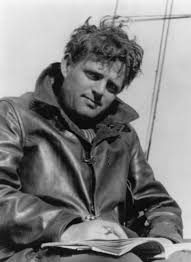
H.L. Mencken
Baltimore Sun/June 4, 1928
I
CONFLICTING reports drift in regarding the booze arrangements for the Democratic National Convention in Houston—a matter that is always of importance when American statesmen meet, for practically all of them use the stuff; and many of them, wet and dry alike, are lifelong lushers. The patriotic citizen, reading of some grotesque debate in the Senate or of a row on the floor of the House, puts the blame upon the fevers of statecraft, but only too often it is due to bad whisky. Some of the leading drys in Washington are stewed nearly all the time, and even among the wets there are gentlemen who get jingled two or three times a week. At a national convention it is common for whole herds of the delegates to go on drunks together, and this has been as common since Prohibition as it was before.
Some of my agents at Houston say that the town boosters have laid in immense stocks of strong beverages, including real Pilsner brought in through Mexico, and that it will be supplied free of charge to all persons connected with the convention, including journalists. Others report that the supply accumulated is small and dubious, and that there will probably be a serious drought. According to these latter, a large force of Prohibition blacklegs, sent down from Washington, has thrown a cordon around the town, and it is difficult and expensive to break through it. If this is true, then there will be a great deal of bitterness in the convention, with frequent outbreaks of rough-house, and the delegates and alternates will return to their homes damning Houston as a hell-hole.
The San Francisco convention of 1920 was a great success largely because the local visionaries laid in a large and elegant store of booze. Months after the visitors departed the town wowsers discovered that sixty barrels of Bourbon had been charged to the municipal smallpox hospital, and that all of it had been consumed, despite the fact that there had not been a patient in the place for several years. But San Francisco merely laughed: Its enlightened and hospitable people knew what had become of the Bourbon. So did the returned delegates, many of whom had liked it so well that they had lingered by the Golden Gate long after the convention adjourned.
II
THE San Francisco convention was the most charming ever heard of, partly because of the cool and lovely weather, but also and perhaps mainly because of the Bourbon and the other refreshments on tap. There was enough red wine to float a battleship, and stronger drinks were plentiful and reliable. The convention might have concluded its gloomy business at the end of the first week, but the delegates were so pleased with the town that they refused to go home. Most of them went on jamborees over the week-end, and not a few got lost, and did not return to the scene of their deliberations on Monday. Five days later some of them were found in taxicabs 200 miles down the coast, headed for Hollywood and lives of sin.
The Chicago convention of the same year, which nominated the martyred Harding, was a flop, for Chicago was then suffering from a spasm of Law Enforcement and even beer was hard come by. I remember visiting the celebrated kaif of the Hon. Hinky Dink, and finding only near-beer on tap. The loud wails and revillngs of the delegates and alternates made a profound impression upon the leading men of the town, and soon afterward Chicago gathered up forces and heaved the Prohibition agents out. Ever since then it has been wringing wet and, as everyone knows, many of its citizens have made great fortunes bringing in beer.
The Coolidge convention, at Cleveland in 1924, was completely dry, and as result it will be many, many years before either great party holds a convention there. In such matters there are party lines, and Democrats and Republicans swap confidences. Cleveland was so dry (mainly on account of the Ohio law, since repealed) that the very newspaper reporters of the town didn’t know where to get a drink. I remember, one day, encountering on the street an eminent dry statesman, whose blanched face and fishy eyes showed me at once that he was seriously ill. He told me that he was suffering from a dreadful belly-ache, due to drinking Lake Erie water, and that only a big shot of hooch could cure. Unluckily, he couldn’t find a saloon, and all the doctors he had approached, knowing his dry principles and suspecting him of being a sincere Christian, had been afraid to prescribe for him. My own hotel was a mile away, but nearby there was another, and in it was a brother journalist who was known to go well armed. So I took the statesman to see him, and in five minutes the belly-ache was gone. Two months later the cured patient was roving the Middle West, making fiery speeches in favor of Law Enforcement.
III
DURING this unspeakable Cleveland convention some friends of mine in Detroit, hearing of the drought and being fearful for my health, loaded a small yacht with bottled beer and set sail down the Detroit river and out across Lake Erie. Unfortunately, the party of rescuers was large and the weather was very hot, so there were quick and heavy inroads upon the cargo. By the time the yacht arrived off the Cleveland mole exactly half the beer was gone. Then a council of war was held, and it was decided to return at once, lest the rescuers themselves perish on the trip home. The yacht got back to Detroit with only half a case left. Marooned in Cleveland, I got nothing save a long telegram of explanation and apology.
Detroit itself is an ideal convention town, for Canada is only half a mile away. The town boosters frankly advertise the advantages that lie in that fact, and sometimes a dozen conventions are going on in Detroit at once. Many of them last for weeks, and even months. The Democratic National Committee was all set to take this year’s national convention there, but at the last minute an oil millionaire from Houston showed up In Washington with his pockets stuffed with money, and the sight of it ran the committeemen amuck. If Houston turns out to be dry they will have to listen to some sizzling talk from the delegates and alternates.
The Houston visionaries, I believe, will rue the day that the oil man went to Washington. For no matter how much booze they produce, it will scarcely be possible, considering their remote situation, to produce enough to satisfy a Democratic national convention. Moreover, the weather down there at the end of June is likely to be very hot, and there will not be enough rooms with baths to go round. Yet more, the trip will be uncomfortable and expensive and delegates have to pay their own way. Finally, the convention hall is a mere makeshift, a sort of glorified Billy Sunday tabernacle and so it will be a stew-pan. All in all, I expect the news to sweep the country that Houston is a horrible place. The convention will cost the town at least $250,000, and all it will get out of it will be ill fame.
IV
KANSAS CITY has less to fear, for it is measurably cooler than any place in Texas, and moreover it is a favorite convention city and has developed great skill at entertaining visitors. My local representatives inform me that enough wines and liquors are already in the bins to keep a dozen Republican conventions pickled for ten days. Where Kansas City gets its supply I don’t know, for the town is far from any port, but that it enjoys a sufficiency I can testify by personal experience. I was there little more than a year ago, and found no sign of drought. It was not as wet, of course, as Baltimore, but Baltimore is a sea-port, and moreover there is no Volstead Act in the Free State.
Nevertheless, I do not favor bringing conventions, and especially political conventions, to this city. The great Democratic gathering of 1912, which nominated the sainted Woodrow, did us far more harm than good. It cost at least $200,000, and all the visitors went home damning the town. To this day they continue to spread the report that it is unbearably hot in summer, and that there are not enough taxicabs. The delegates to a national convention, indeed, always go home sore. If the convention town is dry, they remember the heat and the crowded hotels. And if it is wet they depart with bad cases of Himmelfahrtjammer, and arrive home with their pockets empty.
Even San Francisco got no profit out of the incomparable convention of 1920. It tried to get both of this year’s conventions, and failed both times. The politicians, after eight years, had begun to forget that smallpox Bourbon; they remembered only what their wives had to say when they got home, wheezy and bedraggled, and how much the long trip to the coast set them back. It is hard to please such men. The trouble with them is that most of them are cheap and tacky fellows. When they go to a convention they want to tank up and paint the town red. If there is not enough booze to keep them stewed during their deliberations they bawl in a frantic and maudlin manner. And if the supply is sufficient they complain about the cost.
 The Archive