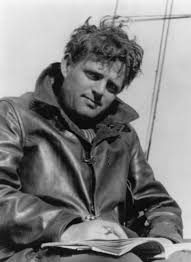
O.O. McIntyre
Kentucky Post/November 6, 1928
The stranger to Manhattan is invariably impressed with the native indifference—the bland unconcern for what the other fellow thinks. On bus tops, young lovers spoon in broad daylight, and on the streets they stroll holding hands in starry-eyed aloofness.
Above the city’s roar may often be heard crude conversations usually reserved for privacy. Men stop before window mirrors to comb cute mustaches and admire their profiles. Women in the same fashion rouge lips or give another hitch to their stockings.
What seems to be immodesty is really a product of massed civilization. There is no other way. On the East Side, mothers sit on the stoops with bared breasts nursing babes, and men seek relief from the heat at open windows, clad only in their underclothes.
On theater fire escapes in the summer are scantily clothed ladies of the ensemble, apparently unaware of the curious rubbernecks below. Women smoke cigarettes in limousines, hotel lobbies and elevators, and smoking along the streets is common in more ways than one.
In dressmaking establishments, mannikins often walk across the room in combinations, and if there is a husband or so there that is their fault or luck or whatever you might call it. Thru hotel windows on a hot night one may always see what neighbors call a “free show” in a small town.
Families who live in the courts of New York apartments usually know how their neighbors live. Blinds are seldom drawn. People may never meet but they have “seen much of each other.” Rankin! The binoculars!
New Yorkers are accustomed to this lack of privacy, and think nothing about it, but the stranger leaves with the very distinct impression it is a wicked city without modesty, morals, or manners. And very little hope.
Speaking of modesty, there is the yarn of a clerk in a cigar store who on the hottest days last summer stood behind the counter wearing a black coat and a pair of running pants. Modest, at least, from the waist up.
On an ocean liner recently was a young stage dancer who has for many seasons appeared nightly under a strong spotlight wearing nothing but a slight jerk of ostrich feathers. She was one of Broadway’s nude marvels, but on the night of the ship’s concert refused to leave the salon until all departed. It developed a tight shoe had troubled her, so she slipped it off. Her foot had swollen and the shoe would not slip back on. So she waited until everybody was out of the way before returning to her cabin. How do these shrinking violets get that way?
Chiseling has long been a descriptive Broadway term for the upstart who walks off with the other fellow’s girl. There’s one adroit chiseler who drifts into cafes late, stands about the entrance until he sees the check paid, and then drops around. He somehow manages to walk off with the prettiest girl at the table. His philosophy is hard-boiled, but he evidently has enough “It” to carry on. “Only suckers,” he yawns, “pay checks.” And what can you do with a fellow like that, with laws so strict about murder?
The oldest tobacco shop in New York is coming down. It stood for 80 years at No. 4, the Battery, and is the last of those hallowed havens where customers could gather in a back room to smoke, play cards, or dominoes. The Indian sign long gracing its front rotted completely away several years ago.
The tobacco shopkeeper is now a tobacconist in Bond Street clothes. Try slapping him on the back with a “You old son-of-a-gun you, how’s tricks?” Or try loafing about awhile and see where you get, other than out. Clerks have become “clarks” in long-tailed linen dusters, with a Piccadilly accent. The corner tobacco store was where we went to telephone, buy stamps, have out skates sharpened and something removed from our eye. Today it has the warmth of a biological laboratory. They don’t even have—forgive the smile through the tears—a friendly cuspidor. The old days are gone. Sometimes I think the auto has come to stay.
 The Archive