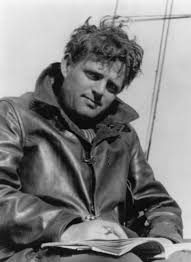
Theodore Roosevelt
Scribner’s/April, 1910
Our next camp was in the middle of the vast plains, by some limestone springs, at one end of a line of dark acacias. There were rocky koppies two or three miles off on either hand. From the tents, and white-topped wagons, we could see the game grazing on the open flats, or among the scattered wizened thorns. The skies were overcast, and the nights cool; in the evening the camp fires blazed in front of the tents, and after supper we gathered round them, talking, or sitting silently, or listening to Kermit strumming on his mandolin.
The day after reaching this camp we rode out, hoping to get either rhino or giraffe; we needed additional specimens of both for the naturalists, who especially wanted cow giraffes. It was cloudy and cool, and the common game was shy; though we needed meat, I could not get within fair range of the wildebeest, hartebeest, topi, or big gazelle; however I killed a couple of tommies, one by a good shot, the other running, after I had missed him in rather scandalous fashion while he was standing.
An hour or two after leaving the tents we made out on the sky line a couple of miles to our left some objects which scrutiny showed to be giraffe. After coming within a mile the others halted and I rode ahead on the tranquil sorrel, heading for a point toward which the giraffe were walking; stalking was an impossibility, and I was prepared either to maneuver for a shot on foot, or to ride them, as circumstances might determine. I carried the little Springfield, being desirous of testing the small, solid, sharp-pointed army bullet on the big beasts. As I rode, a wildebeest bull played around me within two hundred yards, prancing, flourishing his tail, tossing his head and uttering his grunting bellow; it almost seemed as if he knew I would not shoot at him, or as if for the moment he had been infected with the absurd tamenesss which the giraffe showed.
There were seven giraffes, a medium-sized bull, four cows, and two young ones; and, funnily enough, the young ones were by far the shyest and most suspicious. I did not want to kill a bull unless it was exceptionally large; whereas I did want two cows and a young one, for the Museum. When quarter of a mile away I dismounted, threw the reins over Tranquillity’s head—whereat the good placid old fellow at once began grazing—and walked diagonally toward the biggest cow, which was ahead of the others. The tall, handsome ungainly creatures were nothing like as shy as the smaller game had shown themselves that morning, and of course they offered such big targets that three hundred yards was a fair range for them. At two hundred and sixty yards I fired at the big cow as she stood almost facing me, twisting and curling her tail. The bullet struck fair and she was off at a hurried, clumsy gallop. I gave her another bullet, but it was not necessary, and down she went. The second cow, a fine young heifer, was now cantering across my front, and with two more shots I got her; the sharp-pointed bullets penetrating well, and not splitting into fragments, but seeming to cause a rending shock.
I met with much more difficulty in trying to kill the young one I needed. I walked and trotted a mile after the herd. The old ones showed little alarm, standing again and again to look at me. Finally I shot one of the two young ones, at four hundred and ten long paces, while a cow stood much nearer, and the bull only three hundred yards off. But this was not all. The four survivors did not leave even after such an experience, but stayed in the plain, not far off, for several hours, and thereby gave Kermit a chance to do something much more worthwhile than shooting them. His shoulder was sore, and he did not wish to use a rifle, and so was devoting himself to his camera, which one of his men always carried. With this, after the exercise of much patience, he finally managed to take a number of pictures of the giraffe, getting within fifty yards of the bull.
Nor were the giraffe the only animals that showed a tameness bordering on stupidity. Soon afterward we made out three rhino, a mile away. They were out in the bare plain, alternately grazing and enjoying a noontide rest; the bull by himself, the cow with her calf a quarter of a mile off. There was not a scrap of cover, but we walked upwind to within a hundred and fifty yards of the bull. Even then he did not seem to see us, but the tick birds, which were clinging to his back and sides, gave the alarm, and he trotted to and fro, uncertain as to the cause of the disturbance. If Heller had not had his hands full with the giraffes I might have shot the bull rhino; but his horn and bulk of body, though fair, were not remarkable, and I did not molest him. He went toward the cow, which left her calf and advanced toward him in distinctly bellicose style; then she recognized him, her calf trotted up, and the three animals stood together, tossing their heads, and evidently trying to make out what was near them. But we were downwind, and they do not see well, with their little twinkling pig’s eyes. We were anxious not to be charged by the cow and calf, as her horn was very poor, and it would have been unpleasant to be obliged to shoot her; and so we drew off.
Next day, when Kermit and I were out alone with our gun bearers we saw another rhino, a bull, with a stubby horn. This rhino, like the others of the neighborhood, was enjoying his noonday rest, in the open, miles from cover. “Look at him,” said Kermit, “standing there in the middle of the African plain, deep in prehistoric thought.” Indeed the rhinoceros does seem like a survival from the elder world that has vanished; he was in place in the Pleistocene; he would not have been out of place in the Miocene; but nowadays he can only exist at all in regions that have lagged behind, while the rest of the world, for good or for evil, has gone forward. Like other beasts, rhinos differ in habits in different places. This prehensile lipped species is everywhere a browser feeding on the twigs and leaves of the bushes and low trees; but in their stomachs I have found long grass stems mixed with the twig tips and leaves of stunted bush. In some regions they live entirely in rather thick bush; whereas on the plains over which we were hunting the animals haunted the open by preference, feeding through thin bush, where they were visible miles away, and usually taking their rest, either standing or lying, out on the absolutely bare plains. They drank, at the small shallow rain pools, seemingly once every twenty-four hours; and I saw one going to water at noon, and others just at dark; and their hours for feeding and resting were also irregular, though they were apt to lie down or stand motionless during the middle of the day. Doubtless in very hot weather they prefer to rest under a tree; but we were hunting in cool weather, during which they paid no heed whatever to the sun. Their sight is very bad, their scent and hearing acute.
On this day Kermit was shooting from his left shoulder, and did very well, killing a fine Roberts’ gazelle, and three topi; I also shot a topi bull, as Heller wished a good series for the National Museum. The topi and wildebeest I shot were all killed at long range, the average distance for the first shot being over three hundred and fifty yards; and in the Sotik, where hunters were few, the game seemed if anything shyer than on the Athi plains, where hunters were many. But there were wide and inexplicable differences in this respect among the animals of the same species. One day I wished to get a doe tommy for the Museum; I saw scores, but they were all too shy to let me approach within shot; yet four times I passed within eighty yards of bucks of the same species which paid hardly any heed to me. Another time I walked for five minutes alongside a big party of Roberts gazelles, within a hundred and fifty yards, trying in vain to pick out a buck worth shooting; half an hour afterward I came on another party which contained such a buck, but they would not let me get within a quarter of a mile.
Wildebeest are usually the shyest of all game. Each herd has its own recognized beat, to which it ordinarily keeps. Near this camp, there was a herd almost always to be found somewhere near the southern end of a big hill two miles east of us; while a solitary bull was invariably seen around the base of a small hill a couple of miles southwest of us. The latter was usually in the company of a mixed herd of Roberts and Thomson’s gazelles. Here, as everywhere, we found the different species of game associating freely with one another. One little party interested us much. It consisted of two Roberts bucks, two Roberts does, and one Thomson’s doe, which was evidently a maitresse femme, of strongly individualized character. The four big gazelles had completely surrendered their judgment to that of the little tommy doe. She was the acknowledged leader; when she started they started and followed in whatever direction she led; when she stopped they stopped; if she found a given piece of pasture good, upon it they grazed contentedly. Around this camp the topi were as common as hartebeest; they might be found singly, or in small parties, perhaps merely of a bull, a cow, and a calf; or they might be mixed with zebra, wildebeest and hartebeest. Like the hartebeest, but less frequently, they would mount anthills to get a better look over the country. The wildebeest were extraordinarily tenacious of life, and the hartebeest and topi only less so. After wounded individuals of all three kinds I more than once had sharp runs on horseback. On one occasion I wounded a wildebeest bull a couple of miles from camp; I was riding my zebra-shaped brown pony, who galloped well; and after a sharp run through the bush I overhauled the wildebeest; but when I jumped off, the pony bolted for camp, and as he disappeared in one direction my game disappeared in the other.
At last a day came when I saw a rhino with a big body and a good horn. We had been riding for a couple of hours; the game was all around us. Two giraffes stared at us with silly curiosity rather than alarm; twice I was within range of the bigger one. At last Bakhari, the gun bearer, pointed to a gray mass on the plain, and a glance through the glasses showed that it was a rhino lying asleep with his legs doubled under him. He proved to be a big bull, with a front horn nearly twenty-six inches long. I was anxious to try the sharp-pointed bullets of the little Springfield rifle on him; and Cuninghame and I, treading cautiously, walked upwind straight toward him, our horses following a hundred yards behind. He was waked by the tick birds, and twisted his head to and fro, but at first did not seem to hear us, although looking in our direction. When we were a hundred yards off he rose and faced us, huge and threatening, head up and tail erect. But he lacked heart after all. I fired into his throat, and instead of charging, he whipped round and was off at a gallop, immediately disappearing over a slight rise. We ran back to our horses, mounted, and galloped after him. He had a long start, and, though evidently feeling his wound, was going strong; and it was some time before we overtook him. I tried to gallop alongside, but he kept swerving; so jumping off (fortunately, I was riding Tranquillity), I emptied the magazine at his quarters and flank. Rapid galloping does not tend to promote accuracy of aim; the rhino went on; and, remounting, I followed, overtook him, and repeated the performance. This time he wheeled and faced round, evidently with the intention of charging, but a bullet straight in his chest took all the fight out of him, and he continued his flight. But his race was evidently run, and when I next overtook him I brought him down. I had put nine bullets in him; and though they had done their work well, and I was pleased to have killed the huge brute with the little sharp-pointed bullets of the Springfield, I was confirmed in my judgment that for me personally the big Holland rifle was the best weapon for heavy game, although I did not care as much for it against lighter-bodied beasts like lions. In all we galloped four miles after this wounded rhino bull.
We sent a porter to bring out Heller, and an ox-wagon on which to take the skin to camp. While waiting for them I killed a topi bull, at two hundred and sixty yards, with one bullet, and a wildebeest bull with a dozen; I crippled him with my first shot at three hundred and sixty yards, and then walked and trotted after him a couple of miles, getting running and standing shots at from three hundred to five hundred yards. I hit him seven times. As with everything else I shot, the topi and wildebeest were preserved as specimens for the Museum, and their flesh used for food. Our porters had much to do, and they did it well, partly because they were fed well. We killed no game of which we did not make the fullest use. It would be hard to convey to those who have not seen it on the ground an accurate idea of its abundance. When I was walking up to this rhino, there were in sight two giraffes, several wildebeest bulls, and herds of hartebeest, topi, zebra, and the big and little gazelles.
In addition to being a mighty hunter, and an adept in the by no means easy work of handling a large safari in the wilderness, Cuninghame was also a good field naturalist and taxidermist; and at this camp we got so many specimens that he was obliged to spend most of his time helping Heller; and they pressed into the work at times even Tarlton. Accordingly Kermit and I generally went off by ourselves, either together or separately. Once however Kermit went with Tarlton, and was as usual lucky with cheetahs, killing two. Tarlton was an accomplished elephant, buffalo, and rhino hunter, but he preferred the chase of the lion to all other kinds of sport; and if lions were not to be found he liked to follow anything else he could gallop on horseback. Kermit was also a good and hard rider. On this occasion they found a herd of eland, and galloped into it. The big bull they overhauled at once, but saw that his horns were poor and left him. Then they followed a fine cow with an unusually good head. She started at a rattling pace, and once leaped clear over another cow that got in her way; but they rode into her after a mile’s smart gallop—not a racing gallop by any means—and after that she was as manageable as a tame ox. Cantering and trotting within thirty yards of her on either quarter they drove her toward camp; but when it was still three-quarters of a mile distant they put up a cheetah, and tore after it. A cheetah with a good start can only be overtaken by hard running. This one behaved just as did the others they ran down. For quarter of a mile no animal in the world has a cheetah’s speed; but he cannot last. When chased these cheetahs did not sprint, but contented themselves with galloping ahead of the horses; at first they could easily keep their distance, but after a mile or two their strength and wind gave out, and then they always crouched flat to the earth, and were shot without their making any attempt to charge. But a wart-hog boar which Kermit ran down the same day and shot with his revolver did charge, and wickedly.
While running one of these cheetahs Kermit put up two old wildebeest bulls, and they joined in the procession, looking as if they too were pursuing the cheetah; the cheetah ran first, the two bulls, bounding and switching their tails, came next, and Kermit, racing in the rear, gained steadily. Wildebeest are the oddest in nature and conduct, and in many ways the most interesting, of all antelope. There is in their temper something queer, fiery, eccentric, and their actions are abrupt and violent. A single bull will stand motionless with head raised to stare at an intruder until the latter is quarter of a mile off; then down goes his head, his tail is lashed up and around, and off he gallops, plunging, kicking, and shaking his head. He may go straight away, he may circle round, or even approach nearer to, the intruder; and then he halts again to stare motionless, and perhaps to utter his grunt of alarm and defiance. A herd when approached, after fixed staring will move off, perhaps at a canter. Soon the leaders make a half wheel, and lead their followers in a semicircle; suddenly a couple of old bulls leave the rest, and at a tearing gallop describe a semicircle in exactly the opposite direction, racing by their comrades as these canter the other way. With one accord the whole troop may then halt and stare again at the object they suspect; then off they all go at a headlong run, kicking and bucking, tearing at full speed in one direction, then suddenly wheeling in semicircles so abrupt as to be almost zigzags, the dust flying in clouds; and two bulls may suddenly drop to their knees and for a moment or two fight furiously in their own peculiar fashion. By careful stalking Kermit got some good pictures of the wildebeest in spite of their wariness. Like other game they seem most apt to lie down during the heat of the day; but they may lie down at night too; at any rate, I noticed one herd of hartebeest which after feeding through the late afternoon lay down at nightfall. After getting the bull rhino, Heller needed a cow and calf to complete the group; and Kermit and I got him what he needed, one day when we were out alone with our gun bearers. About the middle of the forenoon we made out the huge gray bulk of the rhino, standing in the bare plain, with not so much as a bush two feet high within miles; and we soon also made out her calf beside her. Getting the wind right we rode up within a quarter of a mile, and then dismounted and walked slowly toward her. It seemed impossible that on that bare plain we could escape even her dull vision, for she stood with her head in our direction; yet she did not see us, and actually lay down as we walked toward her. Careful examination through the glasses showed that she was an unusually big cow, with thick horns, of fair length—twenty-three inches and thirteen inches respectively. Accordingly we proceeded, making as little noise as possible. At fifty yards she made us out, and jumped to her feet with unwieldy agility. Kneeling, I sent the bullet from the heavy Holland just in front of her right shoulder as she half faced me. It went through her vitals, lodging behind the opposite shoulder; and at once she began the curious death waltz which is often, though by no means always, the sign of immediate dissolution in a mortally wounded rhino. Kermit at once put a bullet from his Winchester behind her shoulder; for it is never safe to take chances with a rhino; and we shot the calf, which when dying uttered a screaming whistle, almost like that of a small steam-engine. In a few seconds both fell, and we walked up to them, examined them, and then continued our ride, sending in a messenger to bring Cuninghame, Heller, and an ox-wagon to the carcasses. The stomach of this rhino contained some grass stems and blades, some leaves and twig tips of bushes, but chiefly the thick, thorny, fleshy leaves of a kind of Euphorbia. As the juice of the Euphorbia’s cactus-like leaves is acid enough to blister—not to speak of the thorns—this suffices to show what a rhino’s palate regards as agreeably stimulating. This species of rhino, by the way, affords a curious illustration of how blind many men who live much of their lives outdoors may be to facts which stare them in their face. For years most South African hunters, and most naturalists, believed in the existence of two species of prehensile-lipped, or so-called “black,” rhinoceros: one with the front horn much the longer, one with the rear horn at least equal to the front. It was Selous, a singularly clear-sighted and keen observer, who first proved conclusively that the difference was purely imaginary. Now, the curious thing is that these experienced hunters usually attributed entirely different temperaments to these two imaginary species. The first kind, that with the long front horn, they described as a miracle of dangerous ferocity, and the second as comparatively mild and inoffensive; and these veterans (Drummond is an instance) persuaded themselves that this was true, although they were writing in each case of identically the same animal! After leaving the dead rhinos we rode for several miles, over a plain dotted with the game, and took our lunch at the foot of a big range of hills, by a rapid little brook, running under a fringe of shady thorns. Then we rode back to camp. Lines of zebra filed past on the horizon. Ostriches fled while we were yet far off. Topi, hartebeest, wildebeest, and gazelle gazed at us as we rode by, the sunlight throwing their shapes and colors into bold relief against the parched brown grass. I had an hour to myself after reaching camp, and spent it with Lowell’s “Essays.” I doubt whether any man takes keener enjoyment in the wilderness than he who also keenly enjoys many other sides of life; just as no man can relish books more than some at least of those who also love horse and rifle and the winds that blow across lonely plains and through the gorges of the mountains. Next morning a lion roared at dawn so near camp that we sallied forth after him. We did not find him, but we enjoyed our three hours’ ride through the fresh air before breakfast, with the game as usual on every hand. Some of the game showed tameness, some wildness, the difference being not between species and species, but between given individuals of almost every species. While we were absent two rhinos passed close by camp, and stopped to stare curiously at it; we saw them later as they trotted away, but their horns were not good enough to tempt us.
At a distance the sunlight plays pranks with the coloring of the animals. Cock ostriches always show jet black, and are visible at a greater distance than any of the common game; the neutral tint of the hens making them far less conspicuous. Both cocks and hens are very wary, sharp-sighted, and hard to approach. Next to the cock ostrich in conspicuousness comes the wildebeest, because it shows black in most lights; yet when headed away from the onlooker, the sun will often make the backs of a herd look whitish in the distance. Wildebeest are warier than most other game. Round this camp the topi were as tame as the hartebeest; they look very dark in most lights, only less dark than the wildebeest, and so are also conspicuous. The hartebeest change from a deep brown to a light foxy red, according to the way they stand toward the sun; and when a herd was feeding away from us, their white sterns showed when a very long way off. The zebra’s stripes cease to be visible after he is three hundred yards off, but in many lights he glistens white in the far distance, and is then very conspicuous; on this day I came across a mixed herd of zebra and eland in thin bush, and when still a long way off the zebras caught the eye, while their larger companions were as yet hardly to be made out without field-glasses. The gazelles usually show as sandy colored, and are therefore rather less conspicuous than the others when still; but they are constantly in motion, and in some lights show up as almost white. When they are far off the sun rays may make any of these animals look very dark or very light. In fact all of them are conspicuous at long distances, and none of them make any effort to escape observation as do certain kinds that haunt dense bush and forest. But constant allowance must be made for the wide variations among individuals. Ordinarily tommies are the tamest of the game, with the big gazelle and the zebra next; but no two herds will behave alike; and I have seen a wildebeest bull look at me motionless within a hundred and fifty yards, while the zebras, tommies, and big gazelles which were his companions fled in panic; and I left him still standing, as I walked after the gazelles, to kill a buck for the table. The game is usually sensitive to getting the hunter’s wind; but on these plains I have again and again seen game stand looking at us within fairly close range to leeward, and yet on the same day seen the same kind of game flee in mad fright when twice the distance to windward. Sometimes there are inexplicable variations between the conduct of beasts in one locality and in another. In East Africa the hyenas seem only occasionally to crunch the long bones of the biggest dead animals; whereas Cuninghame, who pointed out this fact to me, stated that in South Africa the hyenas, of the same kind, always crunched up the big bones, eating but the marrow and fragments of the bone itself.
Now and then the game will choose a tree as a rubbing post, and if it is small will entirely destroy the tree; and I have seen them use for the same purpose an oddly shaped stone, one corner of which they had worn quite smooth. They have stamping grounds, small patches of bare earth from which they have removed even the roots of the grass and bushes by the trampling of their hoofs, leaving nothing but a pool of dust. One evening I watched some zebras stringing slowly along in a line which brought them past a couple of these stamping grounds. As they came in succession to each bare place half the herd, one after another, lay down and rolled to and fro, sending up spurts of dust so thick that the animal was hidden from sight; while perhaps a companion, which did not roll, stood near by seemingly to enjoy the dust.
On this same evening we rode campward facing a wonderful sunset. The evening was lowering and overcast. The darkening plains stretched dim and vague into the far distance. The sun went down under a frowning sky, behind shining sheets of rain; and it turned their radiance to an angry splendor of gold and murky crimson.
At this camp the pretty little Livingstone’s wheat-ears or chats were very familiar, flitting within a few yards of the tents. They were the earliest birds to sing. Just before our eyes could distinguish the first faint streak of dawn, first one and then another of them would begin to sing, apparently either on the ground or in the air, until there was a chorus of their sweet music. Then they were silent again until the sun was about to rise. We always heard them when we made a very early start to hunt. By the way, with the game of the plains and the thin bush, we found that nothing was gained by getting out early in the morning; we were quite as apt to get what we wanted in the evening or indeed at high noon.
The last day at this camp Kermit, Tarlton, and I spent on a twelve-hours’ lion hunt. I opened the day inauspiciously, close to camp, by missing a zebra, which we wished for the porters. Then Kermit, by a good shot, killed a tommy buck with the best head we had yet gotten. Early in the afternoon we reached our objective, some high koppies, broken by cliffs and covered with brush. There were klipspringers on these koppies, little rock-loving antelopes, with tiny hoofs and queer brittle hair; they are marvellous jumpers and continually utter a bleating whistle. I broke the neck of one as it ran at a distance of a hundred and fifty yards; but the shot was a fluke, and did not make amends for the way I had missed the zebra in the morning. Among the thick brush on these hills were huge euphorbias, aloes bearing masses of orange flowers, and a cactus-like ground plant with pretty pink blossoms. All kinds of game from the plains, even rhino, had wandered over these hill-tops.
But what especially interested us was that we immediately found fresh beds of lions, and one regular lair. Again and again, as we beat cautiously through the bushes, the rank smell of the beasts smote our nostrils. At last, as we sat at the foot of one koppie, Kermit spied through his glasses a lion on the side of the koppie opposite, the last and biggest; and up it we climbed. On the very summit was a mass of cleft and broken bowlders, and while on these Kermit put up two lions from the bushes which crowded beneath them. I missed a running shot at the lioness, as she made off through the brush. He probably hit the lion, and, very cautiously, with rifles at the ready, we beat through the thick cover in hopes to find it; but in vain. Then we began a hunt for the lioness, as apparently she had not left the koppie. Soon one of the gun bearers, who was standing on a big stone, peering under some thick bushes, beckoned excitedly to me; and when I jumped up beside him he pointed at the lioness. In a second I made her out. The sleek sinister creature lay not ten paces off, her sinuous body following the curves of the rock as she crouched flat looking straight at me. A stone covered the lower part, and the left of the upper part, of her head; but I saw her two unwinking green eyes looking into mine. As she could have reached me in two springs, perhaps in one, I wished to shoot straight; but I had to avoid the rock which covered the lower part of her face, and moreover I fired a little too much to the left. The bullet went through the side of her head, and in between the neck and shoulder, inflicting a mortal, but not immediately fatal, wound. However it knocked her off the little ledge on which she was lying, and instead of charging she rushed up hill. We promptly followed, and again clambered up the mass of bowlders at the top. Peering over the one on which I had climbed there was the lioness directly at its foot, not twelve feet away, lying flat on her belly; I could only see the aftermost third of her back. I at once fired into her spine; with appalling grunts she dragged herself a few paces downhill; and another bullet behind the shoulder finished her.
She was skinned as rapidly as possible; and just before sundown we left the koppie. At its foot was a deserted Masai cattle kraal and a mile from this was a shallow, muddy pool, fouled by the countless herds of game that drank thereat. Toward this we went, so that the thirsty horses and men might drink their full. As we came near we saw three rhinoceros leaving the pool. It was already too dusk for good shooting, and we were rather relieved when, after some inspection, they trotted off and stood at a little distance in the plain. Our men and horses drank, and then we began our ten miles march through the darkness to camp. One of Kermit’s gun bearers saw a puff adder (among the most deadly of all snakes); with delightful nonchalance he stepped on its head, and then held it up for me to put my knife through its brain and neck. I slipped it into my saddle pocket, where its blood stained the pigskin cover of the little pocket Nibelungenlied which that day I happened to carry. Immediately afterward there was a fresh alarm from our friends the three rhinos; dismounting, and crouching down, we caught the loom of their bulky bodies against the horizon; but a shot in the ground seemed to make them hesitate, and they finally concluded not to charge. So, with the lion skin swinging behind between two porters, a moribund puff adder in my saddle pocket, and three rhinos threatening us in the darkness to one side, we marched campward through the African night.
Next day we shifted camp to a rush-fringed pool by a grove of tall, flat-topped acacias at the foot of a range of low, steep mountains. Before us the plain stretched, and in front of our tents it was dotted by huge candelabra euphorbias. I shot a buck for the table just as we pitched camp. There were Masai kraals and cattle herds nearby, and tall warriors, pleasant and friendly, strolled among our tents, their huge razor-edged spears tipped with furry caps to protect the points. Kermit was off all day with Tarlton, and killed a magnificent lioness. In the morning, on some high hills, he obtained a good impala ram, after persevering hours of climbing and running—for only one of the gun bearers and none of the whites could keep up with him on foot unless he went hard. In the afternoon at four he and Tarlton saw the lioness. She was followed by three three-parts grown young lions, doubtless her cubs, and, without any concealment, was walking across the open plain toward a pool by which lay the body of a wildebeest bull she had killed the preceding night. The smaller lions saw the hunters and shrank back, but the old lioness never noticed them until they were within a hundred and fifty yards. Then she ran back, but Kermit crumpled her up with his first bullet. He then put another bullet in her, and as she seemed disabled walked up within fifty yards, and took some photos. By this time she was recovering, and, switching her tail she gathered her hind-quarters under her for a charge; but he stopped her with another bullet, and killed her outright with a fourth. We heard that Mearns and Loring, whom we had left ten days before, had also killed a lioness. A Masai brought in word to them that he had marked her down taking her noonday rest near a kongoni she had killed; and they rode out, and Loring shot her. She charged him savagely; he shot her straight through the heart, and she fell literally at his feet. The three naturalists were all good shots, and were used to all the mishaps and adventures of life in the wilderness. Not only would it have been indeed difficult to find three better men for their particular work—Heller’s work, for instance, with Cuninghame’s help, gave the chief point to our big-game shooting—but it would have been equally difficult to find three better men for any emergency. I could not speak too highly of them; nor indeed of our two other companions, Cuninghame and Tarlton, whose mastery of their own field was as noteworthy as the preeminence of the naturalists in their field. The following morning the headmen asked that we get the porters some meat; Tarlton, Kermit, and I sallied forth accordingly. The country was very dry, and the game in our immediate neighborhood was not plentiful and was rather shy. I killed three kongoni out of a herd, at from two hundred and fifty to three hundred and ninety paces; one topi at three hundred and thirty paces, and a Roberts’ gazelle at two hundred and seventy. Meanwhile the other two had killed a kongoni and five of the big gazelles; wherever possible the game being hal-lalled in orthodox fashion by the Mahometans among our attendants, so as to fit it for use by their coreligionists among the porters. Then we saw some giraffes, and galloped them to see if there was a really big bull in the lot. They had a long start, but Kermit and Tarlton overtook them after a couple of miles, while I pounded along in the rear. However there was no really good bull, Kermit and Tarlton pulled up, and we jogged along toward the koppies where two days before I had shot the lioness. I killed a big bustard, a very handsome, striking-looking bird, larger than a turkey, by a rather good shot at two hundred and thirty yards.
It was now mid-day, and the heat waves quivered above the brown plain. The mirage hung in the middle distance, and beyond it the bold hills rose like mountains from a lake.
In mid-afternoon we stopped at a little pool, to give the men and horses water; and here Kermit’s horse suddenly went dead lame, and we started it back to camp with a couple of men, while Kermit went forward with us on foot, as we rode round the base of the first koppies. After we had gone a mile loud shouts called our attention to one of the men who had left with the lame horse. He was running back to tell us that they had just seen a big maned lion walking along in the open plain toward the body of a zebra he had killed the night before. Immediately Tarlton and I galloped in the direction indicated, while the heart-broken Kermit ran after us on foot, so as not to miss the fun; the gun bearers and saises stringing out behind him. In a few minutes Tarlton pointed out the lion, a splendid old fellow, a heavy male with a yellow and black mane; and after him we went. There was no need to go fast; he was too burly and too savage to run hard, and we were anxious that our hands should be reasonably steady when we shot; all told, the horses, galloping and cantering, did not take us two miles.
The lion stopped and lay down behind a bush; jumping off I took a shot at him at two hundred yards, but only wounded him slightly in one paw; and after a moment’s sullen hesitation off he went, lashing his tail. We mounted our horses and went after him; Tarlton lost sight of him, but I marked him lying down behind a low grassy ant hill. Again we dismounted at a distance of two hundred yards; Tarlton telling me that now he was sure to charge. In all East Africa there is no man, not even Cuninghame himself, whom I would rather have by me than Tarlton, if in difficulties with a charging lion; on this occasion, however, I am glad to say that his rifle was badly sighted, and shot altogether too low.
Again I knelt and fired; but the mass of hair on the lion made me think he was nearer than he was, and I undershot, inflicting a flesh wound that was neither crippling nor fatal. He was already grunting savagely and tossing his tail erect, with his head held low; and at the shot the great sinewy beast came toward us with the speed of a greyhound. Tarlton then, very properly, fired, for lion hunting is no child’s play, and it is not good to run risks. Ordinarily it is a very mean thing to experience joy at a friend’s miss; but this was not an ordinary case, and I felt keen delight when the bullet from the badly sighted rifle missed, striking the ground many yards short. I was sighting carefully, from my knee, and I knew I had the lion all right; for though he galloped at a great pace, he came on steadily—ears laid back, and uttering terrific coughing grunts—and there was now no question of making allowance for distance, nor, as he was out in the open, for the fact that he had not before been distinctly visible. The bead of my foresight was exactly on the centre of his chest as I pressed the trigger, and the bullet went as true as if the place had been plotted with dividers. The blow brought him up all standing, and he fell forward on his head. The soft-nosed Winchester bullet had gone straight through the chest cavity, smashing the lungs and the big blood-vessels of the heart. Painfully he recovered his feet, and tried to come on, his ferocious courage holding out to the last; but he staggered, and turned from side to side, unable to stand firmly, still less to advance at a faster pace than a walk. He had not ten seconds to live; but it is a sound principle to take no chances with lions. Tarlton hit him with his second bullet, probably in the shoulder; and with my next shot I broke his neck. I had stopped him when he was still a hundred yards away; and certainly no finer sight could be imagined than that of this great maned lion as he charged. Kermit gleefully joined us as we walked up to the body; only one of our followers had been able to keep up with him on his two-miles run. He had had a fine view of the charge, from one side, as he ran up, still three hundred yards distant; he could see all the muscles play as the lion galloped in, and then everything relaxed as he fell to the shock of my bullet.
The lion was a big old male, still in his prime. Between uprights his length was nine feet four inches, and his weight four hundred and ten pounds, for he was not fat. We skinned him and started for camp, which we reached after dark. There was a thunderstorm in the south-west, and in the red sunset that burned behind us the rain clouds turned to many gorgeous hues. Then daylight failed, the clouds cleared, and, as we made our way across the formless plain, the half moon hung high overhead, strange stars shone in the brilliant heavens, and the Southern Cross lay radiant above the sky line.
Our next camp was pitched on a stony plain, by a winding stream bed still containing an occasional rush-fringed pool of muddy water, fouled by the herds and flocks of the numerous Masai. Game was plentiful around this camp. We killed what we needed of the common kinds, and in addition each of us killed a big rhino. The two rhinos were almost exactly alike, and their horns were of the so-called “Keitloa” type; the fore horn twenty-two inches long, the rear over seventeen. The day I killed mine I used all three of my rifles. We all went out together, as Kermit was desirous of taking photos of my rhino, if I shot one; he had not been able to get good ones of his on the previous day. We also took the small ox-wagon, so as to bring into camp bodily the rhino—if we got it—and one or two zebras, of which we wanted the flesh for the safari, the skeletons for the Museum. The night had been cool, but the day was sunny and hot. At first we rode through a broad valley, bounded by high, scrub-covered hills. The banks of the dry stream were fringed with deep green acacias, and here and there in relief against their dark foliage flamed the orange-red flowers of the tall aloe clumps. With the Springfield I shot a steinbuck and a lesser bustard. Then we came out on the vast rolling brown plains. With the Winchester I shot two zebra stallions, missing each standing, at long range, and then killing them as they ran; one after a two-miles hard gallop, on my brown pony, which had a good turn of speed. I killed a third zebra stallion with my Springfield, again missing it standing and killing it running. In mid-afternoon we spied our rhino, and getting near saw that it had good horns. It was in the middle of the absolutely bare plain, and we walked straight up to the dull-sighted, dull-witted beast; Kermit with his camera, I with the Holland double-barrel. The tick birds warned it, but it did not make us out until we were well within a hundred yards, when it trotted toward us, head and tail up. At sixty yards I put the heavy bullet straight into its chest, and knocked it flat with the blow; as it tried to struggle to its feet I again knocked it flat, with the left-hand barrel; but it needed two more bullets before it died, screaming like an engine whistle. Before I fired my last shot I had walked up directly beside the rhino; and just then Tarlton pointed me out a greater bustard, stalking along with unmoved composure at a distance of a hundred and fifty yards; I took the Springfield, and kneeling down beside the rhino’s hind-quarters I knocked over the bustard, and then killed the rhino. We rode into camp by moonlight. Both these rhinos had their stomachs filled with the closely chewed leaves and twig tips of short brush mixed with grass—rather thick-stemmed grass—and in one case with the pulpy, spiny leaves of a low, ground-creeping euphorbia.
At this camp we killed five poisonous snakes: a light-colored tree snake, two puff adders, and two seven-foot cobras. One of the latter three times “spat” or ejected its poison at its assailants, the poison coming out from the fangs like white films or threads, at a distance of several feet. A few years ago the singular power of this snake, and perhaps of certain other African species, thus to eject the poison at the face of an assailant was denied by scientists; but it is now well known. Selous had already told me of an instance which came under his own observation; and Tarlton had once been struck in the eyes and for the moment nearly blinded by the poison. He found that to wash the eyes with milk was of much relief. On the bigger puff adder, some four feet long, were a dozen ticks, some swollen to the size of cherries; apparently they were disregarded by their sluggish and deadly host. Heller trapped some jackals, two species, and two striped hyenas; the first we had seen; apparently more timid and less noisy beasts than their bigger spotted brothers.
One day Kermit had a curious experience with a honey bird; a smallish bird, with its beak like a grosbeak’s and its toes like a wood-pecker’s, whose extraordinary habits as a honey guide are known to all the natives of Africa throughout its range. Kermit had killed an eland bull, and while he was resting, his gun bearers drew his attention to the calling of the honey bird nearby. He got up, and as he approached the bird, it flew to another tree in front and again began its twitter. This was repeated again and again as Kermit walked after it. Finally the bird darted round behind his followers, in the direction from which they had come; and for a moment they thought it had played them false. But immediately afterward they saw that it had merely overshot its mark, and had now flown back a few rods to the honey tree, round which it was flitting, occasionally twittering. When they came toward the tree it perched silent and motionless in another, and thus continued while they took some honey—a risky business, as the bees were vicious. They did not observe what the bird then did; but Cuninghame told me that in one instance where a honey bird led him to honey he carefully watched it and saw it picking up either bits of honey and comb, or else, more probably, the bee grubs out of the comb, he could not be certain which.
To my mind no more interesting incident occurred at this camp.
 The Archive