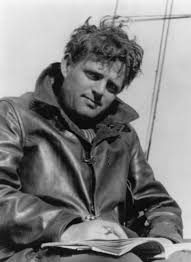
Damon Runyon
The Buffalo News/February 3, 1937
Handling of Hauptmann Case, Blamed Partly for His Misfortune, Called Brilliant, Despite Odds.
Poor old Ed Reilly has been put away as a mental case. We are sorry to hear it. Not a bad fellow, Reilly.
He was chief counsel for Bruno Richard Hauptmann in the famous trial at Flemington, and for a time, his name appeared in the papers in big headlines almost every day.
Reilly rather enjoyed headlines. As a matter of fact, he was one of those fellows who think in headlines. That is, he would say and do things calculated to produce headlines over his quotations and actions.
This is nothing to criticize. It is the natural instinct of the born showman. Reilly, in his heyday, was all that. At the time of the trial he was big and bluff, and ruddy, and flamboyant, and fairly glowed in the publicity spotlights. He always gave us fellows covering the Hauptmann trial something to write about.
Thought Himself at Fault
His physician is quoted as saying that Reilly thought Hauptmann innocent of the Lindbergh crime, and felt that he might have been at fault somewhere in his handling of the case.
We wouldn’t know about the domestic trouble. But we wouldn’t think he had any reason to worry about his handling of the Hauptmann matter.
We thought he made the best of a bad case.
We don’t know what he secretly thought of Hauptmann. We never asked him. We assume, however, that a lawyer who undertakes the defense of a man accused of a crime as dreadful as the Lindbergh kidnapping must believe there is reasonable doubt of his client’s guilt, or he wouldn’t lift a finger to help him.
Got Case Through Paper
So we must assume that what the physician says of Reilly’s belief is true. Still, as a lawyer, he could scarcely blame himself for the verdict of the Flemington jury, which was based on evidence so circumstantial that it must have caused Reilly, regardless of his belief, to wonder a little about Hauptmann.
Reilly was a Brooklyn lawyer of something more than local fame. He got into the Hauptmann case through a New York newspaper, as we remember the paper putting Mrs. Hauptmann in touch with him.
In Brooklyn, Reilly was sometimes mentioned as “Death House” Reilly, because of the number of his clients who found themselves eventually sitting in the electric chair, with old Bob Elliott peering over their shoulder.
Two Strikes on Clients
This title wouldn’t seem to be any recommendation for a lawyer, but a fellow once explained it to us this way:
“Reilly practices criminal law as a relief from the boredom of civil practice. When a Brooklyn court has a tough case to assign to a lawyer, Reilly always gets it. He seldom draws a client who hasn’t two strikes on him to start with.”
Well, Hauptmann had a couple of strikes on him to start with too, as Reilly soon discovered. It was a mighty tough case for any lawyer.
Reilly was associated in the defense with three steady-going country lawyers from New Jersey, who seemed somewhat bewildered by the ornate manner and method of the Brooklyn barrister.
Said to Have Blundered
He appeared before the jury of small town men and women arrayed even as Solomon in all his glory—striped pants, spats, morning coat and waistcoat, and his boutonniere. A huge fur-lined, fur-collared overcoat concealed his sartorial effulgence outside the courtroom.
But however the jury may have regarded his display, we think it was testimony to Reilly’s honesty. He appeared that way in other courts, and he saw no reason to change his make-up for Flemington.
Some say Reilly made terrible blunders in legal tactics, as for instance, his conceding of the corpus delicti at an unexpected moment.
At least one of his associates was inclined to make something of the possibility of raising a doubt in the minds of the jurors that the baby skeleton was that of the Lindbergh child, thus perhaps clouding the very facts of the crime.
Chance to Confuse Jury
A medical man was being examined at this point, when Reilly abruptly announced that the defense conceded it.
He hadn’t consulted his associates, and some observers said Reilly missed a chance to confuse the jury, but here again, we believe it was testimony to his intellectual honesty.
He told us that he felt that contesting the corpus delicti in this case would have been a gross piece of legal chicanery.
He withdrew from the case after Hauptmann’s conviction. We used to see him occasionally around the night clubs in New York, and for a time he had to get up and take bows under the spots when the masters of ceremony introduced him.
New York Forgot Him
By and by, he didn’t get introduced anymore.
The last time we saw him, we thought the glitter of his ornate exterior was fading somewhat, and certainly the sparkle of his personality was dimmed.
Reilly was a fellow who liked to get around, and if you keep getting around Broadway long enough, the nap gradually wears off.
His physician says that rest and treatment may bring him around again, and we hope that’s true.
We would hate to think of a picturesque fellow like “the bull of Brooklyn” mumbling his life away in a nuttery.
 The Archive