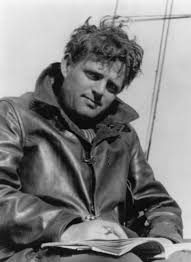
H.L. Mencken
Baltimore Evening Sun/December 21, 1931
I
With arrests imminent in Salisbury, the investigation of the lynching of December 4 will presently pass into the hands of the criminal court there, and once it is at bar discussing it will be an indecorum. In the interval it may be worthwhile to examine briefly some of the effects of the crime upon the credit and dignity of Maryland. Those effects bear upon all of us, for while the lower Shore is a small part of the State it is an ancient one, and whatever any considerable number of its citizens say and do, publicly and without general and immediate challenge, is naturally mistaken for the act and voice of the Maryland people. This may be irrational and unjust, and no doubt it is—as Shoremen themselves, in fact, have often argued when the whole State has been credited with Baltimore’s surpassing wetness—but such is the way human beings think, and being unable to change it we must learn to suffer it.
In the present case there can be no doubt whatever that Maryland has suffered a severe loss in reputation, and will be a long time recovering it. One need not, of course, be quite so gloomy as the Salisbury Advertiser, which holds that the scandal “will take generations to live down, and cannot ever be erased.” But there is every reason to believe that it will be remembered for a good many years, and at very inconvenient and embarrassing moments. The Leo Frank case is now ancient history in Georgia, and those who were responsible for it long ago decided formally to forget it, but it is recalled constantly by other persons, and to the obvious damage of the State. Similarly, the Sacco-Vanzetti case has ceased to be discussed in Massachusetts, but elsewhere it is talked of very often, and millions of people are acutely aware of it who never think of Harvard University.
The lynching in Wicomico county will not be remembered as long as the case of Sacco and Vanzetti nor even as long as the case of Frank, for its victim was a poor black half-wit, friendless and no doubt well deserving death for his crime. No committee of uplifters will be formed to make whoopee in his memory, and there will be no stoning of American consulates at Buenos Aires and Budapest. A week after the court finishes with the business he will be forgotten. But it will not be so soon forgotten that the proud old State of Maryland, after years of honorable standing among the most enlightened and orderly of American commonwealths, has been shoved down again—let us hope only transiently—to the ruffianly level of Mississippi and Arkansas.
II
The newspaper comment that I have seen—and there has been a great deal of it—has nearly all struck the same note. That is the note of genuine surprise that anything so out of harmony with the State tradition should have happened in a Maryland town. If Williams had been lynched in rural Georgia the news would have got only a few lines, but when he was lynched in Maryland it was worth black type, usually on the front page. Poor Salisbury got such advertising as its most ardent boosters never dreamed of. Its name was spread across a thousand newspapers, and became known to millions who had never heard it before. And every one of those millions was reminded that it was in Maryland.
At some time in the future, after the Wicomico county court has brought the case to an end, I plan to reprint the comment of the papers on both Shores, and some selections from those of papers elsewhere, at home and abroad. For the present, a few selections must suffice. As I have said, most of the out-of-State papers show only bewilderment: they can scarcely believe that such news should come from Maryland. But others, especially the more backward States, are derisory rather than sympathetic, and seem to gloat over the fact that Maryland has succumbed to their frequent example. I point, for instance, to the Commercial Appeal of Memphis, Tenn., a State celebrated largely for two things: that it was the scene of the Scopes monkey trial and that it has had more than 200 lynchings since 1889:
“In nearly all cases, Southern lynchings are the result of grave provocation. But in Maryland, a Negro who has killed a white man and was himself almost killed by the son of the victim was taken from the hospital and lynched. The almost-dead man had to be carried to the point where he was strung up. His body was taken to the Negro district of the town of Salisbury, where it was cremated as the mob shouted.”
The logic here may be characteristically shaky, but the intent is plain enough, and so is the advertising. The Tribune, in far-away Albuquerque, N.M., is more logical but no less devastating:
“Tom Johnson, the Negro convicted of the brutal murder of a little Santa Fe girl, must die in the electric chair . . .We commend the case of Johnson to the attention of other localities in the United States, particularly to the officials and citizens of the great Free State of Maryland . . Several days ago mob law broke out in Maryland and a wounded Negro was lynched. The Negro was guilty of shooting his employer. Santa Fe county citizens flamed with indignation at a greater outrage in their community, but they kept their heads. The officials of Santa Fe county acted quickly, calmly. The case has been a triumph of orderly process throughout, Sheriff Baca took no chances.”
III
No one expects much from Tennessee, or, for that matter, from New Mexico. The former is a backward State upon almost all counts. It ranks forty-second in wealth, whereas Maryland is nineteenth. In education it is forty-first, in health forty-fourth, and in public order forty-third. Its usual place in the news is that of a comic character, what with its anti-evolution laws, its Holy Rollers and its boozing Prohibitionists. Nor is New Mexico much better, for it is very sparsely settled, and though it has no horde of illiterate Negroes, as Tennessee has, it is burdened with even less literate Mexicans. Its rank in wealth is thirty-fifth, in education forty-second, in health forty-fifth, and in public order thirty-fourth. Its death rate from homicide is actually larger than Oklahoma’s and its record for lynching is worse than Florida’s.
Certainly no Marylander, not even a loyal Salisburyian in his lucid moments, likes to think of Maryland getting into such company. For many years past the Free State has been going up the ladder, not down. Its schools have been improved, its death rate has declined, and it has made an excellent record for public order. During the years from 1889 to 1930 inclusive its lynching record grew better year by year, and for the whole period it had less than half as many lynchings, to each 100,000 of population, as Virginia, less than a quarter as many as Kentucky, less than a fifth as many as Tennessee, and less than one-fourteenth as many as Mississippi. Since the turn of the century, indeed, its record has been far better than that of the country as a whole.
Nor has this advance gone unmarked. I think it safe to say that most reflective Americans, in late years, have come to admire Maryland, and that not a few have learned to envy it. Its sound laws,
honest courts, and enlightened public opinion have been often noticed. All Americans have come to know that, almost alone among the States south of the Mason & Dixon line, it has resisted
stoutly and successfully the pernicious influence of such anti-social agencies as the Anti-Saloon League and the Ku Klux Klan. It has had much less graft than the other densely populated States, and what little has occurred has been promptly and severely punished. It is generally orderly, even in its most remote parts, and its one big city, Baltimore, has been singularly free from that gang terrorism which has beset so many other cities. The word has gone out that Maryland has reasonable laws; that they are administered fairly; that no man, whatever his color or condition, is denied his plain rights, and that opinion among the people strongly supports this state of affairs. A Maryland Governor has attracted national attention by advocating the Maryland program, and a good part of his importance as a Presidential candidate is due to the fact that people elsewhere would like to be governed as well as we have been.
As one who has spent a great deal of time and energy, for years past, in whooping up the virtues of the State, both at home and abroad, I am naturally distressed to see it disgraced before the world, and if I have spoken against those responsible for that disgrace in harsh terms I have no apologies to offer. At a single stroke they have undone the good work of years. At a single stroke they have made Maryland ashamed, even in the presence of Tennessee and New Mexico. And to add to their offense they have sought to distract attention from it by setting up a vain and hollow bluster against those who have denounced it.
IV
Two weeks ago, writing in this place, I argued that the lynching of Williams was foreseen and inevitable—that its roots were in a turbulence that had been rising for a long while, unchallenged
by those who should have put it down. I see no reason to change that view. The very manner in which presumably enlightened Shoremen have tried to cover up the crime offers it impressive
support. Nor am I alone in holding it. Here, for example, is an extract from an editorial in the Frederick Citizen, a paper that surely cannot be accused of any prejudice against country people:
“Our sympathy goes to Wicomico County in particular and the lower Eastern Shore in general. Sympathy because the economic and intellectual opportunities of this beautiful but isolated peninsula are so limited that those men of industry and vision to whom inevitably community leadership is intrusted have found themselves impelled to pack up their bags and hie away to more favored lands. Hence Eastern Shore leadership has fallen into the hands of second and third raters, from whom the citizenry in general have taken their cue. Sordidness and Intolerance have become familiar in a section once famous for Culture and Gentility. For years there has been recognized on the Shore a leadership that appeals strictly to Emotion, and lets Reason grow cold and numb.”
A notice under the masthead of the Citizen informs me that it is “the official and recognized organ of the Democratic party in Frederick country.” From the masthead itself I learn that the president of the company publishing the paper is the Hon. David C. Winebrenner 3d, Secretary of State of Maryland.
 The Archive