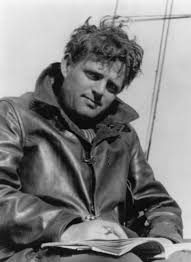
H.L. Mencken
Baltimore Evening Sun/January 12, 1931
I
In the spring of 1920 the most conspicuous citizen of the United States, and withal the most popular, was the Hon. Herbert C. Hoover, LL.D. The plain people were already tiring of the Archangel Woodrow, but Dr. Hoover was still high in their favor. There was a widespread demand, artfully supported by the remains of the British press bureau, that he be promoted to the White House, and multitudes of Americans liked him so well that they were willing to vote for him either as a Republican or as a Democrat. Dr. Hoover himself, at least for a while, seemed to vacillate between the two parties, but early in the year he discovered that he had been a lifelong Republican, and in June he opened gorgeous headquarters in Chicago and prepared to accept the party nomination. With my own eyes I saw ten barrels of Hoover buttons in the custody of his agents, and enough Hoover posters to cover all the barns in Iowa.
But when the convention met Dr. Hoover was nowhere. Every time his name was mentioned by one of the orators the delegates arose and gave him three rousing cheers, but when the time came to nominate a candidate they had other engagements. Some of them, chiefly the darker brethren, voted doggedly for the Hon. Frank O. Lowden, LL.D., a son-in-law of the Pullman Company and very easy with his money. Others voted for General Leonard Wood, who carried the Roosevelt torch and had rich and doting friends. Yet others voted for the muriatic Hiram W. Johnson of California, who owned and operated what remained of the Progressive movement in the cow country. For days the three factions struggled desperately in the hellish heat of a Chicago June, until finally it became apparent to everyone that not one of them could ever beat the other two. So they gave up the vain fight, mopped their brows dismally, and nominated the Hon. Warren Gamaliel Harding of Ohio, now a saint in Heaven.
Why Harding? Why the most abject and obscure of United States Senators? Why a fifth-rate political hack from a seedy little Ohio town? Why not the Hon. Mr. Hoover, then as now a godly and gifted man—and surely ten times as popular, judging by the exclamations in the barber-shops as he has ever been since? The answer is quite simple. Hoover had the gallery, but Harding had a small but reliable block of votes. Hoover, under the hands of Wilson and God, had saved the world from pillage and rapine, but Harding could trust the Ohio delegation. So Harding was duly nominated, prevailing over Cox at the ensuing plebiscite, went into the White House, and left a fragrance of juniper and patchouli there which lingers to this day, despite all the exorcisms of Monsignor Cannon. The best that Hoover could make was the ninth spot in his Cabinet, seven places below Andy Mellon and but one above Puddler Jim Davis.
II
A lesser man, bumped so painfully, would have retired sadly to nurse his hurts, and perhaps forsworn ambition forevermore. But not so the Great Engineer. His alert and resilient mind, long trained in the mine stock business, applied itself instantly to the business of finding out what had happened to him. It didn’t take him long to do so. He had made, it appeared, a very serious mistake. A stranger to American customs, he had assumed in all innocence that the way to get a Presidential nomination was to enchant and stagger the great masses of the plain people. He discovered that the true way was to go out quietly and round up delegates, which is to say, professional politicians.
Having made this discovery he proceeded at once to turn it to his uses. Before the end of 1921 unfamiliar faces began to appear in the Hoover office. They were the faces of gentlemen skilled at the art and mystery of practical politics—gentlemen who knew how to round up the dark brethren in the South, gentlemen who understood the factional intricacies of Iowa, Missouri, and Utah, gentlemen who professed to know what the farmers were longing for in Kansas and what the miners would swallow in Pennsylvania. There were, too, a number of journalists—able and seasoned fellows who knew even more about politics than the politicians. Dr. Hoover made them welcome and listened to them attentively. Presently some of them were working for him. He had plenty of money and loved to have bright men around him. One of the journalists became his confidential secretary. The other gentlemen began to say that there was much talk of Hoover in their bailiwicks.
No effects were visible at the 1924 convention, for Dr. Coolidge, as everyone will recall, had a walk-over. The Hoover men, by now a pretty large company, were all for him. Dr. Hoover himself remained in the Cabinet—not altogether to Dr. Coolidge’s delight, but there he stuck. Meanwhile, more and more gentlemen called at his office, and more and more of them were very practical men, and not too squeamish—Claudius Huston, for example. Returning home, they let it be known that the people of their sections were all talking Hoover. At this many of the politicians resident in Washington—for example, Jim Watson and old Charlie Curtis—laughed. They had witnessed the debacle at Chicago, and they believed, being stupid fellows, that Dr. Hoover was still a political innocent, and ripe for another.
In 1928 they went to Kansas City to see him butchered again. What confronted them was a long row of blackamoors from the South—all Hoover men, hog-tied and ready to serve. And another long row of white delegates—hog-tied in the same way, and just as ready. The struggle was over in ten minutes. Vare of Pennsylvania and old Andy Mellon were the first to climb down, and after them came Watson, Curtis and the rest. In 1920 Dr. Hoover had the gallery, but no votes. In 1928 he had the votes, and damn the gallery! What it cost him, God knows: it must have been a pretty penny. But he was rich and could afford it—and now he is President of the United States.
III
This long prologue brings me to the few words that I venture to address to Governor Ritchie’s true friends. They believe, and I think with sound reason, that he stands a good chance of getting the Democratic nomination next year. Of all the candidates so far brought out, he is at once the most attractive and the most worthy. Unlike the Hon. Owen D. Young, he has no inconvenient strings tied to him and is not open to attack by demagogues. Unlike the Hon. Franklin D. Roosevelt, he is not saddled with Tammany and did not wait until the last minute to turn wet. And unlike the Hon. Mr. Buckley of Ohio and other such aspirants, he is already well known throughout the country and does not have to be hawked like a new corn cure. He stands for a body of ideas that is coherent, sensible, and fast making converts. He has had long experience in public service and shows a high capacity for it. He is a frank, intelligent, and honorable man, with enough courage and color to make him dramatic and interesting. Moreover, he is a very skillful practical politician.
But all these things will not suffice to get him the nomination. Something more will be necessary, as Dr. Hoover discovered so sadly in 1920. He will need votes—and reliable votes—and now is the time to get them. They will not come in spontaneously; they will not come in for the asking. The few that Maryland can muster, of course, are already in the bag, but they were not enough to start anything in 1924 or in 1928, and they will not be enough in 1932. What is needed is the solid support of one of the larger States. If Pennsylvania, say, could be fetched, then the Ritchie candidacy would become formidable at once. If Missouri, Illinois, Indiana, and California could be brought into line, or the majority of the Southern States, with Massachusetts in the offing, then it would be all over save the charges of fraud.
Some of these States, it seems to me, are still open to persuasion. They have no candidates of their own, save maybe favorite sons who will disappear at the first clash, and they show no sign of being heated up by either Roosevelt or Young. Both gentlemen, however, have their friends hard at work. Roosevelt’s, I believe, have opened headquarters in Washington and are already busy in a dozen States. Young can rely upon the support of every power-grabber in the country, and hence of most of the bankers. But neither, I believe, could withstand a really energetic assault. They are very vulnerable men. Ritchie, in fair combat, could probably beat either or both of them, especially in the South and West. But the South and West move only under pressure. They must be solicited, as Dr. Hoover solicited them so competently between 1920 and 1928. If Ritchie is presented to them in the proper way, they will, I am convinced, incline toward him. But if he is not presented, then they will forget that he exists.
Eighteen months remain until the convention. In eighteen months and three weeks, indeed, it will be over. My suggestion to the Ritchie men is that they form an organization without further delay, raise a couple of hundred thousand dollars, hire some professionals, and take to the road. They have spent quite enough time telling the Governor that he is a good fellow, and the candidate foreordained. What is needed now, and it must come very quickly, is definite and decisive action.
 The Archive