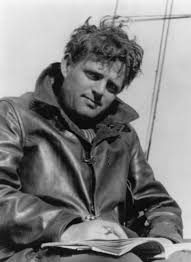
H.L. Mencken
Baltimore Evening Sun/November 23, 1931
I
The venerable head of the American State Church, Archbishop James Cannon, Jr., D.D., is so often wrong that we are apt to forget that he can ever be right. Yet he, too, has his moments of sagacity, and sometimes they are moments of genuine illumination. Whether, at such times, he operates under his own power, or is, like other high ecclesiastical dignitaries, no more than a funnel or mouthpiece for the Holy Spirit I do not profess to know. But whatever the source of his wisdom, he occasionally discharges a shell that is heavily loaded with it. Such a shell burst in Washington on November 15, when His Grace denounced roundly, in blistering theological terms, the refusal of the Federal Radio Commission to renew the license of a radio station operated by the Rev. Bob Shuler, D.D., in Los Angeles the Damned.
This Pastor Shuler, I must confess frankly, is a fellow whose sayings and doings may plausibly upset the judicious. There is certainly nothing monkish about him. On the contrary, he is loud and impudent, blatant and vain. As a holy clerk of the Methodist rite, he is naturally in politics up to his neck, and anything but careful of his words. Several years ago, having gathered up a great following by his radio harangues and his sermons in his basilica, he set himself up as boss of Los Angeles, and undertook to elect a mayor to his taste. This enterprise prospered, and presently his nominee, the Hon. John C. Porter, LL.B., was installed in the City Hall.
Of Mr. Porter a great deal was heard a bit later on, at the time the American mayors made their famous tour of France. Most of these great men, glad of the furlough from Prohibition, took to the flagon with glad hosannas, and some of them were stewed from the moment they landed at Havre until they were loaded upon their ship for the journey home. But not the Hon. Mr. Porter. Every time the hospitable French offered him a stoup of wine he covered his glass with his fist. When they urged him to imbibe he addressed them on the evils of rum. Not once during that historic pilgrimage did he take so much as a pony of cognac, not even when, as at Carcassonne, he came down with severe cramps. Nor did he even enter any of the gaudy stews of Paris, so popular among visiting American sociologists, or resort to the galleries where the French keep their huge stock of hand-painted oil paintings of naked women.
II
Unfortunately, the American correspondents in Paris, in general a somewhat liquorish class of men, took the Hon. Mr. Porter’s crusade against the drink evil in bad part, and depicted it in their dispatches as uncouth and even barbaric. They represented the French as laughing at it, and hinted that the whole business was doing grave damage to the Franco-American entente cordiale. What they had to say about the boozing of the other mayors was good-natured, but what they had to say of Dr. Porter’s teetotaling had acid in it. Even the correspondent of the Sunpaper, an abstemious man himself, was very tart in his reports.
When these animadversions reached Los Angeles they caused a good deal of unhappiness. The local boosters, still sweating under the public effects of the Aimée McPherson scandal, began yelling that the town was disgraced again. In this cry the newspapers soon joined, and so did the politicians, for neither relished the hegemony of Mr. Porter’s boss, Pastor Shuler. Presently the other town ecclesiastics also helped in the whooping, for they were jealous of the rev. gentleman’s unparalleled professional success. Thus many streams of hatred converged upon him, and when he essayed to set up a defense, and began striking out at his enemies, he was laid by the heels on a very thin charge of contempt of court, and sent to jail for thirty days.
But the term in jail naturally had no effect upon so rambunctious a man. Instead, it only aroused him to fresh prodigies. From his very cell he kept on damning his enemies, and when he got out he preached such sermons in his church that women fainted and strong men leaped howling into the air. And after the canonical hours he preached them all over again by radio, so that they reached thousands of persons in the endless and horrible Los Angeles suburbs, and even in the deserts beyond. He spared no one. He damned the boosters, he damned the town politicians, he damned the local newspapers, and he even damned Aimée McPherson. And for good measure he let fly a few bombs at the Pope.
III
This radio campaign was a vast success. It not only made secure the pastor’s grip upon Los Angeles and its environs, which are thickly settled with fans of theology; it also threatened to make him boss of all Southern California. When champions were put up to oppose him he knocked them out with scarcely an effort. Night after night he boiled the ether with his declarations that he would make Los Angeles safe for Prohibition, Christian Endeavor and all the other great boons of the Wesleyan revelation, and night after night the town boosters tossed and perspired in their beds. Tourists began to keep away. It began to be whispered that Los Angeles was really saved. The news that bubonic plague had broken out could not have done it more damage.
So the local patriots decided that the only way to put down the nuisance was to take Pastor Shuler off the air, and to that end they resorted to Washington, and petitioned the Radio Commission to cancel his license. There were long hearings, with much heat on both sides. The pastor’s enemies alleged that he had indulged in violent attacks upon “other churches, the Chamber of Commerce, the American Legion, the judges, and the Bar Association,” and that he had thus “promoted religious strife and antagonism.” To this he answered that everything he had said was true, and that if anyone thought it was false, there was ample remedy in the ordinary courts, under the laws against libel and slander. On Friday, November 13, the commission decided against him, and refused to renew his license.
It was this decision that Archbishop Cannon denounced in his bull of November 15, and, as I think, with great force and effect. He said, as reported by the Sunpaper:
Protestants and Romanists alike have equal rights to use the air to present their views. Nor can any commission, officer or court arrogate under the Constitution a right to forbid any man or organization to denounce on the radio the menace of Romanism to American institutions because such attacks may “promote religious strife and antagonism,” nor, contrariwise, to prevent Romish priests from exercising equal privileges.
The preaching of the Lord Jesus Christ produced religious strife, antagonism, persecution. Were He on earth today, by the ruling of the Radio Commission, He could not speak or preach over the radio, because his preaching would “promote religious strife and antagonism.”
This attack by the Radio Commission will not only not allay, but will most assuredly promote “religious strife and antagonism.”
IV
What could be sounder than this?
What could be more dangerous than to allow a gang of politicians at Washington to censor the air? What could be in more flagrant contempt of the doctrine laid down by the First Amendment? Anyone who felt himself aggrieved by Pastor Shuler’s harangues had a clear remedy. He could sue the rev. gentleman, under the laws of California, for slander, and probably also proceed against him criminally, for a radio broadcast obviously has the public and general character of a printed libel. He could do this in courts admittedly unfriendly to the defendant, and with the ardent support of the local newspapers. And if he took the law into his own hands and gave the pastor a thrashing, he could be sure of encountering the same partiality as a defendant himself.
But that is not the main point. The main point is that the decision of the Radio Commission sets an intolerably evil precedent, and will cause grave damage hereafter to men far better than Pastor Shuler. If the commission has a right to prohibit speeches which it believes will cause “religious strife and antagonism,” then it has a right to prohibit speeches which cause any other kind of strife and antagonism. In other words, then it has a right to decide at all times, and on whatever grounds it may seem sufficient, what shall and shall not be said on the air. It would be hard to imagine a more outrageous censorship. And it would be hard to imagine putting it into worse hands.
The Catholics, I believe, took no part in the attack upon Shuler. It was carried on by his political enemies, aided by the town boosters of Los Angeles. But it was made, at least in part, on the ground that his speeches were offensive to Catholic sentiment. Well, what if they were? Why shouldn’t they be? Have we come to such a pass that a Protestant can no longer state his objections to Catholicism, or a Catholic to Protestantism? Does the religious freedom of the First Amendment mean no more than that every man must accept in craven silence the religious ideas of every other man, even when they seem to him to menace his private liberties and the national welfare? Must he be mute even when some church goes into politics, and sets out, as he thinks, deliberately to “promote strife and antagonism”?
I think I’d rather see a thousand Shulers on the air, howling and roaring nonsense without end, than one man, however mean, deprived of his plain and inalienable rights. For when the liberty of even a Shuler is invaded and made a mock of, then the liberty of no man is worth a damn.
 The Archive