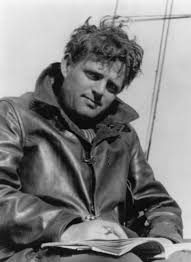
H.L. Mencken
Batimore Evening Sun/November 30, 1931
They have seduced my people, saying, Peace; and there was no peace.-Ezekiel XIII, 10.
I
By the time these lines get into print, for all I know, the front page of the Evening Sunpaper may be black with headlines announcing that the League of Nations has stopped the war in the Far East, and forced the Chinese and Japanese to kiss and hug each other with loud hosannas. If so, then I can only hope that the readers of the editorial page, who are judicious above the common, will accept the news with proper reservations. For though it will appear in a great family newspaper, and under the guarantee of an eminent press association, it will nevertheless be false. The League of Nations will not and cannot stop the war in Manchuria. It cannot and will not stop a war anywhere, whether large or small, in which a first-rate Power is engaged.
Some of the advocates of the League, like the advocates of the World Court and of the Kellogg Peace Pact, do it a great disservice by constantly exaggerating its potency. They represent it to be the parliament of a sort of super-state, with authority over the doings of all the member nations, just as the Parliament at Westminster, until a few months ago, had authority over the doings of all the British Dominions. It is really nothing of the sort. Its power to enforce its mandates is almost nil, and even within those narrow bounds it acts only against small and weak states. What it actually resembles is not a parliament at all, but simply a council of ambassadors. Its proceedings, save in trivial matters, can never be impartial. Its aim, on higher levels, is never to ascertain and enforce what is right and just, but simply to stretch right and justice to meet the self-interest of its more important members.
The history of its undertakings proves all this only too abundantly. It adjudicated the dispute between Sweden and Finland over the Aland Islands very easily, for both parties were too weak to fight and the stakes were so small as to be almost worthless. Any half-competent master in chancery, hired for the job at $10 a day and expenses, could have done quite as well. It was also successful in stopping the buffoonish combat between the Greeks and the Bulgars in 1925, and in settling some unimportant frontier disputes between Hungary and Czechoslovakia and Czechoslovakia and Poland. But when it tackled the Silesian question it failed miserably, for France had a finger in that pie, and when it tried to prevent the rape of Lithuania by Poland it failed again, and for the same reason. Similarly, it failed when it undertook to halt the alienation of Turkish territory to the bogus state of Iraq, for Iraq was really England, and England had to be given what she wanted.
II
Most Americans think of the League of Nations as the creation of the late Woodrow Wilson, but the historians of the future will probably take a much less romantic view of its origin. It was actually invented in England, and its primary purpose was to consolidate and safeguard the English stealings in the World War. The system of mandates was devised to that end, and has worked very well. England still holds all of the seized German and Turkish territory that is worth keeping, and the rest has been cleverly palmed off on other nations—for example, Syria on France. The United States, it will be recalled, was to have been saddled with Armenia. The poor Italians got nothing, greatly to their grief, and the Japs have been denounced as scoundrels every time they have tried to take a fair share of the mainland of Asia.
Wilson, who was a frantic Anglomaniac and very susceptible to flattery, was easily convinced that the whole scheme was his own, and the English repaid him for taking the responsibility for it by hailing him as a great idealist, comparable almost to the Founder of Christianity and far surpassing such lesser worthies as George Washington. It was naturally supposed that he would be able to bring in the United States as a member; the English, in fact, counted on it confidently, for they needed the American hordes to safeguard the peace almost as badly as they had needed them to carry on the war. But, as everyone will recall, the American people basely betrayed the higher idealism. In other words, they refused to be hornswoggled. Instead, they followed such villains as Senator James A. Reed of Missouri, who exposed the League as an English scheme. As for Wilson, his heart broke with a report heard round the world.
This left England in a most unpleasant position. With the United States beside it, ready with money and men, it would have run the League, but with the United States absent hegemony threatened to pass to France, and in fact did pass. So the English, always altruists, began agitating for the admission of Germany, who could be trusted, they thought, to stand against France, and on September 10, 1926, Germany was duly admitted. But since then England has got into such troubles at home that she has little energy left for international intrigue, and Germany, observing the way the wind blows, has begun to flirt with France, which now rules the roost. So there is a renewed drive to rope in the United States, and it will undoubtedly become more vigorous as England recovers.
III
The World Court, which is a creature of the League, is no more a court in the ordinary sense than the League itself is a parliament. The essence of a court is that it is impartial, which is precisely what the World Court is not. Let us say that two Baltimoreans, A and B, fall out and decide to have the law on each other. They go before a judge, C, who knows neither of them and cares nothing about them, and he puts their dispute before a jury, D, E, F…O, whose members are similarly neutral. But when a nation, A, goes before the World Court it has a judge on the bench, and so has its opponent, B. And all of the other judges, C, D, E, F, and so on, belong to nations that are notoriously friendly to either A or B, and bound up with its fortunes.
I am speaking here, of course, of disputes between first-rate nations. When it comes to the small fry—Greece, Guatemala, Siam, and so on—the World Court can afford to be honest, just as the League of Nations can afford to be honest in the like case. But when it comes to nations of any genuine power and importance, it can no more be honest than the Baltimorean A, could be honest if he were put on the bench or in the jury-box to try his own suit against B. The thing is simply a psychological impossibility. And it becomes doubly impossible when one recalls that the judges on the World Court bench are nearly all worn-out professional politicians, eager only to keep their gaudy jobs.
What its deliberations are worth was shown somewhat humorously in the late case of France vs. Germany and Austria—the Customs Union case. The learned judges divided precisely along political lines. The seven whose countries favored the customs union decided that it was in strict accord with both Article II of the Treaty of Saint-Germain and the Geneva Protocol. The other eight, whose countries were against it, decided that it was illegal and immoral. Thus it lost by one vote. That one vote represented the superior influence of France in the League of Nations as it is now constituted.
IV
One often hears the League defended, despite its obvious impotence and dishonesty, on the ground that it offers the only promise of ultimate peace in the world that is at present visible. But this is a very sorry argument in its favor. Exactly the same defense might be offered for the quack cancer cures which fill the drug stores. No reputable medical man knows how to cure cancer, and hence none promises to cure it. Ergo, let us turn to the quacks, who shine with optimism and idealism! The League cure for all the sorrows of the world is scarcely much better. It relieves, to be sure, a few minor boils and bellyaches, but it is as ineffective against cancer as Christian Science or Lydia Pinkham’s Vegetable Compound.
In fact, the League seems to grow less effective as year chases year. At the start, when it was still largely in the hands of enthusiasts, it at least made some effort to function, but of late it has shown a growing reluctance to tackle any really serious problem. Its management is now in the hands of professional diplomats, which is to say, of the most timorous, disingenuous and stupid class of educated men in the whole world. Not one in a hundred of them really believes that war can ever be put down, and not one in ten would vote to put it down if it were possible. What interests them is not the welfare of the human race but simply their professional business—the witless and endless juggling for petty advantage, the sharp forestalling and overreaching of the other fellow, the eternal setting up and knocking down of balances of power.
To such men disinterest is quite unimaginable. They are out to get whatever they can for the countries they represent, by fair means or foul. So long as they dominate the League of Nations it can never be anything save a machine for prospering the shrewd and bold and swindling the weak. If they pretend to go to China’s rescue, then let China look out. It will cost far more in the long run than a head-on struggle with Japan.
 The Archive