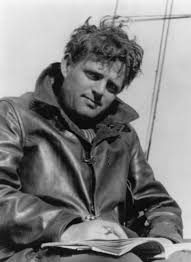
H.L. Mencken
Dothan Eagle/October 26, 1929
On October 8, in the Senate of the United States, H. R. 2667 (the new Smoot-Grundy tariff bill) being under debate, the Hon. Arthur Hendrick Vandenberg, A. M. honoris causa, L.L. D. h. c., editor of the Grand Rapids Herald, author of “Psychological Salesmanship,” and junior Senator from the republic of Michigan, offered the following amendment:
(b) Furniture: The (antique) furniture described in paragraph 1812 shall enter the United States at ports which shall be designated by the Secretary of the Treasury for this purpose. If any article described in paragraph 1812 and imported for sale is rejected as unauthentic in respect to the antiquity claimed as a basis for free entry, there shall be levied, collected, and paid on such article, unless exported under customs supervision, a duty of 50 per cent of the value of such article in addition to any other duty imposed by law upon such commodity.
As everyone knows, Dr. Vandenberg’s home, Grand Rapids, is the center of the American furniture industry, and so it was not unnatural for several Senators to suspect that his high dudgeon against bogus antiques from abroad was inspired in some way, however innocently or unconsciously, by such a tender solicitude for his constituents. One such doubter was the Hon. Clarence C. Dill, B. L., of Washington. Gathering himself together, he made bold to frame what he obviously intended to be a sarcastic question, to wit:
Does the Senator think that his own Grand Rapids furniture people could make just as good “antiques”?
But Dr. Vandenberg was not daunted. Instead he answered instantly and very frankly:
I am glad to answer the Senator’s question. Yes; and undoubtedly there is a great deal of fake antique furniture made in the United States; but none of it cheats American labor, none of it cheats American capital, and none of it undertakes to defraud the Treasury of the United States. That is a very big distinction.
This plainly satisfied the Senate. Even Senator Dill announced at once that he would vote for the amendment. It was, indeed, a reply falling in with the most ancient and honorable traditions of American legislation and jurisprudence. There was in it the fine flavor of perfect classicism. For what it said, reduced to everyday terms, was simply that the public could jolly well be dammed. The amendment provided a new source of revenue for the Treasury, which is to say, for the jobholders. It secured the struggling fake antique furniture industry of Grand Rapids against foreign competition. It made sure of adequate compensation for free American workmen, skilled in the art and mystery of manufacturing bogus Sheratons and Chippendales. As for protecting the rest of us against being swindled, the Senate simply had no time to be bothered.
II
I have said that all of the Senators were satisfied by Dr. Vandenberg’s reply. That, however, is not quite accurate. Several continued to murmur. One was the Hon. Thomas J. Walsh, LL.D., of Montana. Another was the Hon. Thaddeus H. Caraway, A. B., of Arkansas. Yet another was the Hon. Millard E. Tydings, LL.D., of Maryland. Dr. Tydings’ objection took a new, and, and, for the Senate, a strange and sinister line.
What, he demanded, did the amendment amount to in substance? Didn’t it simply turn over all persons who brought furniture from abroad to the mercies of the customs jobholders? Didn’t it expose every such person, however innocent of any intent to defraud the Treasury, to the charge of attempting a swindle, and to summary execution without trial? What was to protect a perfectly reputable and well-meaning man, already rooked by fake-antique dealers in Europe from being further rogued and penalized by a gang of ignorant and irresponsible bureaucrats? “My heavens!” roared Dr. Tydings. “We have got so in this country that just so we can make a profit out of things, the justice of an individual situation no longer counts. Just so you can make money, what does it matter if a great injustice is done to four or five, or a hundred or a thousand people?”
But Dr. Vandenberg was not to be upset. Calmly, judicially, as a lawyer, an editor, a 32 degree Mason, a Shriner, a Woodman, an Elk, a Congregationalist and a Senator, he answered: “The prospector of our own land is of greater concern to me than the European counterfeiters.” And then:
MR. TYDINGS: Even though, in accomplishing that result, the Senator from Michigan knowingly, deliberately, intentionally—
MR. VANDENBERG: And wilfully. (Laughter.)
MR. TYDINGS: Yes—would punish any number of people who had done no wrong, who had every honest intention of abiding by the law?
MR. VANDENBERG: Yes; and I am not worrying very much about punishing innocent people, because this amendment is not aimed at them, and will not touch them except in rare cases.
MR. TYDINGS: Then my ideas in government are different from those of the Senator from Michigan. I would rather have less money made, and protect the innocent people of this country, than see large amounts of money made at the expense of only four or five or even one innocent man.
III.
I have inserted a few caps to point up the colloquy. Is it any wonder that Dr. Tydings is opposed to the Anti-Saloon League, by the Methodist Board of Temperance, Prohibition and Public Morals and by every other agency of Law Enforcement among us? Is it any wonder that patriotic men, both in Washington and in Baltimore, begin to talk seriously of deporting him to Russia? Who, indeed, could imagine any more poisonously anti-American doctrine than that he preaches? Let him move over from the Senate to the Supreme Court and whisper it to Mr. Chief Justice Taft, and he will be guilty of homicide as well as of sedition. Let him intone it to the Maryland Club (to which, in “Who’s Who in America,” he says he belongs), and the bouncer will give him a bum’s rush swifter and dizzier than that which would greet Alexander Berkman, Mr. Julius Holmes, or the ghosts of Sacco and Vanzetti.
Dr. Tydings claims to be a lawyer by trade and even signs himself Legum Doctor, but there must be some mistake. Certainly any first-year law student should know the very fundamental axiom of American criminal law. If Dr. Tydings is actually unaware of it, then let him be informed: it is that it is better to punish a thousand, nay, a million innocent men than let one suspect get away. And when I say punish, I mean it in the fullest sense. It is not only the right, it is the duty of every jobholder to shoot to kill, and it is equally his duty to shoot at the first sign of suspicion. Does his bullet lay low an innocent man? Then that is a painful incident, but no more. It is, indeed, not even painful, but rather laudable and elevating, for of all the high privileges open to a free American citizen, whether innocent or guilty, the highest is that of being assassinated that the majesty of the law may be upheld.
This axiom has been stated and ratified a thousand times as the very kernel and essence of the current federal jurisprudence, and it has been accepted by at least four-fifths of the States. The fact that it has not been accepted by the Maryland Free State is the chief count of the blistering Methodist indictment of this commonwealth. So long as we reject it we shall lie under suspicion of atheism and treason. That is exactly what is meant when the Law Enforcers plead with us to give up our evil courses and join the Union.
IV
Thus Dr. Tydings must be put down, I suppose, as one lying outside the pale of decency. He has not only shamed the Senate by his gabble about protecting the innocent against the just pains and penalties of the laws; he has also shamed Rotary, the American Legion, and the Committee on the State War Memorial Building, to which he also belongs. Nevertheless, it may give him some comfort to reflect that a number of other Marylanders cherish this abominable heresy—including even several lawyers; more, even one or two judges. It has survived here from an earlier and more innocent era, just as Manicheism and sorcery survive in certain back reaches of the Eastern Shore and cannibalism in the remoter glades of Garrett county.
Dr. Tydings’ fellow heretics have not got much comfort, of late, out of contemplating the great deliberative body he serves in. Whenever they glance toward the seat once occupied by the Hon. William Cabell Bruce, LL.D., and behold the Hon. Phillips Lee Goldsborough, LL.D., using it as a springboard for his antics—when this depressing spectacle greets them their sensations are not unlike those of the bumpkin who reached for his girl in the dark and kissed a cow. Maryland used to have two Senators. Now it has a Senator and a Goldsborough.
But the Senator who remains is at least authentically of the Free State. He has not yet joined the Anti-Saloon League or any of the rest of them. He has not yet submitted to baptism and dehorning by the Wesleyan rite. He is yet beautifully ignorant of respectable American law, despite all the diplomas that hang in his garage. In the name of those Marylanders who sit with him and must go to Hell with him I venture to greet him with loud and lamentable cheers. His statement of the Great Maryland Heresy was apt, pungent, plain and unanswerable. He earned his honorarium for a year by one day’s work. He is a Senator to admire and be proud of.
 The Archive