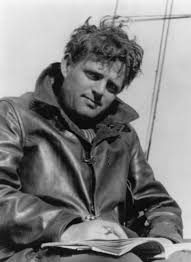
H.L. Mencken
Baltimore Evening Sun/May 6, 1910
Half a dozen publishing houses which devote themselves entirely to printing the rejected manuscripts of amateur authors (always, of course, at the expense of the latter) seem to be flourishing mightily just now. Several of the most important of them make a specialty of bad poetry. How many books of ghastly doggerel they have put forth during the past year is beyond accurate computation, but the number probably exceeds 400. These books are always well printed and artistically bound, and no doubt the authors pay the bills willingly. The usual charge for printing such a volume is about $300, which leaves the publisher a profit of $100 or $150, but on occasion he will shade his price a bit.
Other publishing houses seem to prefer bad novels to bad poetry, probably because it is possible to charge the author more for the printing. The actual cost of setting up, printing and binding 1,000 copies of a novel of ordinary size is about $500, but the egotistic amateur who seeks to inflict his work upon the world usually has to pay $750 or $1,000. For that investment he gets the entire edition of his work. Very often, perhaps, he materially diminishes the net cost of it by forcing copies upon his friends and upon the booksellers of his town. But, despite that, there must be a huge cavity in his pocket-book at the end of his adventure.
Chasing The Poet
Some of these fool-chasing publishers do not trust to chance for the appearance of clients, but go after them in an organized and effective manner. Whenever the name of a new bard appears in the magazines, or even in the daily papers, they send him a cordial letter, praising his work effusively and suggesting that a whole book of it would delight the country’s cognoscenti. Nine times out of ten the beginner is so flattered by this suggestion that he immediately forwards a couple of pounds of manuscript to the publisher.
And then begins the effort to make him pay for the book. He is informed with delicacy that all poetry, even including such masterly stuff as he writes himself, is a dubious publishing venture, and that, in consequence, the publisher, before undertaking to give his effusions to the world, must think it over carefully. When this has soaked in, he receives a letter suggesting that the risks of the venture be shared. He asks how much his share will be. He receives in reply a long statement, showing that it will cost, let us say, $500 to print the book, and suggesting that he provide $300.
Then comes the final haggling. The poet is inflamed by the idea of printing a book; perhaps he has even announced its early appearance. The publisher now gives him his coup de gras by coming down to $250 — about $100 more than the book will actually cost. If it is at all possible for him to raise the money, the poet will do so, and his volume will be added to the thousands already in the boneyard of the Congressional Library.
Many American poets, it may be mentioned, seem able to raise the money. Poetry is no longer a vice of the penurious only, like Socialism and rushing the can. It has become, indeed, a sort of universal pestilence. There are dozens of opulent bards, male and female, and even a few who are actually millionaires.
The Amateur Novelist.
The amateur novelist is bagged in a manner much like that which suffices to ensnare the poet. If, by any chance, he gets a single short story into print, he is immediately in receipt of flattering letters from the lemon-squeezing publishers. If, on the contrary, his short stories are so bad that not even a 10-cent magazine will print them, and his novel manuscripts come back from the first-class publishers with distressing regularity — even then the lemon-squeezers strike his trail, soon or late.
In the literary weeklies they insert advertisements asking for manuscripts; by a thousand and one other devices they seek to get names and addresses of aspiring, but unsuccessful authors. Some of them even offer to buy such names and addresses, and many a publisher’s reader or magazine subeditor, doomed to read bad manuscripts for a living, ekes out his income by compiling and selling such lists.
Now and then, of course, one of these thrifty publishers nabs an author who is more than an amateur. The latter, for example, may be just emerging from a battle royal with his regular publisher, perhaps over royalties, and so he is quite ready to be convinced that he will make more by printing his book at his own expense, and taking all, instead of a small percentage, of the profit.
Poets are particularly susceptible to that sort of argument. The demand for poetry, even for first-class poetry, is very small, but it is usually difficult to convince an amateur poet, with flattering reviews before him, that his publisher’s meagre sales report is accurate. Nine times out of ten, he accuses the honorable man of swindling him and they part company in anger. He is then ripe for the lemon-squeezers.
Paying A Literary Debt.
The little Scandinavian countries have given us Ibsen and Bjornson, Brandes and Selma Lagerlof — the greatest of modern dramatists, one of the greatest of literary mad mullahs, a critic of the first rank and the foremost woman writer of the day. How have we paid up that literary debt? What contemporary English and American books have been done into Dano-Norwegian and Swedish? What English and American writers do the Danes, Swedes and Norwegians read?
A glance at a recent catalogue of the Gyldendal Publishing House, of Copenhagen, the principal establishment of its kind in Scandinavia, affords us a somewhat astonishing answer. Are the Danes reading Mark Twain, Howells, Henry James, Conrad, Moore and Meredith? Apparently not. The Americans who appear to be represented by translations are Robert Herrick, Frank Norris and Jack London! And the favorites among Englishmen seem to be Israel Zangwill and Conan Doyle, with H.G Welles and Thackeray as bad seconds!
There are no less than eight volumes of Sherlock Holmes stories on the Gyldendal list. Just before the name of Doyle stands that of Dickens. He is represented by but one book, “Oliver Twist.” The two lonesome American novels on the list are Herrick’s “The Memoirs of an American Citizen” (“En Amerikansk Borgers Erindringer”) and Norris’ “The Octopus” (“Polypen”). Supporting them is Jack London’s book of Klondike tales, under the title of “Fortaellinger fra Klondyke.” Two volumes of Zangwill’s Ghetto stories are also there — but no sign appears of “Huckleberry Finn.”
The publishers apply the high-sounding denomination of “Moderne Verdenslitteratur.” (“Modern World-Literature”) to the books of Herrick, London, Norris and Zangwill, and in the same list the works of Pierre Loti, Anatole France and Paul Bourget appear. On a separate sheet, devoted apparently to classics, and showing, among other books, the poems of Heine, there appears one volume of James Fenimore Cooper’s Indian fustian and Thackeray’s “Book of Snobs.” The latter, which becomes, in Danish, “Bogen om Snobberne,” has the honor of a special paragraph, in which it is praised as “a classical book” and “one of the best-known in English literature.” But how about “Vanity Fair,” “Pendennis” and “Henry Esmond?” Alas, they are not there!
 The Archive