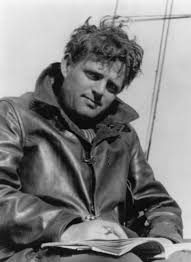
H.L. Mencken
Baltimore Evening Sun/May 2, 1910
The ridiculous report, so industriously circulated by the Boston Evening Transcript and other sensational papers, that Governor Hughes will be compelled by the unwritten law of the judiciary to shave off his copious and unearthly whiskers when he becomes a justice of the Supreme Court of the United States has no foundation whatever in fact.
There is, indeed, no such law, written or unwritten. The learned justices have a perfect right to cultivate their hirsute garden as they list. They may go in for shaven lawns, they may decide for shrubbery before the ear, they may even devote their leisure to broad waterfall effects, straight or bifurcated. It is all one. No court-martial or board of inquiry has any authority to question their taste or to offer suggestions. A barrister who sought to enliven a tedious argument before them and mixing sly jokes about the judicial foliage would be clearly in contempt and might reasonably expect a heavy fine or a term in jail.
Whiskers On The Bench
A considerable diversity is noticeable in the vegetable adornment of the justices. The Chief Justice and Justice Holmes go in for pugnacious mustaches of the Bismarck type, without chin or cheek support. Justice Harlan wears siders, Justice Moody wears a mustache of the ragged sort popular among business men, Justice Lurton sports a toothbrush, and Justice McKenna yields to the insidious fascinations of a full beard, though his upper lip is bare.
In the past many other capillary effects have been visible in that austere sanhedrin. It is firmly established, indeed, as an axiom of jurisprudence that a justice may cut his whiskers as he pleases, just as he may divert himself with plantation toilet or the common plunge of commerce, as he pleases.
There is no purpose here, of course, to lay it down as an indubitable fact that Governor Hughes will make no rearrangement of his facial adornments when he mounts the bench. That he need not do so has been established, but that he will not do so is scarcely a matter of safe prophecy. He may, indeed, yield voluntarily to a wakening sense of the fitness of things—to some spontaneous aesthetic impulse—and so mutilate his whiskers with scissors, or even obliterate them entirely with a razor.
Such changes of mind are by no means impossible theoretically and by no means unrecorded in actuality. Many a man, after staggering on to 50 years with whiskers, more or less grandiloquent, has suddenly chopped them off and gone down to his grave with smooth cheeks. And by the same token many a man, after 50 years of clean shaving, has devoted the leisure of his old age to the cultivation of whiskers more or less elaborate.
The psychology of bewhiskerment, in truth, is exceedingly complex and obscure. Why do men raise whiskers? And why do other men raise mustaches? It is common to ascribe all such disfigurements to a childish vanity, to crude and even childish conceptions of the beautiful. The man with mutton-chops, for example, is dismissed with a sneer as a man of defective aesthetic vision, and it is assumed as a matter of course that his infirmity also inclines him to admire upright pianos, solitaire diamond rings, plaid waistcoats, green hats and other abominations.
Some Eminent Shrubbery
But a brief inspection is sufficient to show the absurdity of all such off-hand theories. Many a man of undoubted intelligence and impeccable taste wears whiskers. Nicholas Acusa, the father of modern philosophy, had a beard reaching to his belt; Herbert Spencer and Thomas Henry Huxley sported Galways; Christopher Columbus went in for throaty effects; Emperor William I of Germany cultivated a pair of burnsides with almost ludicrous assiduity; Napoleon III wore an imperial, and Henrik Ibsen trained his hair and beard into a form suggesting an aureole or an Elizabethan ruff. Even Shakespeare gave obvious attention to his whiskers.
In view of all this—and thousands of other examples must occur to everyone—it becomes plain that the cultivation of whiskers is by no means a sign of ignorance or puerility, nor even of senile degeneration. But why, then, do men raise them? Why do civilized and educated human beings, who would shrink instinctively from any suggestion that they pierce their ears, cut furrows across their scalps or bedaub their foreheads with gaudy pigments—why do such superman still waste time and thought upon the rearing of fantastic and unsightly vegetal flora?
In Paris, a couple of years ago, a curious psychologist sought to find out, albeit he confined his inquiries to men with mustaches and had no dealing with actual whiskers-wearers. To each of 100 chosen men he addressed the simple question. Why do men wear mustaches? and from each of them he got a reply. Those replies afford us an interesting, though perhaps, not quite satisfying, insight into the causation of all hirsute manifestations.
Thirty-six Gave It Up
Ten of the men admitted frankly that they wore mustaches because their wives insisted that they do so, and all 10 seemed to hint that if they were free to choose they would shave. Sixteen others answered that mustache-wearing was the fashion in their professions, and that they feared shaving would make them seem eccentric. Eight others answered that their fathers wore mustaches before them, and that they deemed it their duty to observe the family custom.
Six others said that they were admirers of eminent men who wore mustaches— such as the Emperor of Germany, for example—and did likewise to show their admiration. Twelve confessed freely that they regarded the mustache as a pleasing ornament, and so cultivated it. Four swore that their upper lips were so tender that they could not bear the agonies of shaving; two said that they desired to hide their false teeth, and six others that they desired to hide scars, warts, moles, hare-lips or other disfigurements.
So far we have accounted for 64 of the 100 men. But what of the 36 remaining: What were their reasons for wearing mustaches? The answer is simple: They had no reasons at all. One and all, they confessed that they could offer no intelligible excuse for their habit. One and all, they passed up the problem as insoluble.
And now the infinite complexity and obscurity of the whiskers question begins to grow apparent. If 36 of 100 men with mustaches confess that their adornments are entirely independent of conscious processes of ratiocination, what sort of answers are we to expect from men with whiskers?
An Impenetrable Mystery
The mustache is a simple thing, and in consequence it should be easily grasped by the mind and placed in an ordered chain of cause and effect. It runs to standard forms, it does not stun the intellect by its prodigality: it is familiar, usual, normal.
But whiskers are not. On the contrary, they are infinitely diverse in quantity and quality, texture and form, density and curvature, length and specific gravity. No two stands are exactly alike. Even among Galways, siders, mutton-chops and other more or less familiar species there are gradations without number.
A fine stand of whiskers, in truth, changes from day to day, even from minute to minute. Meteorological variations conditions and qualify it; tonsorial incompetence cripples and musses it; it is affected by every phenomenon of a restless environment. The human mind must needs be helpless in the presence of a thing so inordinately complex, mobile, fluid and elusive.
Even a man who devotes his whole life to the cultivation of his whiskers, meditating upon them ceaselessly, day and night, and giving them the place of honor in his most secret hopes and aspirations—even so assiduous a birsuticulturist must, in the end, stand flabbergasted before their impenetrable mystery.
 The Archive