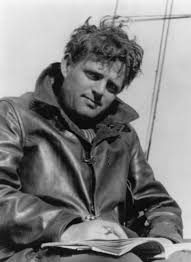
H.L. Mencken
The American Mercury/January, 1926
For six years past we have witnessed the effort of the Methodists and their fellow witch-hunters to force Prohibition upon the rest of us. That effort has been carried on with a fiery zeal and in complete disregard of common decency and the immemorial rights of free men. Congress and the State legislatures have been blackjacked and blackmailed into passing laws of extravagant harshness, and their enforcement has been put into the hands of professional gunmen, most of them obvious scoundrels and many of them downright felons. The Federal courts, gradually loaded with judges and district attorneys satisfactory to the Anti-Saloon League, have reduced the Bill of Rights to a jest, and some of them have been blind to perjury, and greatly facilitated blackmail. The Coast Guard, for more than a century an honorable service, has been converted into a seagoing force of snoopers and smellers. Officers have been detached from the Marine Corps, and put to the noisome work of spies and informers. And the whole obscene farce has been played out to the tune of raucous bellowings to God, with ecstatic shouts every time a head was cracked.
Yet everyone knows that Prohibition is not enforced today. Everyone knows that the supply of alcoholic beverages, in the cities and in the country, is still immense, and that it shows no sign of diminishing. And everyone knows that the effort at enforcement has not made any converts to Prohibition—that the overwhelming majority of intelligent and self-respecting Americans are against it now, as they were against it when the uproar began. The Methodists and their fellow Ku Kluxers know all these things quite as well as you and I know them, and the knowledge fills them with a blind, frantic rage. Read their papers if you want to find out what they are thinking. Read the press-sheets sent out by the Methodist Board of Temperance, Prohibition and Public Morals. Failure is written all over these precious publications, and with it an almost pathological fury. Any man who presumes to criticize Prohibition is a villain; every argument brought against it dishonest and immoral. There are, it appears, only two classes of citizens in the Republic: Methodists and criminals. No bolder attempt to set up a theocracy was ever made in this world, and none ever had behind it a more implacable fanaticism.
These Methodist dervishes are excellent politicians. Unluckily, it is their very skill at political science which now gives them their greatest disquiet. They know very well, as everyone knows, that they could get any new legislation they wanted out of the present Congress, however extravagant it might be, and however violently in contempt of the Bill of Rights, and however offensive to all civilized Americans. They have a political machine that functions in almost every congressional district, including some, even, in the large cities, and they know by long experience precisely how to make a congressman jump as they whistle. But they also know that the country itself is beginning to slip out of their hands, and that another assault upon its endurance might bring them to swift disaster. In other words, they are now afraid to exercise the power that they undoubtedly have in Washington. They bluster and bluff, and their legislative slaves talk darkly of “putting teeth” into the Volstead Act, but those teeth are false, and everyone knows it. One more turn upon the screw, and their power might suddenly vanish. The present farce is a nuisance, but it is at least bearable. If it were made any worse there would have to be an end of it.
So the Methodists step a bit softly, despite their highfalutin threats and noisy billingsgate—and their concrete programme, as it appears in their official organ, is mild enough. First, they propose that the Federal government gradually withdraw from enforcement work, and leave it to the states. Second, they plan a campaign against the anti-Prohibition “sneak propaganda” now so common in “fiction, humor, stage dialogue and other ordinary avenues of news and entertainment.” Third, they insist that no rogue be given a job as an enforcement officer unless he can prove that he is an actual Prohibitionist, i.e., a Methodist. Fourth, they propose to “claim space in the local press for educational propaganda.” Such is the programme that I lift from the Voice, the official paper of the Board of Temperance, Prohibition and Public Morals. There is not the slightest mention in it of Bishop Nicholson’s scheme to have at heretics with “gun and bayonet,” i.e., to murder all persons who refuse to yield obedience to the Methodist hierarchy. When the devil is sick, the devil a saint would be. It is a mild, pianissimo programme—but it will fail just as certainly as the old programme of blackmail, perjury and roughhouse.
II
Its first article is an abject confession of impotence. Federal enforcement, up to now, has been the apple of the Methodist eye. Its advantages were and are obvious. The Federal courts, from time immemorial, have been harsher than the state courts. They had behind them, before Prohibition fell upon them, a long record of efficiency; the offendor who fell into their hands was bumped off expeditiously, and punished severely. Their judges and prosecuting officers are not elected by the people, but appointed from Washington; they are thus much less responsive than State officers to local political influence and public opinion. Until very lately, their judges, in general, were palpably superior to the State judges in learning and dignity. In the first days of Prohibition they set out to enforce it mercilessly, and, as everyone knows, greatly strained the Bill of Rights in the process.
Yet they have failed ignominiously, and now the Methodist College of Cardinals proposes to abandon them, or, at all events, to take away nearly all their present work, including especially that petty part which offers most satisfaction to Methodist sadism, the Methodist lust to persecute. Will the State courts do any better? Will they give gaudier and more thrilling shows? I presume to doubt it. They have, in fact, failed to do so everywhere, even where the State laws are already harsher and more idiotic than the Volstead Act. Consider, for example, Indiana. The State is run by the Ku Klux Klan, which is to say, by the Methodist/Baptist bloc of moron fanatics. It has laws so drastic that every citizen is at the mercy of any blackmailer who chooses to harass him. It has repealed and repudiated the Bill of Rights. Yet Indiana refuses sturdily to become a Methodist Utopia. It remains wet, and is slowly growing wetter. Its State judges begin to revolt against the dirty work that is forced upon them. Its minority of civilized inhabitants prepare to clean house. In five years, and maybe sooner, the Anti-Saloon League will be as impotent in the State as it is in New York and New Jersey. The very excesses of the Methodist Cheka have made inevitable its overthrow.
So everywhere. State enforcement is not only a confession of failure; it is a begging of the whole question. What it amounts to, in the last analysis, is simply this: that wet States are licensed to remain wet. There is not much chance, indeed, that it will work effectively even in the so-called dry States. How many of them are actually dry? I point to two that swarm with Methodists, Baptists and other such vermin: Kansas and Georgia. According to E. W. Howe, a Kansan of nearly fifty years’ standing and a citizen of the highest repute, the State is now wringing wet from end to end, and especially in the rural districts. And Georgia? It is so wet that it actually serves as a reservoir of alcohol for the adjacent States: Alabama, Tennessee and even North Carolina, the paradise of moonshiners since apostolic times. There is, indeed, not a dry State in the Union. Reliable agents tell me that even such remote and forlorn cow-pastures as South Dakota and such deserts as Nevada are full of bootleggers, and that every country garage-keeper knows where dependable stuff is to be got.
The other articles of the Methodist programme are too silly to be worth discussing. Let some Methodist butter and egg man who believes that anti-Prohibition “sneak propaganda” should be expunged from “stage dialogue”—let some such Christian fancier of dramatic art put his money into a play in which all the jokes favor Prohibition. Or into a movie to the same effect. He will learn something, I believe, that is not in the official bulls of the Board of Temperance, Prohibition and Public Morals, nor even in the divine visions of the Methodist bench of bishops. Article 3 is obviously mere buncombe: the politicians have already taken the appointment of Prohibition agents from the Anti-Saloon League, and they are not likely to yield up their prerogative. There remains Article 4. All it amounts to is a proposal that the small papers that already take orders from the local pastors should be worked a bit harder. The large dailies, with few exceptions, are wet already, and will remain so. They have long since got over submitting to the threats and extortions of Methodist devil-chasers.
Thus the good Wesleyans stand, with ashes in their mouths and a far-away look in their eyes. Their great crusade has failed. It will drag on, of course, for years—at all events, so long as it is possible to shake down the Sunday-schools—but it has obviously lost the steam that made it so lively when it began. The consecrated brethren, in those days, were full of what the Kiwanians call pep. Moreover, they were expansive and in good humor. The club of the law was in their hands. All that remained was for them to lay on lustily, and so entertain their customers. But now they sweat only bile. The fortunes of war run against them. If they stop clubbing it will all be over. And if they club harder something very unpleasant may happen to them. Meanwhile, collections fall off. In every State the Anti-Saloon League is hard up, and even the Board of Temperance, Prohibition and Public Morals, I daresay, finds it harder than it used to be to squeeze the faithful assembled in Little Bethel.
What remains for fair men is to estimate the damage that these great Christian agencies have already done. They have introduced new corruptions into our politics, they have filled Congress and the State legislatures with cowards and scoundrels, they have reduced the Federal courts to confusion and futility, they have destroyed the guarantees of the Bill of Rights, they have filled the land with hordes of armed blackguards, they have fostered the growth of such common nuisances as the Klan, they have preached crusades of hate against all persons who do not share their theological imbecilities, they have libelled and defamed all Americans who are civilized, and they have made the United States ridiculous. So much we have paid already for letting an ignorant and unscrupulous religious oligarchy come to power among us. Such is the cost of Methodism to the Republic. Let every American remember the fact when the day of reckoning comes. H. L. M.
 The Archive