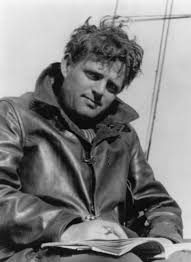
H.L. Mencken
The Morning Union/September 20, 1925
Those optimists who plan to put down Fundamentalism by educating Homo boobiens are on all fours, it seems to me, with that simpleton of fable who sought to lift himself over a stile pulling at his boot straps. Homo boobiens is a Fundamentalist for the precise reason that he is uneducable, That is to say, he is quite unable to grasp the complex evidences upon which the civilized minority bases its heresies, and so he seeks refuge in the sublime simplicities of revelation. Is Genesis incredible? Does it go counter to the known facts? Perhaps. But do not forget to add that it is divinely simple—that even a Tennessee judge can understand it.
Perhaps the process is a bit clearer on another plane: I choose that of medicine. As everyone knows, scientific medicine has made more progress since the middle of the last century than it had made in the 50 centuries preceding. Today it is rapidly divesting itself of what remains of its old superstitions; it is becoming scientific in the exact sense, and year by year its practical efficacy, its capacity to cure disease, is greater. Yet in this very time of its greatest progress it is confronted by ever-increasing hordes of quacks. The very day that news of insulin is in the newspapers Homo boobiens seeks treatment for his diabetes from a chiropractor.
Why? The reason seems to me to be simple. When an ignorant man goes to a doctor he wants not only treatment, but also enlightenment and consolation. He wants to know what is the matter with him, and how it is to be cured. Now, try to imagine a medical man explaining to him the nature of diabetes and the action of insulin. If you can imagine it, then you have an imagination, indeed. The whole thing is inordinately complex. The explanation must be itself explained. To get to the bottom of it, to understand it in any true sense, is a sheer impossibility to a man not specially trained, and that training may be given only to men of unusual intelligence. But any moron can understand the explanation of the chiropractor. It is idiotic, but, like most things that are idiotic, it is also beautifully simple. So the moron grasps it– and cherishes it.
II.
Something of the same sort goes on in department of divinity. The clodhopper’s objection to the hypothesis of evolution is not primarily that it is heathenish: that, indeed, is only an afterthought. His primary objection is that it is complicated and unintelligible—in the late Martyr Bryan’s phrase, that it is “stuff and nonsense.” In order to understand it a man must have a sound grounding in all the natural sciences; he must bring to the business an immense and intricate knowledge. And in order to get that grounding he must have a mind capable of taking it in.
Obviously, such minds are not common—that is, viewing the population as a whole. In the cities, where the sharpest fellows congregate they may run to four or five per cent of the total, but in the back reaches of the land, where the population has been degenerating for generations, they are probably far below one per cent. The fact was brilliantly on display at the late trial of the infidel Scopes at Dayton, Tenn. What impressed me most, watching that trial through long sweaty days, was the honest bewilderment of the assembled yokels. They simply could not understand the thing that Scopes was accused of teaching. Its veriest elements were as far beyond their comprehension as the music of Bach or the theory of least squares.
Nor was it only the obvious near ants who showed that pathetic puzzlement. The judge on the bench was plainly flabbergasted. His questions wore those of a man completely ignorant, and, what is more, of one completely unable to learn. When Darrow attempted to explain the A B C of the evolutionary hypothesis to him he sat there with his mouth open, blinking his eyes uneasily. The thing beyond his powers, and so he quite naturally concluded that it was senseless and against God. An explanation of the nature and causes of diabetes would have dismayed and alarmed him in exactly the same manner.
III.
The central difficulty lies in the fact that all of the sciences have made such great progress during the last century that they have got quite beyond the reach of average man. There was a time when this was not so. Even down to the end of the 18th century any man of ordinary intelligence could understand every scientific concept in good repute, even in astronomy. In medicine the thing was quite simple. Read the memoirs and biographies of the period—for example, Boswell’s “Johnson”—and you will find every sick man disputing with his doctor as an equal, and often driving the good man into an uncomfortable corner.
But with the dawn of the 19th century all that began to change. Chemistry slowly took on the character of an exact science; physics, stimulated by the discovery of electricity, made vast and rapid progress; geology began to stand on its own legs; biology was born. More important, the sciences began to interchange facts and ideas; it was no longer possible for a zoologist, say, to be ignorant of chemistry, or for a pathologist to neglect physics. There followed an era of synthesis, culminating dramatically in Darwin’s publication of “The Origin of Species,” and science was reborn.
Simultaneously it threw off all its old diffidence, its ancient subservience to general opinion, and especially to theological opinion. The earliest scientists of the whole world was yet a sort of Tennessee. But the later revolutionists promulgated their heresies boldly, and met the ensuing, uproar bravely. In England it was Huxley who led them; in every civilized. country there was another like him. When the battle was over science was free at last, for the first time in the history of man. Since then no scientist, coming upon new knowledge in his laboratory or in the field, has had to pause before announcing it to sound out the bishop.
IV.
This freedom, as everyone knows, has immensely increased what may be called the momentum of scientific research. Discoveries have followed one another at a rapid pace, and some of them have been of the first importance. There is scarcely a science that has not been completely revolutionized since 1860, and to the old ones many new ones have been added. Thus the body of scientific knowledge has grown immensely, and as it has grown it has taken on an ever greater and greater complexity. Nobody of today could hope to sweep the whole of the sciences, as many men did so lately as 1850. And no man can take in all that even one science has to say without long and difficult training, and a special aptitude for that sort of knowledge.
Meanwhile man in general has lagged far behind. He remains, indeed, precisely where he was when all this tremendous advance began. His mind is simple; his talents are few. In the days when the sciences themselves were simple he could be made, perhaps, to understand their elements—in other words, he was educable. But today the thing is quite beyond him. No conceivable training could convert an ice wagon driver into a pathologist or a hillbilly into a mathematical physicist. But the former may become a chiropractor and the latter may become a rustic judge. And there we are.
The fundamental fallacy is the assumption that all this is not true—that Homo boobiens is still capable of grasping anything and everything that goes on in the world. It is an imbecility, and hence dear to pedagogues. They are responsible, at bottom, for Fundamentalism. Half-educated themselves, they have sought to crowd an impossible education upon their victims. The young moron in the village high school must be taught geology, paleontology, biology—all completely incomprehensible to him, and both incomprehensible and sinister to his pa. No wonder his pa sounds the fire alarm, rushes to the village tabernacle, and appeals for succor to the Lord God Jehovah!
 The Archive