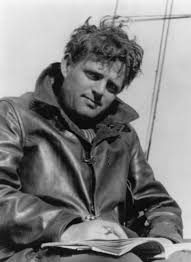
H.L.Mencken
The Nation/July 6, 1921
The American Novel. By Carl Van Doren. The Macmillan Company.
The literature of the United States is still at nurse, and so American criticism continues to give forth a strong aroma of apologetics. It is necessary, first of all, to convince the somewhat aloof and agnostic reader that the thing discussed is really worth discussing. This spirit broods over all our academic criticism, some of which, when it tackles the depressing question of, say, Longfellow, or Prescott, or George Boker, grows positively lyrical. It even creeps into more artful stuff, for example, John Macy’s lone and brilliant book, the Howellsiad of Alexander Harvey, and the present treatise by Carl Van Doren. The nineteenth century was the century of the novel—and if we produced no novels of the first rank while it dragged and snuffled along, then we must throw ourselves upon our sparse poetry, our flabby drama, and our huge stacks, elevators, and Bush Terminals of short stories. Accordingly, Mr. Van Doren addresses himself gallantly to establishing the dignity of the American novel, not so much by direct argument as by sly suggestion. Does he succeed? Well, I can only report that my own respect for that American novel is appreciably greater than it was before I read him. He is intelligent; he is persuasive; he is readable; most of all, he is quite remarkably learned. Here we have something far above and beyond the usual scholastic compilation, by a tutor out of a row of textbooks. The man has read the novels themselves—even Simms’s “The Yemassee,” Bird’s “Nick of the Woods,” and Mrs. Stowe’s “The Pearl of Orr’s Island”—and more than once, describing them, he implants the strange suspicion that this or that ancient tale, for long embalmed as a mere name in a dull hornbook for sophomores, would repay search and unearthing and the lazy devotion of a summer afternoon. For one, I come away with a new curiosity to apply my eye to two of them: Col. John W. De Forest’s “Miss Ravenel’s Conversion from Secession to Loyalty” and Joseph Kirkland’s “Zury.” The titles used to make me snicker; they are somehow idiotic. But now I snicker no more.
Mr. Van Doren is the first critic to separate the American novel from the general stream of the national literature. The device makes for clarity. With Irving and the historians cleared away it is easier to examine Cooper and Hawthorne at leisure; with Poe and Emerson put aside, there is elbow-room for the sentimental novelists of the days before the Civil War; with the appalling apparition of Whitman laid, one is able to concentrate upon Howells and Henry James. Having so prepared his field, Mr. Van Doren proceeds to plat it geographically and historically, and the result is a chronicle that relates itself at every point to the gradual development, not only of the mere literature of the United States, but also of the general life of the United States. The book is thus quite free from the usual academic remoteness and bloodlessness. It is a history of ideas, but they show themselves in events, and often they are palpably derived from events. Cooper was shaped by his time; as it changed, he changed, and more than once—a platitude, but too often forgotten. The American dime novel had its origins in historical processes, and they are worth tracing. Howells and Mark Twain represented, in their sharp disparity, a conflict that was remaking the American character. The romantic movement of the later nineties was as much a part of the national history as the Spanish-American War. And the rise of naturalism at the beginning of the new century was a symptom of a change so profound that its nature is even yet much misunderstood. Without burdening his story and making it too heavily “scientific,” Mr. Van Doren gets into it a sharp sense of this larger ebb and flow of ideas. His generalizations are cautious, but they are sound. He has converted the history of the novel in the Republic from a record of isolated and unintelligible phenomena, which it too often is in the literature books, into a record of a coherent and logical evolution, with even some of the future steps discreetly foreshadowed.
As for his judgments, they are devoid of pontifical dogmatism and usually immediately convincing. His discussion of Henry James is an excellent piece of criticism, for without failing to savor even the least virtue of the artist, he exhibits clearly the fatal artificiality and superficiality of the man. James was a biologist who devoted his whole life to a meticulous and even furious study of the wings of butterflies; that there were also jackasses, hyenas, codfish, Congressmen, lice, cobras, and scorpions in the world apparently never occurred to him. Within his limits he was superb, but so is a hummingbird within hers; we eat, however, ducks. The same air of the myopic don hung about Howells, despite his own belief that he was a daring and revolutionary fellow. He converted his chronicle of life in These States into a sort of pastoral in superior journalese—but he always forgot that the farmer has mud on his boots and a bad stomach, and that pigs smell almost as badly as Slovaks, and that the principal business of a cow is parturition. Both were as un-American as a cathedral or a string quartet. Neither, I believe, is read today. James is studied, but not read; he becomes a sort of superior vice, like the music of Mahler or the painting of Cezanne. As for Howells, the very names of his books begin to fade. The best of him, I believe with full orthodoxy, is in “The Rise of Silas Lapham.” Well, put “The Rise of Silas Lapham” beside “The Titan.” What, in brief, is the difference? It is the difference between a novel that peeps into the parlor-window and a novel that turns the whole house inside out. The technique of Howells was infinitely beyond the technique of Dreiser; he was, in fact, a craftsman of such surpassing dexterity that he was diverting even when he was downright silly. But the great passions that move and torture human beings in the world were quite beyond his grasp; he never experienced them, and he could not comprehend them.
I incline to think that Mr. Van Doren is a bit too kind to Cooper. The temptation here is very severe, for Cooper remains the one American novelist who is universally read in foreign parts; even Mark Twain is a great deal less known. But I doubt that his standing abroad is quite as dignified as the wide dispersion of his books seems to indicate. His rank, in truth, is much closer to that of Eugene Sue than to that of Flaubert or Turgenev; he is read as a sort of licit dime novelist, and chiefly by the young.
But this is criticism of Cooper rather than of Van Doren. Mr. Van Doren is generous, but by no means maudlin; he knows Cooper’s principal deficiencies, and states them plainly. The general effect of his study of the novel is that of clear light. It is well-ordered, it reveals extraordinary knowledge of its subject, and it is written gracefully and ingratiatingly. In brief, a sound and valuable book—and an excellent overture to the work on living American novelists that is to follow.
 The Archive