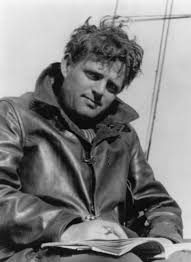
H.L. Mencken
The Sunday Record/August 15, 1926
One of the strangest delusions of criticism is to be found in the notion that there is such a thing as realism—that is, realism grounded on objective fact in the same way that a scientific monograph, say, or the report of a law trial, is grounded upon objective fact. Nothing of the sort is imaginable. The arts do not, cannot deal with reality, for the moment they begin to do so they cease to be arts. This function is something quite different, and even antagonistic. It is not to photograph the world, but to edit and improve the world. It is not to embrace the whole, but to select and exhibit the salient part. It is not to echo life, but to show a way of escape from life.
But perhaps I succumb to phrases. What I mean to say, in plain language, is that no genuine artist would paint a picture if he were completely satisfied with the thing he depicts. His dissatisfaction is precisely what makes him an artist. He is moved by a yearning to put in something or take out something, to make a comment, to frame a gloss upon the word of God—or, as it is usually put, to express himself. And the measure of his virtue as an artist lies in that contribution, not in what he takes bodily from nature. If what he has to say is novel and charming, then he is a good artist. If what he has to say is trite and dull, then he is a bad one. The first and last thing is what he has to say.
Certainly all this should be obvious, but for some reason or other it seems to be not so. I have read of late a long essay on James Joyce’s “Ulysses,” praising it in high, astounding terms as a complete and exact record of a day in the life of its people. It is, of course, nothing of the sort. At least nine-tenths of its materials came, not out of the Bloom family, but out of James Joyce. Even the celebrated unspoken monologue of Marion at the end is his, not hers. There are long sections of it that even the professional psychologists, who are singularly naive, must detect as false—that is, false for Marion, false for a woman of her position, perhaps even false any woman. But they are not false for Joyce.
Some years ago I enjoyed the somewhat laborious honor of reading, in manuscript, a new novel by a well-known American novelist, greatly esteemed for his fidelity to the metaphysical bugaboo known as the truth. It was, in more than one way, a work of high merit, but it had a number of obvious defects. One was a painful superabundance of irrelevant detail. Another was an excess of detail of a sort likely to arouse the libido of the Comstocks, and so get the book a bad name.
I called this last blemish to the attention of the author, pointing especially to a scene depicting what has since come to be called a petting party. At once he rose to high dudgeon.
“You are,” he roared, “asking me to make my story false. It is like asking a woman to cut off the ears of her child. What you object to actually happened. It had to happen. It was inevitable. I defy you to describe a petting party without mentioning it.”
I did not accept the challenge, but proceeded by a more indirect route. That is to say, I described the same petting party in different terms. I included all the details that my eminent friend had included, but then went on to include some details of my own. The first brought him up.
“But you can’t…” he began, in some agitation.
“Did it happen?” I demanded. “Am I going outside the record?”
He retreated behind indignation and I proceeded to my second canto. While I was in the midst of my fifth or sixth he returned and proposed peace.
“You are quite right,” he said. “It is impossible to tell it all. I thought I was doing it, but I see now that I really wasn’t. Every passage you have objected to comes out.”
But this was going too far, and so I protested in turn.
“Not at all,” I said. “If they are true to you, then they stay in. It is your book, not mine. It doesn’t represent objective reality; it represents your reaction to reality. Did those passages seem sound and inevitable when you wrote them? Then stay in.”
So they stayed in, and the Comstocks duly raided the book.
Thus argument, as usual, led only to contradiction, enmity and disaster. On another such occasion the consequences were less deplorable. I have another friend, a distinguished anatomical artist, whose drawings are celebrated for their precise and merciless fidelity to nature. He paints landscapes quite as well as livers and lights, but in the same way. He is strongly against the new movement in painting, and believes that it is the artist’s highest duty to present the object depicted exactly as it stands.
One day I told this gentleman that I’d like to have a specimen of his work, and he presented me forthwith with a truly marvelous drawing. It represented, he told me, a kidney in the last stages of some dreadful disease, and was to be reproduced in a forthcoming medical work. Knowing nothing of kidneys, I could admire it as a work of art, and as such seemed to be magnificent. So greatly did I esteem it that I had it framed and hung it in my office, that visiting customers might share my pleasure in it.
The first visitor to see it was a critic of painting. He anchored himself before it and gazed at it for ten minutes.
“How do you like it?” I asked at length.
“It is superb,” he said. “Leonardo himself was not a better draftsman. You have a masterpiece. Where did you get it?”
“Do you know what it represents?” I asked,
“No,” said the critic. “Who cares what it represents? It may be whatever you choose to call it. All it represents to me is a first-rate draftsman. The fellow can draw. And he has something say.”
Whereupon, in the manner of art critics, my friend proceeded to a disquisition unintelligible to me. But one thing, at least, I understood: that this master realist had not fetched him by realism.
In so far as it has any meaning at all, indeed, realism simply means opposite of consciously false. Daisy Ashford’s “The Young Visiters” was brilliantly realistic, and in the best sense, though it was full of palpable absurdities. But Daisy did not intend them to be absurdities. She felt them as truths, and so she was a realist. The world she depicted was authentically the world that she saw. And what she added to it represented exactly her private view of the way it might be made better and more charming.
In this sense–the only true sense—all novelists of any merit whatsoever are realists. Joseph Conrad was, though he dealt habitually with strange people and unfamiliar situations, often near the border line of the fantastic. Anatole France was, though he more than once crossed the line. Realism is simply intellectual honesty in the artist. The realist yields nothing to what is manifestly not true, however alluring. He makes no compromise with popular sentimentality and illusion. He avoids the false inference as well as the bogus fact. He respects his materials as he respects himself.
But all that certainly doesn’t make him a photographer. In the world as he sees it there are facts that lie outside him and facts that lie within, and they are of equal importance. It is his contribution that converts a dead external reality into a living inner experience, and conveys his own emotion to the reader. If that emotion of his is common and shoddy, then what he writes will be common and shoddy, but if it has dignity in it, and some echo of the eternal tragedy of man, then he will produce a genuine work of art. What ails most of the so-called realists, particularly, in this great republic, is simply that they are inferior men. They see only what is visible to an ice wagon driver. They bring to it only the emotional responses of a trolley conductor.
 The Archive