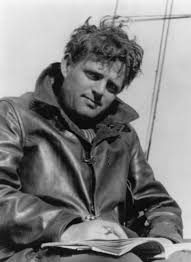
H.L. Mencken
Springfield Morning Union/March 1, 1925
THE reputation of Ambrose Bierce, like that of Edgar Saltus, has always had something occult and artificial about it. He has been hymned in a passionate, voluptuous way by a small band of disciples, and he has been passed over altogether by the great majority of American critics, and no less by the great majority of American readers. Certainly, it would be absurd to say that he is generally read, even by the intelligentsia. Most of his books, in fact, are out of print and almost unobtainable, and there is little evidence that his massive collected works, printed in 12 volumes between 1909 and 1912, have gone into anything even remotely approaching a wide circulation.
I have a suspicion, indeed, that Bierce did a serious disservice to himself when he put those 12 volumes together. Already an old man at the time, he permitted his nostalgia for his lost youth to get the better of his critical faculty, never powerful at best, and the result was a depressing assemblage of wornout and flyblown stuff, much of it quite unreadable. If he had boiled the collection down to four volumes, or even to six, it might have got him somewhere, but as it was his good work was lost in maze of bad and indifferent work. I doubt that anyone save the Bierce fanatics aforesaid has ever plowed through the whole 12 volumes. They are filled with epigrams against frauds long dead and forgotten, and echoes of old newspaper controversies, and experiments in fiction that belong to a dark and expired age.
In the midst of all this blather there are some pearls—more accurately, there are two of them. One consists of the series of epigrams called “The Devil’s Dictionary,” the other consists of the war stories, commonly called “Tales of Soldiers and Civilians.” Among the latter are some of the best war stories ever written—things fully worthy to be ranged beside Zola’s “L’Attaque du Moulin,” Kipling’s “The Taking of Lungtungpen,” or Ludwig Thoma’s “Ein Baryischer Soldat.” And among the former are some of the most gorgeous witticisms in the English language.
II.
Bierce, I beliève, was the first writer of fiction ever to treat war realistically. He antedated even Zola. is common to say that he came out of the Civil War with a deep and abiding loathing of slaughter—that he wrote his war stories as a sort of pacifist. But this is certainly not believed by anyone who knew him, as I did in his last years. What he got out of his services in the field was not a sentimental horror of it but a cynical delight in it. It appeared to him as a sort of magnificent reductio ad absurdum of all romance. The world viewed war as something heroic, glorious, idealistic. Very well, he would show how sordid and filthy it was—how stupid, savage and degrading.
But to say this is not to say that he disapproved it. On the contrary, he vastly enjoyed the chance it gave him to set forth dramatically what he was always talking about and gloating over: the infinite imbecility of man. There was nothing of the milk of human kindness in old Ambrose; he did not get the nickname of Bitter Bierce for nothing. What delighted him most in this life was the spectacle of human cowardice and folly. He put man, intellectually, somewhere between the sheep and the horned cattle, and as a hero somewhere below the rats. His war stories, even when they deal with the heroic, do not depict soldiers as heroes; they depict them as bewildered fools, doing things without sense, submitting to torture and outrage without resistance, dying at last like hogs in Chicago, the literary capital of the United States.
So far, in this life, indeed, I have encountered no more thoroughgoing cynic than Bierce. His disbelief in homo sapiens went even farther than Mark Twain’s; he was quite unable to imagine the heroic, in any ordinary sense. Nor, for that matter, the wise. Man, to him, was the most stupid and ignoble of animals. But at the same time the most amusing. Out of the spectacle of life about him he got an unflagging and Gargantuan joy. The obscene farce of politics delighted him. He was an almost amorous connoisseur of theology and theologians. He howled with mirth whenever he thought of a professor, a doctor, or a husband. His favorites among his contemporaries were such superb zanies as Bryan, Roosevelt, and Hearst.
III
Another character that marked him, perhaps flowing out of this same cynicism, was his curious taste for the macabre. All of his stories show it. He delighted in hangings, autopsies, dissecting rooms. Death to him was not something repulsive, but a sort of low comedy—the last act of squalid and rib rocking buffoonery. When, grown old and weary, he made his way to Mexico, marched into the revolution then going on, and had himself shot, there was certainly nothing in the transaction to surprise his acquaintances. The whole thing was typically Biercian. He died happy, one may be sure, if his executioners made a botch of dispatching him—if there was a flash of the grotesque at the end.
I once enjoyed the curious experience of going to a funeral with him. His conversation to and from the creamatory was superb—a long series gruesome but highly amusing witticisms. He had tales to tell of crematories that had caught fire and singed the mourners, of dead bibuli whose mortal remains had exploded, of widows guarding the fires all night to make sure that their dead husbands did not escape. The gentleman whose carcass we were burning had been a literary critic. Bierce suggested that his ashes be molded into bullets and shot at publishers, that they be presented to the library of the New York Lodge of Elks, that they be mailed anonymously to Ella Wheeler Wilcox. Later on, when he heard that they had been buried in Iowa, he exploded in colossal mirth. The last time I saw him he predicted that the peasants would dig them up and throw them over the state line. On his own writing desk, he once told me, he kept the ashes of a near relative. I suggested idly that the ceremental urn must be a formidable ornament.
“Urn, hell!” he exclaimed, “I keep them in a cigar box!”
IV
There is no adequate life of Bierce, and I doubt if any will èver be written. His daughter has forbidden the publication of his letters, and shows little hospitality, I am told, to volunteer biographers. One of his disciples, George Sterling, has written about him with great insight and affection, and another, Herman George Scheffauer, has greatly extended his fame abroad, especially in Germany. But neither seems disposed to do him in the grand manner, and I know of no one else competent to do so. He liked mystification, and there are whole stretches of his life that are unaccounted for. His end had mystery in it, too. It is assumed that he was killed in Mexico, but no eyewitness has ever come forward, and so the fact, if it is a fact, remains hanging in the air.
Bierce followed Poe in most of his short stories, but it is only a platitude to say that he wrote much better than Poe. His English was less tight and artificial; he had a far firmer grasp upon character; he was less literary and more observant. Unluckily, his stories seem destined to go the way of Poe’s. Their influence upon the modern short story, at least on its higher levels, is almost nil. When they are imitated at all, it is by the lowly hacks who manufacture thrillers for the cheap magazines. Even his chief disciples, Sterling and Scheffauer, do not follow him. Sterling is a poet whose glowing romanticism is at the opposite pole to Bierce’s cold realism, and Scheffauer, interested, passionately, in experiment, has departed completely from the classicism of the master.
It is astonishing that his wit Is so little remembered. In “The Devil’s Dictionary” are some of the most devastating epigrams ever written. “Ah, that we could fall into women’s arms without falling into their hands.” It is hard to find a match for that in Oscar himself. I recall another: “Opportunity: A favorable occasion for grasping a disappointment.” Another: “Once: enough.” A third: “Husband: One who, having dined, is charged with the care of the plate.” A fourth: “Our vocabulary is defective; we give the same name to woman’s lack of temptation and man’s lack of opportunity.” A fifth: “Slang is the speech of him who robs the literary garbage cans on their way to the dump.”
But I leave the rest to your own exploration.
 The Archive