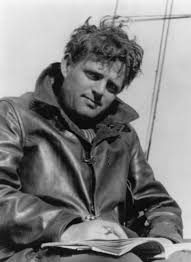
H.L. Mencken
Baltimore Morning Sun/December 14, 1931
What with their grandiose effort to stampede and paralyze Baltimore with threats of boycott, ruin and desolation, their even more grandiose effort to terrify the sinful Sunpapers into leaping to the mourners’ bench and accepting lynching as a Christian sacrament, and their announced determination, come what may, to save the Republic and the True Faith from the hellish conspiracies of the Russian Bolsheviki, the Salisbury fee-faw-fums are giving a very gaudy show–so gaudy, indeed, that I marvel to see Baltimoreans so indifferent to it. It is quite as good as any of the similar shows that are set up from time to time in the deeper reaches of the Bible Belt, and it has the prime virtue of being all our own. But very few Baltimoreans seem to be aware that it is going on, and those few take no apparent interest in it.
The local papers of the lower Shore, for a week past, have been bursting with incandescent and highly instructive stuff. They have not only mirrored faithfully the emotions of a pious and patriotic people at an heroic moment; they have also printed a number of new facts about the sublime event of December 4. One item, which I take from the Berlin-Ocean City News, is that the ceremony was not performed in churchly silence, as the Sunpaper’s correspondents reported, but to the tune of “kicking and screaming.” Nor was this kicking and screaming, it appears, done by the lynchee, for he was in a strait-jacket and had his head tightly bound, but by the six Salisbury boosters who led the lynchers.
Another interesting item is that the rope was not flung over the fatal tree by “several men,” as the lying Sunpaper reported, but by a gallant Salisbury “schoolboy”—no doubt a graduate of some seminary in ropecraft, chosen for his talent. A third item I lift from the celebrated Marylander and Herald of Princess Anne, a leader in the current movement to bust Baltimore by boycott:
“One member of the mob took his knife and cut off several toes from the Negro’s feet and carried them away with him for souvenirs.”
What has become of these souvenirs the Marylander and Herald does not say. No doubt they now adorn the parlor mantelpiece of some humble but public-spirited Salisbury home, between the engrossed seashell from Ocean City and the family Peruna bottle. I can only hope that they are not deposited eventually with the Maryland Historical Society, or sent to Archbishop James Cannon, Jr., the most eminent of all the living natives of Salisbury.
II
MY remarks in this place on December 7, under the heading of “The Eastern Shore Kultur,” seem to have upset the Marylander and Herald, for it devotes the better part of two columns of black type on its first page to a calm and well-reasoned refutation of them. The essence of this refutation is that, along with the Hon. Bernard Ades, LL.B., I am affiliated with “anarchist and Communist groups, composed for the most part of men and women from the lowest strata of the mongrel breeds of European gutters.” To this the Cambridge Daily Banner adds the charge that I am a lyncher myself, for didn’t I once propose to take William Jennings Bryan “to the top of the Washington Monument in Washington, disembowel him, and hurl his remains into the Potomac”?
This proposal, unfortunately, I can’t recall, but no doubt the editor of the Daily Banner has a better memory than I have. In any case, I am constrained to acknowledge it on the general ground that a theologian is capable of anything. The Worcester Democrat, of Pocomoke City, though it does not mention my ghastly designs on Dr. Bryan, joins the Daily Banner in denouncing me as a lyncher, and offers to bet that both Dr. Edmund Duffy, the Sunpaper’s wizened cartoonist, and I “are cussing the luck which prevented [us] from getting [our] hands on the rope that swung ‘Mister’ Williams to a tree.” Going further, it ventures the view that both of us could have danced with glee around the bonfire of human flesh; could easily have imagined a barbecue was on hand; could have eaten the flesh of the carcass, and smacked [our] lips over the fine flavor of the gasoline. This fancy, which I leave to the Freudians, warms up the Pocomoke brother, and he proceeds as follows:
“Mencken’s soul, if he has one, must have come from a hyena, a rattlesnake, or a skunk. There must have been present at his birth a flock of leathern-winged bats, a nest of rattlesnakes, a swarm of hornets, and a colony of toad frogs–all contributing to his special form of life. There must have been some such scene attending his later existence as portrayed by the immortal William where the witches concoct a charm made up of poisoned entrails, fillet of a fenny snake, eye of newt, toe of frog, wool of bat, tongue of dog, adder’s fork. blind worm’s sting, lizard’s leg, scale of dragon, and all cooled with baboon’s blood. With all this, his body was smeared good and plenty, and behold! the creature in its present form!”
III
I reprint these brief extracts from a diatribe that runs on to a column because they serve very well to show what effect the lynching spirit, if it is allowed to go unchecked, has upon the minds of simple people—even upon the more literate minority thereof. If a man who is apparently familiar with respectable literature can write so, what is one to look for in the common run of low-down politicians, prehensile town boomers, ignorant hedge preachers, and other such vermin? That a community so debauched is in a mood to restore the orderly processes of civilized government is certainly hard to believe. Inflamed to frenzy by the very men who ought calm it, it is bound to proceed to other outrages, and unless the decenter people of the region regain the upper hand such outrages will undoubtedly follow.
These decenter people, I should add in fairness, have not been wholly silent. Even some of the newspapers of the Shore, though they are under cruel pressure from the reigning witch burners, have spoken out courageously against the Williams lynching. One such is the Salisbury Advertiser. Though it seeks to the blame for the atrocity upon the Communists, it yet denounces plainly “an ugly blot upon the name and reputation of our peace-loving Christian community which it will take generations to live down, and [which] cannot ever be erased,” and goes on to argue that, by now, even “those having part in the consummation of the deed” are probably ashamed of themselves.
The Star and the News of Elkton, in the upper part of the Shore, speak even more plainly, and especially the former, which does not mention the Communists, but condemns the lynching roundly as the “diabolical act” of a “depraved mob,” and calls upon Governor Ritchie and the Wicomico county authorities “to bring the perpetrators of this unspeakable crime to justice, and by doing so give notice that such vicious outrages will not be tolerated in Maryland.”
IV
The question before the house is thus quite simple. It is whether the Salisbury lynchers will be permitted to escape punishment for their crime, and so inspire a long series of like atrocities among similar town boomers, or whether the decent people of the lower Shore will band themselves together effectively and see that the guilty are brought to heel. Every schoolboy in Salisbury knows who was in the mob. The names of those who dragged the victim from the hospital, blind and helpless, are known, and so is the name of the hero who made off with the souvenir toes. The leaders are on public display at this moment, bathed in moron admiration.
The Salisbury Advertiser is probably right: some of the very men who ran with the pack on December 4 have by now found their “sympathy with such illegal procedure” oozing out of them. There were plenty of other Salisburians who were on the other side from the start. From some of them, in fact, I have received letters during the past week. What remains to be done is to organize this decent opinion against the scoundrels who disgraced the town, and to bring them to justice as quickly as possible lest civilized government be abandoned altogether on the lower Shore. This may take some time, but it can be done if a few resolute leaders step forward, giving notice to Ku Kluxry that they are not afraid. The chief lynchers are already very uneasy, and they have reason to be.
Meanwhile, their attempt to becloud the issue by ranting against Communists and depicting the Sunpapers as Red need deceive no one. There were open threats of lynching against Yuel Lee in Snow Hill before any Communist appeared on the Shore, and they were heard again at Cambridge when it was proposed so unwisely to try him there. The judges and district attorneys at Cambridge actually asked Governor Ritchie for troops so early as November 13. In brief, a lynching was brewing among the Shore Ku Kluxers, and everyone knew it. That Williams happened to be the victim instead of Lee was only an accident. The will to lynch was already there.
That the murder of Mr. Elliott was a brutal and revolting one no one denies. Nor does anyone blame his son for attempting, on discovering it, to dispose of his murderer. Any other son would have done the same thing. But it is one thing to yield thus to a sudden and natural passion, and quite another to plan and execute a deliberate and inexcusable crime. The sole question to be determined is whether the civilized people of Maryland will permit such crimes to be perpetrated with impunity. The Salisbury lynchers must make up their minds to the fact that that question is not going to be got rid by puerile gabble about Communist plots and childish efforts to alarm their betters.
 The Archive