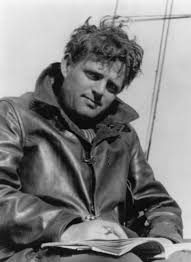
Ray Stannard Baker
Outlook/July 27, 1895
Four race-tracks with pool-selling and other gambling adjuncts were in full operation in or near Chicago, and thousands of persons made a business of “playing the races.”
The city government was given over completely to the spoils system, and the payrolls contained, not only the names of known thieves, gamblers, and saloon-keepers, but, as recent investigations have shown, there were many ward politicians and “heelers” who illegally drew pay from the city. Some of them have been recently indicted. A number of notoriously corrupt men were on the police force, and the City Council was busy selling franchises.
Most of the streets were wretchedly filthy, especially in the outlying portions of the city. And yet an immense amount of money was expended by the department having in charge the work of cleaning them.
Massage “parlors,” with women attendants, and other places of unmentionable bestiality were running unrestricted.
The Health Department was so lax in its inspections that many of the smaller bakeries and milke depots were allowed to do business in foul basements.
At the November elections of last year there were riots in many precincts; voters were illegally arrested; one man was killed and about a hundred injured, mostly by gangs of city employees assisted by the semi-criminal elements. The police did not raise a hand to prevent disturbances.
A general demoralization prevailed among the charity organizations of the city. The various societies overlapped one another in their work, and there were constant jealous bickerings. Thus it happened that some of the needy were not helped at all, and some received more than their share. Doubtless, this condition of affairs prevented many persons from contributing as much as they otherwise would.
It was when these civil and social abuses were at their worst that the Civic Federation, which had been perfecting and strengthening the organization for months, began its crusades. Its accomplishments since then have been simply wonderful.
It is now safe to say, for the first time in many years, that there is not a gambling-house in the city of Chicago. Even “boarding-house games” have been raided and the players fined. This result was only attained by a desperate fight in which, not only the gamblers, but the police force, the City Hall administration, and the justices of the peace were arrayed against the Civic Federation. After the Committee on Gambling, headed by the Rev. W. R. Clarke, had accumulated all the evidence through special detectives, it had to have its own special constables and deputy sheriffs appointed, and it kept up the raiding, week after week, pursuing the gamblers from place to place until they finally gave up. In the course of the campaign more than three hundred of them were arrested, and much property was destroyed. All of this work was enthusiastically indorsed in several great mass-meetings of citizens.
The four race-tracks were all closed this spring after a lively conflict, and for some time there was not an open race-track nearer to Chicago than St. Louis. Recently, however, the horsemen have opened a course in Milwaukee. A strong Federation lobby in the Legislature, last winter, defeated the gamblers’ lobby and prevented the passage of a law legalizing pool-selling.
The spoils system in the city government and in the government of Cook County has given place to a business-like civil service. The bill providing for the merit system in making appointments was forced through the Legislature by the Political Committee of the Civic Federation, aided by delegations from fifteen of the principal clubs of the city, and the question was then submitted to the people at the April election and carried by more than 50,000 majority. The Federation had watchers at many of the worst precincts, and not only were riots prevented, but such perfect order prevailed that there were complaints from only three precincts out of 945. Doubtless, this peaceful condition of affairs was due largely to the fact that the sum of $50,000 was raised by popular subscription for the punishment of the rioters at the previous election. Seventy-seven men were indicted through the efforts of the Civic Federation attorneys; one was sent to the penitentiary, and many others pleaded guilty and were fined. This had a salutary effect in preventing disturbances at the polls in the April election.
Previous to this election, the Civic Federation conducted a vigorous campaign for reform, held many meetings, and billed the city with posters; it succeeded so well that number of the most notorious boodlers in the City Council were retired, and a Mayor was elected who has so far evinced a determination to further the best interests of the city. Investigations of the bakeries, the milk depots, and the meat supply were made by a committee, and the Health Department was compelled to abate some of the worst abuses.
The downtown district is cleaner today than it ever was before in the history of the city. Not long ago the Civic Federation organized a street-cleaning brigade, consisting of about seventy-five men and ten wagons. The men were all uniformed and kept at work constantly in a small district in the heart of the city. Heavy iron receptacles for waste paper were also placed on the lamp-posts—all at the expense of the Civic Federation. The object of this movement is to show that the streets can be kept clean, if the work is properly conducted. Much popular enthusiasm in the enterprise has been awakened, and some of the foremost men and women in the city are interested in seeing it succeed. Outside of the business portions of the city, the Civic Federation employs a small army of inspectors to watch the streets and alleys, and insists that the city contractors do their duty. In the Nineteenth Ward, one of the foulest in the city, Miss Jane Addams, of Hull House, has recently been appointed City Inspector; and she has already worked a marvelous transformation in the condition of the streets and alleys in her territory. It is worthy of note that, since these things have come to pass, several contractors have thrown up their contracts in disgust. When they were forced to do what they agreed to do, there was no money in the business. The Civic Federation works in complete harmony with the Street-cleaning Department of the city. Recently 200,000 copies of the abbreviated sanitary laws of Illinois have been printed, and they will be placed in every kitchen in the city for the enlightenment of careless servant-girls.
Many massage “parlors” have been raided and closed up, and several dealers in vile books have been arrested and prosecuted. Other places of shame have been driven out of business.
The charity work of the city has been completely reorganized, and the various societies united in a bureau conducted by the Civic Federation. Comprehensive lists of the needy families of the city are kep, with the name of the society which attends to each, thus preventing duplicating and the conflicts which are its necessary attendant. This bureau was the outgrowth of the extensive work of relief carried on by the philanthropic department of the Civic Federation, when the army of the unemployed besieged Chicago in the winter of 1893-94. About $135,000 was raised and expended at that time.
The Civic Federation held a Congress of Arbitration and Conciliation last November. Miss Jane Addams was the Secretary. Some of the ablest thinkers and writers of the day took part. A bill, similar in provisions to the Massachusetts law, was prepared and presented to the legislature. It was shelved after passing one House, but the Governor insists on its reconsideration at a special meeting of the Legislature recently called.
The Civic Federation was able to accomplish these astonishing results in so short a time because it carried with it the power and influence of the entire reform element of the city. Instead of a dozen or more organizations more or less at war with one another, and no one of them strong enough to command the respect and assistance of the citizens at large, there is one commanding center, from which every effort is directed.
The Civic Federation was, in a measure, a spontaneous manifestation of a general desire for better things which had been slowly growing for a long time. Varius things helped to precipitate its organization. Among these, the critical admiration of the city by thousands of visitors during the World’s Fair played an important part. It made the citizens feel the responsibility of making Chicago something more than a great money-making machine. The various congresses, the Parliament of Religions, and later the speeches of the ubiquitous Mr. Stead, of London, all played a part in the work. Mr. Ralph M. Easley, present Secretary of the Civic Federation, had been working for some time on a scheme for a union of reforms and this scheme, slightly modified, was adopted at the mass-meeting in which the organization was born. There can be no doubt, although the present members of the Civic Federation are loth to admit it, that Mr. Stead’s speeches did much toward giving the new enterprise a start. The name “Civic Federation” was a revised form of “Civic Church,” a London organization much lauded by Mr. Stead. A committee of five was appointed in November, 1893; and almost before any one knew it, the organization was complete, and it had behind it the most influential citizens in every walk of life.
It is remarkable that from the start the purpose and extent of the work were clearly conceived. The following is an extract from the minutes of the meeting of November 23, 1893, showing the plan of the organization:
“The object of this organization is the concentration in one potential, non-political, non-sectarian center, all the forces that are now laboring to advance our municipal, philanthropic, industrial, and moral interests, and to accomplish all that is possible towards energizing the public conscience of Chicago.”
The term “clearinghouse for reforms” was frequently used in the early days of the movement. A business judiciousness was determined upon. Only such reforms were to be advocated as would receive the unqualified support of the majority of the good citizens of Chicago, and not too much was to be undertaken at one time. There were those hot-headed reformers who advocated an immediate attack on the saloon and the social evil, but the wiser leaders of the Civic Federation resolved first to try its strength on lesser evils, perfecting its organization and educating the people at the same time. Each department, with its own specialties, had its own work to do, and no positive step could be taken without consulting the General Council.
The Civic Federation is organized on a simple but very effective plan. It consists, first, of the Central Council, made up of one hundred men and women, representing all shades of religious and political belief, organizations as wide apart as Boards of Trade and trades-unions, and all nationalities that go to make up the city. All new members of this Central Council, except the presidents of the Ward Councils, are selected by the Council itself. In each ward there is also a Ward Council, the president of which is a member of the Central Council, and in each precinct there is or will be a Precinct Council, the president of which is a member of the Ward Council. In this way the Civic Federation is distinctly representative. The total number of its members is now about ten thousand, and they are all selected. Some of the Ward Councils have headquarters and paid inspectors of their own. Each Council is divided into six departments—political, municipal, industrial, philanthropic, moral, and educational; and the work of these departments is in charge of separate committees.
All the money used by the organization is raised by popular subscription. Double or triple the amount now used could be secured with the greatest east.
Naturally, one of the first rocks on which the Civic Federation struck, as an organization designed to clean the rascals from the City Hall, was the charge of political favoritism. The “gang” accused its officers of having “mayoralty bees in their bonnets,” but this difficulty was surmounted by taking a rather unique stand on political questions. In the first place, it passed a rule that no persons holding an office of any kind, or running for an office of any kind, should remain a member of the Civic Federation; then it asserted that it was making no attempt to proselyte men to any particular party. It urged the members of each party to attend the caucuses of that party and insist on the nomination of good men to office. It favored a non-partisan city government.
The Civic Federation has only fairly begun its work. The boodle element still dominates in the City Council, and at next spring’s election an attempt will be made to get better aldermen elected. The Philanthropic Department is now engaged in the work of driving beggars from the street and in making extensive investigations of tenement house life and conditions. A committee composed of some of the members of the Moral Department is arranging a conference with the Chief of Police, the matrons of the police stations, and other people who have knowledge of the questions to consider methods and devise plans for abating the social evil. Another committee is investigating public school expenditures and methods. Other committees have other work in hand.
So great has already been the success of the Civic Federation that other Civic Federations have sprung up in a score or more of Western cities, notably Detroit, San Francisco and Kansas City. There is now a plan on foot for establishing a National Federation of Civic Federations, which will have a nation-wide influence.
 The Archive