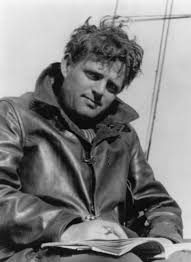
H.L. Mencken
Baltimore Evening Sun/July 6, 1931
The method of choosing grand juries in Baltimore, it appears, is as follows: When the time comes ’round each of the eleven judges of the Supreme Bench nominates two freemen of the town, along with one, two or three alternates, all of them men of discreet years, chosen for their notorious wisdom and rectitude. The names are canvassed by the whole bench, and if the two nominees of a given judge turn out to be eligible they are appointed forthwith. If not, resort is had to his alternates, or to the alternates of another judge. Thus twenty-two jurors are selected, leaving one more to make the legal twenty-three. This one more, in practice, is always a colored man of high tone, and finding him is delegated to that judge or those judges who happen to be Republicans. In this way the jury is completed.
Some time ago I received a note from one of the judges, a man who has known me for twenty-five years, saying that he was putting me down as one of his nominees. This proof of judicial confidence, I confess, flattered me, and I returned thanks at once. But at the same time my conscience, always delicate, induced me to suggest that I was probably ineligible. Here Is the substance of my letter:
Unless I misunderstand Article 36 of the Maryland Declaration of Rights, a grand juror must believe in what is commonly called the moral order of the world. That is, he must believe that there exists an eternal moral law, ascertainable mainly by revelation, and that any person who violates it will be punished inevitably, either in this world or the next. Inasmuch as I have doubts about this moral law, do not believe that violations of it, if it exists, are punished inevitably on this earth, and remain, at the most, of an open mind about a future life, I think I probably fall outside the specification . . . . In fact, so long as the Declaration of Rights remains as it is I seem to be unable to take any hand in any legal process in Maryland, either as witness or as juror.
I requested that this letter be laid before the Supreme Bench. What notion was taken upon it, if any, I do not know, for the learned judges carry on their deliberations in camera, but I observed that when the list of grand jurors was published my name was not on it. Inasmuch as I am unaware of any other ground for my disqualification, I can only conclude that I was disqualified, as I had myself suggested, on a ground purely theological.
II
No doubt it will surprise many Marylanders to hear that a religious test still exists in the Free State, and, what is worse, that it is actually a part of the Declaration of Rights, the very charter of our freedom. Yet I see no way to view the following passage in Article 36 as anything else:
. . . nor shall any person, otherwise competent, be deemed incompetent as a witness or juror on account of his religious belief provided he believes in the existence of God, and that, under His dispensation, such person will be held morally accountable for his acts, and be rewarded or punished therefor, either in this world or the world to come.
Plainly enough, this provision sets up a double test. In the first place every witness or juror must believe in the existence of God, which bars out all atheists at once, and all agnostics with them. And in the second place, he must believe that divine justice takes precedence of divine grace and mercy, which bars out all Moslems, and great numbers of Christians. It Is not sufficient for him to believe that the wicked may be punished post mortem: he must believe unqualifiedly that they will be punished. If he finds himself unable to believe it, then he cannot sit on any jury in the State of Maryland, or give evidence in any court of law or equity.
That this view of Article 36 is sound is proved by all the pertinent Maryland decisions. In Clare vs. the Slate (39 Md., 164), Stewart J., speaking for the Court of Appeals, held that a man be put on trial for his life only on the indictment of boni et legales homines, good and lawful men, and in The State v. Mercer (101 Md. 535) Schmucker, J., also speaking for the court, held that no disbeliever in “the existence of God and His dispensation of rewards and punishments” could be such a good and lawful man. And in Arnd vs. Amling (53 Md., 192) the court held that no disbeliever could qualify as a witness.
The decisions are quite dear and exactly to the point. They meet it squarely and state the law unequivocably. They are binding upon every judge in Maryland, and have been cited lately, and with approbation, by Owens, J., in Baltimore and by one of the judges in the counties. If any man stands indicted in the State today by a grand jury which included one unbeliever, then his indictment Is null and void. If any man has been convicted by a petit jury which included one, then his conviction is without force or effect. And if there was one unbeliever among the material witnesses against him, then he is still as good as innocent.
III
It will be observed that the definition of an unbeliever set up by Article 36 is very sweeping. The two halves of the test are not joined by or but by and. It Is thus not sufficient to believe “in the existence of God”; it is also necessary to believe that he maintains a complete judicial system for the detection and punishment of sinners, and that any man who escapes it in this world is bound to be laid by the heels In the next. In brief, believing in Hell is quite as essential as believing in God. The precise nature of Hell, of course, is not defined, but there is the thing itself as plain as day. Take it away, and the whole test falls to pieces.
The late Mr. Chief Justice Taft, if he had ever come into Maryland to testify in a lawsuit, might have been challenged and disqualified, for he was a Unitarian, and thus did not believe in Hell; in fact, his disbelief was used against him, especially in the Bible Belt, in the campaigns of 1908 and 1912. Nor is the disqualification of President Hoover at all certain, for he is a Quaker, and if the Quakers believe in Hell then they have surely managed to keep the fact a secret. I refrain, in delicacy, from pointing to any of our own great officers of state. The oath of office prescribed by Article I, Section 6 of the Constitution Includes no religious test, and so they are probably safe in their jobs despite a contradiction (and apparently unconstitutional) provision in the code of 1924. But suppose some of them that I could name were summoned to court as witnesses?
What would happen to most of the faculty of the Johns Hopkins is plain enough: they would be disqualified at once. I know a large number of these learned men, some of them with considerable intimacy, but I can recall none save Dr. Howard A. Kelly who has ever expressed any active and eager belief in Hell. Many of them, it may be, believe in God, but, as I have just shown, belief in God is not enough; it is also necessary to believe that God invariably rewards virtue and as invariably punishes sin. If it be admitted for an instant that any conceivable sinner may escape, then the test becomes mere vanity and nonsense, signifying nothing.
IV
Mr. B.H. Hartogensis, a learned member of the Baltimore bar, has been carrying on a campaign against religious tests, in Maryland and elsewhere, for many years, but his chief attention, naturally enough, has been directed to those which work a hardship on his own people, the Jews. Article 36, so far as I can make out, does not disqualify Jews—that is, if they be orthodox—for they unquestionably believe in the same God that Christians believe in, and they do not categorically deny the existence of Hell. But, it certainly works a dreadful slaughter of many other persons, including not a few of the highest eminence in these parts.
What is to be done about it I don’t know. At several times in the past skeptical legislators from the city have made efforts at Annapolis to submit Article 36 to the voters of the Stale for repeal, but always their resolutions have been killed by the pious county members. There is some question, indeed, whether a referendum would suffice to repeal the article, for it is not in the Constitution proper, but in the Declaration of Rights, and it may be that the Declaration of Rights cannot be molested save by a constitutional convention. We were to have one, but it was shelved at the last session. And even if it had been held, Article 36 might have survived.
In Alabama a somewhat similar test was lately got rid of by judicial interpretation. First the judges of the Court of Appeals decided that the dying declaration of an unbeliever could not be accepted in evidence, and then they granted a rehearing and decided exactly the other way (Haura Wright vs. the State). Perhaps, if a case under Article 36 were taken to our own Court of Appeals it might be induced to repudiate Its judgment in The State vs. Mercer. But that seems unlikely, for The State vs. Mercer was heard as recently as 1905, and Maryland Judges seldom change their minds so quickly. The only way out, I suppose, is to keep on agitating, as Mr. Hartogensis has been agitating for years. When complete religious freedom is established in Maryland at last he will deserve an equestrian statue 100 feet high.
Meanwhile, it should be pleasant for many Baltimoreans to discover that they can escape jury service without expense of becoming an honorary member of the Fifth Regiment or the nuisance of committing a felony or studying for the bar. Let those who are so inclined simply say that they do not believe in Hell, and the Judge on the bench will have to excuse them. If they ever get to Hell they will undoubtedly regret their denial sorely, but while they remain on this earth it will ease and gratify them no end.
 The Archive