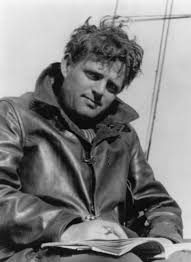
Admiral Sampson: A Character Sketch

Ray Stannard Baker

Harper’s/September, 1899

It was said of Kitchener of Khartum: “Other generals have been better loved; none was ever better trusted.”

These words fit as if they had been spoken of Admiral William T. Sampson. There have been those who wondered why a junior officer, captain of a ship—when there were many rear-admirals, commodores, and even captains of higher rank and longer experience in the navy—was appointed to the supreme command of the greatest fleet ever gathered under the American flag, and that with the almost universal commendation of the men who knew him best, not excepting the officers who had thus been superseded. The great public is well informed regarding this particular advancement, and yet it was only one of many in Sampson’s unusual career. Sampson became superintendent of the Naval Academy as a commander, when the post had been filled for years previously by rear-admirals, commodores, and captains. He was elevated to the important position of Chief of the Bureau of Ordnance as a captain, a position usually held by an officer of higher rank. He was selected while yet a captain for the distinguished honor of representing the United States Navy at the International Maritime Conference. He was the first commander of the largest of American sea-going battle-ships—the “Iowa.” He was the man naturally selected from all the navy as the president of the board which was to inquire into the “Maine” disaster. It was no sudden freak of political or popular favor—indeed, Admiral Sampson is not a popular man, so called—that made him chief at the naval battle of Santiago. All through his long career, his appointments have come without reference to the political color of the existing administration. He has held intimate advisory positions under both Republicans and Democrats, and has been equally trusted by each. He never had a political friend, in the commonly accepted meaning of that term; he never in his life sought any position, either directly or indirectly. He was always called up; he never forced himself up.

All this argues unusual qualities of mind and unusual moral fiber; but it argues, more than anything else, a certain superb trustworthiness. “There is no man more thoroughly trusted by the Department and by all his fellow-officers in the navy than Admiral Sampson,” said Secretary John D. Long, of the Navy Department. It is a trustworthiness of that rare yet homely sort that grows best in Anglo-Saxon soil. It regards not only the interests of the country and of the navy; but, higher than either, it governs Sampson’s own interests, for he is without personal ambition.

It will not do to draw the parallel between Kitchener and Sampson too closely, for in many of the deeper things of character they are widely different; and yet I cannot refrain from quoting another characterization of the conqueror of Khartum, the man “who has worked at small things and waited for great, marble to sit still and fire to smite; steadfast, cold, and inflexible.” This somehow suggests Sampson. At least, it may well be borne in mind in reviewing Sampson’s career.

It is sometimes difficult to account properly for a man. At first glance, it would seem that Admiral Sampson grew in meager and unfriendly soil. His father was a plain day laborer, an Irish immigrant; his early home was in the woods of central New York; his opportunities for schooling were limited; his incentives to rise were few. And yet this north of Ireland stock, nurtured in poverty and Presbyterianism, vital of body and light of heart, is fertile in good men. Somehow genius seems always smoldering just beneath its surface, ready to leap forth when opportunity arises. In this case, as in that of many other famous Americans, the opportunity came with the stimulation of emigration. The Admiral’s father and mother, James Sampson and Hannah Walker, came to New York in 1836, and settled at Palmyra, on the bank of the Erie Canal. The elder Sampson was a man of great physical strength and endurance, although of little ambition. He was steady, plodding, silent, even dull-minded; he possessed few of the active virtues, but in those of a negative sort he was rich. Thus he was temperate, clean, self-controlled; he was kindly in his family; he worked steadily for his day’s wages, and spent his evenings at home; he saved what money he could. These virtues he bequeathed as the best of legacies to his children.

What he lacked—a touch of the fire of imagination and spirituality—his wife, the Admiral’s mother, made up. Mrs. Sampson was a woman of rare native refinement and ability. She was sweet, even beautiful, of face, and strong and steady and kindly of character. She was proud of her children—the Admiral was the oldest of a family of eight—and ambitious for them with all the keen ambition of mother-love. She was deeply, but practically, religious. An old friend of the family in Palmyra told me that he had often seen her on a Sunday morning with her little flock of children around her, all neatly dressed in honor of the day, coming down to the Presbyterian church—a walk of a mile. Although weighed down with the heavy duties of a poor man’s family, she yet found time to read much and to spur her children on in their development. The Admiral and his sister Lizzie were both naturally studious, and between these two and the mother there sprung up a warm companionship and friendliness, which meant more to them, perhaps, than their kinship. The close relations between brother and sister continued for years, the Admiral, while still in the struggling stages of his early career, sending his sister to Mount Holyoke Seminary, that she might complete her studies.

It was a good, green country, with weather-colored houses and big red barns, this central New York, where Sampson grew up, the kind of country in which an imaginative boy might expand. His opportunities were few, but he made the most of them. From the very first he was at the head of his classes in school. His mother would assume any burden rather than disturb her children in their education. Mr. Pliny B. Sexton, president of the village bank of Palmyra, who was a schoolmate of Sampson’s, said of him: “He was the busiest boy I ever knew. Many times I have seen him run all the way home from school to help his father. I don’t think he ever played ball or went skating in his life; he was too busy. He was one of the best-liked boys in the school, although never what could be called popular. We called him ‘Will,’ never ‘Billy’—which you will recognize as a tribute to his dignity.”

Miss Hannah Sampson, the Admiral’s sister, who still lives in the old family home, says that the boy was a great reader. He devoured all manner of books on history, mechanics, and branches of natural science, and he even enjoyed mathematical works. Novels did not interest him. Before he was sixteen years old he had borrowed and read, so Mr. Sexton told me, nearly every book in town, except story books. And most of this reading was done, like Lincoln’s, early in the morning or late in the evening, for there was always hard work to do as long as daylight lasted. During school vacations, young Sampson worked steadily with his father, sawing wood, spading gardens, digging ditches, and doing odd jobs about the village. For a time he worked for twenty-five cents a day in a brick-yard.

And thus he came to his seventeenth year—he was born in 1840. At this time there was a vacancy in the Naval Academy to be filled from the Palmyra congressional district, and Congressman Morgan of Aurora had the right of appointment. Two boys of influential parentage were named for the position, but owing to the objection of their mothers, the offer was declined in both instances. Then Mr. Morgan asked the principal of the Palmyra school for the name of his brightest boy. The answer came without a moment’s hesitation, “Sampson.” The Admiral’s mother was overjoyed at the opportunity thus opened, but his father objected. The elder Sampson was growing old, the boy was now strong enough to do a man’s work, and he was needed at home. But Mrs. Sampson laid her hand on her husband’s shoulder, and her words are now historic in Palmyra. “I want one son,” she said, “who won’t carry a sawbuck on his shoulder all his life.”

It so happened that, when the official announcement of Sampson’s appointment reached Palmyra, a number of politicians were gathered in the office of the local newspaper, in Main Street. One of them looked out of the window. There in the street were James Sampson and his son digging a ditch connected with some public improvement. “Gentlemen,”’ he said, “if you wish to see the future Admiral of the United States Navy, look out the window.”

And so young Sampson left his native town for the first time in his life, to go to the Naval Academy. In the sifting which follows when a hundred boys are thrown together in the same class, Sampson came out, as usual, at the top. Admiral John W. Philip, who was a member with Sampson of the class that entered in 1857, showed me a yellowed old book in which he had kept the class standings. At the Naval Academy four is the perfect marking. Well, it was amazing to see with what regularity Sampson won fours. Apparently it made not the slightest difference whether the subject was mathematics, French, moral science, or seamanship, his grade was nearly always four. “I remember well,” said Admiral Philip, “the struggle of the four S’s—Sampson, Stewart, Stone, and Snell. They fought for first place all through the course, but Sampson came out ahead. He was graduated number one.”

Such scholarship as this sometimes makes a boy unpopular with his classmen, but it was quite the reverse in the case of Sampson, for he was not given to conceit or pomposity; he was sane of mind and simple of heart—a gentleman by nature. But he was much too quiet and dignified—even cold, if you will—to become a boy’s good-fellow, although no midshipman in the academy was more thoroughly respected and trusted. In his last year, he won the greatest honor that can come to a cadet: he was appointed adjutant of his class—a position bestowed not so much for scholarship as for the general qualities which go to make up a good seaman and soldier. So far as I could learn, Sampson never appeared in any of the games or sports of the academy; he received few demerits; he never was in a rough-and-tumble fight, although he had muscles of steel and unusual physical endurance—a boy who could study eighteen hours out of the twenty-four and retain his vigor and health. Years later, during the long blockade of Santiago, he never retired until after midnight, and he was invariably up at four in the morning. All through the years at the academy he was developing the stern self-discipline which was to carry him to many honors. His intellect was of the kind that Huxley describes as “a clear, cold logic engine, ready to be turned to any kind of work, and spin the gossamers as well as forge the anchors of the mind.” It mattered not what subject was before him, he went at it steadily, methodically, unrelentingly.

“It wouldn’t have mattered,” said a friend who has known the Admiral ever since his academy days, “what Sampson had set out to be; he would have mastered any subject. He would have made a good scientist—in fact, he is a good scientist; he would have made a first-class college president, a lawyer, a doctor, or even a preacher—or, rather, a theologian. No matter where he has been placed in the navy, whether to make astronomical observations at Washington or to fight Spaniards at Santiago, he has done everything well. It is the quality ot genuine greatness.”

During Sampson’s first furlough home from Annapolis, he wore the first overcoat he had ever owned—the one he drew with his uniform as a cadet. His father was still laboring about the village, and the young midshipman, without a thought of his position, took up the shovel and sawbuck and worked out his furlough. It was at this time that he met his future wife, Miss Margaret Aldrich. The Aldriches were prominent people in Palmyra, living in a fine old place some distance out from the village. During Sampson’s furlough they gave a party, and there was some question about the advisability of inviting the young cadet, who had been seen that week ditch-digging with his father. Social distinctions in a small town are as sharply drawn as in a great city, but Miss Aldrich insisted that Sampson be invited. He came; they were married three years later. Following his graduation from the Naval Academy in 1861, he was appointed a master, and in 1862 he became a lieutenant, and was assigned to the old sailing-ship “John Adams,” then used as a practice-ship for naval cadets. One of the officers—then a cadet—who accompanied him on a cruise from Newport to Port Royal, South Carolina, speaks of his qualities as an officer: “He was never excited, and never hurried, and he never seemed to raise his voice, and yet his orders could be heard distinctly by the men at the weather-earing when reefing topsails.”

Captain French E. Chadwick, the Admiral’s chief of staff, knew him as an instructor in the Naval Academy, a position which he held in 1862. “The first time I ever saw Sampson,” this officer writes, “I was going down Pelham Street—I was then a midshipman—and I met a new officer coming up on the opposite side. I knew him to be Lieutenant Sampson, just arrived. He was at that time of the mature age of twenty-two; sufficiently old from my period of view, and naturally of interest as a new ‘instructor.’ But what most impressed me, and what has always remained in mind, was his extraordinary beauty of face and color, which I have always thought was the finest I ever saw in a young man. Later on, I came to recognize another quality of like enviable kind: a remarkably clear, musical, and resonant voice, low in talking, but one that could be heard with ease anywhere on a ship—a gift the value of which in those days of canvas can hardly now be appreciated.

“Along with this unusual personal beauty (I use the word advisedly, and I mention it only because it was so marked), there was a great absence of self-consciousness. I am sure Sampson never gave a thought to his personal appearance beyond what ordinary personal care demanded. Posing is as far from him as it was from Abraham Lincoln; he has always been the simplest of men; of a simplicity which is the highest type of manners.”

At this time the country was in the midst of the Civil War, and Sampson was anxious to go to the front and put in practice some of the precepts of the Naval Academy. His opportunity finally came in 1864, when he was assigned to the ironclad “Patapsco,” then doing duty with the blockading squadron off Charleston. It was dreary, nerve-wearing work, but it fitted the young officer, perhaps, for another and more notable blockade thirty-four years later. Just at the close of the war, the “Patapsco” met with a most dramatic and terrible fate; and Sampson’s conduct was what one would expect it to be from later knowledge of the man: cool, self-possessed, and perfectly courageous. The ship had been sent one night, in accordance with the usual custom, to cover the patrol-boats. It crept in toward Charleston under cover of dense darkness. Sampson was in the pilot-house with the captain; the other officers were forward in the wardroom. Of a sudden there came a violent shock; the bow of the iron vessel was lifted bodily from the dark water, and upward through the decks came a crushing burst of water, steam, and fire. At first, Sampson thought the ship had been struck by a heavy shot; but a sharp lurch forward and a swift settling in the water told the story of a torpedo. Every officer in the forward wardroom had been instantly killed; the ladder leading up from the berth-deck had been thrown down by the shock, so that most of the seamen died struggling below. The captain stepped from the turret into one of the boats, which floated from its cradle as the ship settled. But Sampson, springing to a boarding-netting near by, caught one of his feet in the meshes, and was drawn down with the sinking ship, the waters rushing in above him. Most men under similar circumstances would have struggled desperately, only to become more hopelessly tangled in the ropes. But Sampson’s cool, methodic mind served him well; he took his time to it, waiting until the terrific downward strain was somewhat diminished; then, twisting his foot carefully, slipped it from the mesh, and shot to the surface of the water, and was rescued.

Succeeding the Civil War came several long cruises, interspersed with the shore duty of a long peace. Sampson was with the flag-ship “Colorado” on the European station from 1865 to 1867, and on the “Congress” in 1871-1873. He commanded the “Swatara” on the Asiatic station from 1879 to 1882, and the “San Francisco” in the Pacific from 1890 to 1892.

Sampson’s discipline on shipboard is as rigid and faultless as his own self-control. He never raises his voice, nor storms; he rarely praises; and yet he is obeyed and respected as few men ever were. This is no doubt partly due to his absolute courage. “You can’t frighten him; you can’t even startle him,” a gunner said of him.

Sampson has always taken a keen interest in the boat races and other sports of his men, and at one time, while he was on the “San Francisco,” so Coxswain Fraser told me, he released a prisoner from the brig to help win a famous race against a boat crew from one of Her Majesty’s ships. And when he finally left the “San Francisco,” the board of inspection not only complimented the ship in unusual terms, but the seamen manned the rigging and gave him three cheers—a mark of honor only accorded to a well-beloved officer.

Sampson’s shore service has been largely that of the trained scientist, a department of work to which his methodical and penetrative mind turned with great avidity. He was twice connected with the Naval Academy as instructor—five years in all—before he became its superintendent, in 1886. His work dealt chiefly with physics, chemistry, metallurgy, and astronomy, in all of which he was singularly proficient. His scientific attainments were so well known that, as far back as 1878, he was sent to Creston, La., to observe a total eclipse of the sun. Nor was he ever content with a mere superficial knowledge. A naval officer who knows him well told me that, when he served at the Naval Observatory (1882- 1885), he spent night after night, weeks at a time, making personal telescopic observations and familiarizing himself with the intimate details of the work. Many men in the same position have been content to attend exclusively to the executive work of the institution and permit the government astronomer to make all of the observations. Later, his work at the Newport torpedo station (1885-1886), of which he was superintendent, dealt largely with the difficult technical and scientific aspects of making and testing ammunition, powder combinations, and a hundred and one other intricate, but vastly important, details in the great machine of the navy. His high attainments in the technical side of war were recognized in his appointment as a member of the Board of Fortifications and Defences and as the delegate of the United States to the International Maritime Conference. Indeed, between November 1, 1884, and June 1, 1885, he was assigned to important special duties no fewer than twenty-one times. He was selected for all of these positions because he had the rare ability of going straight to the heart of a subject and of drawing his conclusions with eminent clearness and common sense.

“He is one of the clearest-headed men I ever knew,” said ex-Secretary of the Navy Hilary A. Herbert; “he has a remarkable facility in stating a proposition lucidly and in the fewest possible words. In this respect I never knew anyone to equal him.”

Sampson’s shore duties have also included the executive direction of some of the Government’s greatest business institutions. Few even of the wealthiest corporations in the country spend $6,000,000 a year, and yet Sampson directed the expenditure of more than that amount annually during his four years (1893-1897) service as Chief of the Bureau of Ordnance—one of the most distinguished positions in the gift of the Government. Here, and at the Naval Gun Factory, of which he was superintendent in 1892, Sampson’s scientific attainments found their greatest scope and purpose. He had supreme charge of providing the armor plate for the vessels of the navy, and of buying and testing projectiles, ammunition, and small arms, and, at the gun factory, of building the great guns. And thus he was instrumental in building and arming many of the ships which he fought so successfully at Santiago. He knew, perhaps better than any other man with the fleet on that July morning, just what his ships would do, just how perfect they were as war engines, how much they would stand in defense, how much they could offer in offense. What better man could have been chosen to the supreme command?

While at the head of the Bureau of Ordnance Sampson also made many important innovations and improvements. During his term of office he developed the plans for the superposed turrets in the two new ships “Kearsarge” and “Kentucky,” and upheld his belief in their efficiency against many opponents. He devised many new and valuable tests for armor plate and ammunition, even going so far as to construct a section of a battleship in model with the framework arranged exactly as in a full-sized ship. He had become convinced of the resisting power of armor plate, but he did not feel altogether sure that the interior construction would bear the terrific impact of great shells; this question was settled by the model. He tested and adopted the new small arms now used in the navy, and to him more than to anyone else was due the successful exposure of the celebrated armor-plate frauds at the Carnegie steel works, which saved the Government many thousands of dollars. “I do not think the Bureau of Ordnance ever had a more efficient and more able chief,’ ex-Secretary Herbert said of him.

During these years of service in the Bureau of Ordnance, Sampson was constantly called upon for consultation by the Secretary of the Navy and even by the President. He never offered advice unless it was asked, and what he said always carried great weight. He had so evidently eliminated the personal element, had so subordinated the worker to the work, that there was never a taint of prejudice or even of preference in his recommendations. Says Professor Philip R. Alger, who worked with him four years in the Bureau of Ordnance: “He was especially characterized by fairness and openness of mind. He was entirely without prejudices, and, unlike most men, he always considered a proposition on its merits alone. Another characteristic was his trust in his subordinates. When he assigned a certain duty to any one of them, he always seemed to have perfect confidence that it would be done, and well done—a sure method of encouraging zeal in anyone worthy of encouragement.”

Sampson carried his trait of personal disinterestedness to its utmost limits. It is the privilege of officers assigned to the command of a vessel to make selection of the junior officers who are to compose their staff. Sampson never in his career exercised this privilege but once, in the case of a single flag lieutenant. When he was ordered to the “Iowa,”’ an officer of high rank in the navy came to him at his office in the Bureau of Ordnance to request a position for a friend. Sampson heard him through quietly; then said: “I never make a practice of selecting my officers, and those I do get have to do their duty.”

This element of stern fairness, that asks nothing, but demands its rights to the uttermost, has given Sampson the reputation of being cold, but it has also placed him on an unapproachable plane of respect and admiration. If an officer or a seaman does his duty, he knows that Sampson is a steady and a powerful friend; if he is derelict, he knows exactly what to expect and that no influence from any source can save him. “If Sampson had only made a few mistakes and failures,” a naval officer said to me, “we should love him as much as we respect him.”

I repeated this remark to another officer, and he responded: “If he could tell a good funny story—”

And yet, in the very inner circle of his friends, and in his family. Admiral Sampson is as genuinely loved as by those outside he is respected; and he even tells the “funny story,” although it partakes rather of the nature of wit, often rapier-like in its keenness, than of humor.

Early in 1897, Sampson was ordered to the command of the “Iowa,” with the construction of which he had been so closely identified. The events of February, 1898— the destruction of the “Maine” and the imminence of war with Spain—found him next in rank to the commander-in-chief of the North Atlantic Squadron. Admiral Sicard’s health was such, at this critical period, that he found it necessary to give up the command, and Sampson was at once appointed to fill his place.

“No one was more surprised at this than Sampson himself,” said Captain Chadwick; “this I know to be a fact. The captains of the squadron were unanimously wishing that he might be selected, hoping—rather against hope—that the few months intervening until his promotion to the rank of commodore might not stand in the way. Whatever was said in favor of the appointment was not said by Sampson or with Sampson’s knowledge. The navy knows its own, and whatever urging was necessary in the Department (and I do not know that any was necessary) was done by naval officers only, two of whom, I was much later informed, mentioned the hope to the Secretary. But the selection was the Secretary’s own. He told me after the war that no influence of any kind whatever was even mentioned; that the appointment was wholly due to what he knew of Sampson’s character in the short intercourse he had with him before he left the Bureau of Ordnance to command the “Iowa.”’ To Sampson himself, the idea of reaching out for an appointment would never occur; it is simply that self-seeking is entirely absent from his nature; it could not come to him. He came to the command with the thorough confidence and affection of every captain in the fleet, a step toward victory in itself, and it was a confidence and affection which never wavered.”

There were four great stratagems in the campaign against Cervera, and they all originated with the commander-in-chief—Sampson. The first was the sinking of the “Merrimac,” a plan devised by Sampson long before he reached Santiago. The second involved the close blockade of Santiago, in which the ships were stationed in a semicircle six miles from the harbor mouth by day and four by night, and later closer, instead of ten or twenty miles out, the usual disposition of the fleet prior to Sampson’s arrival. The third, and possibly the most important, was the continued use of a search-light covering the harbor mouth during the night. Cervera himself has said that this prevented him from making a night sortie. And fourth, the plan of the battle itself was Sampson’s. He had provided for every possible contingency. If the Spanish ships came straight out and offered battle in deep water, every American captain knew just what to do; similarly, if the Spaniards went east, or went west, or divided, every captain had his orders, so that he could fight the battle, as it was fought, without signals. It is not the naval battle of Santiago itself which awakens the admiration of the men who know, so much as the blockade that preceded it. There are few outside the service who can appreciate the terrible strain and responsibility which a commanding officer on blockade duty must bear. A fleet is not like a slow-moving army; its strides are three hundred or more miles a day. For nearly ten days, it now appears, Cervera was perfectly free to leave Santiago; and to know whether he had done so, and if he had done so, where he had gone, was a serious problem. Moreover, a whole nation was watching Sampson intently, and waiting to pass judgment. He knew not at what moment to expect an attack, for there were alarms at every hour of night and day. Through those long, hot weeks before Santiago, he never wavered, never lost his temper, and bore with magnificent restraint and steadiness the clamors of his impatient country and the alarms incident to the blockade. He brought to bear the self-discipline of a lifetime. Neither by word nor look did he show that the responsibility was unusual. But he came back, Mrs. Sampson told me, looking older and grayer by ten years than when he went away. Sampson came to Washington only twice during the entire summer following the battle; and then quietly, on strictly official business. He did not go to any of the clubs, nor to the Capitol; and of the hundreds of social invitations with which he was flooded he accepted few.

It was not that Sampson did not feel as keenly as any American the wonder of the great victory; but he would not be lionized for it. He had done his duty; every other man in the fleet had done as much; why, then, should he be praised above the others? That was his way of looking at it. And yet there never was a man more keenly gratified than he in winning the admiration of those who really appreciate the strategical perfection of his campaign. One should no sooner expect to see Sampson accepting an honor he had not earned than to find him clapping a senator on the shoulder and asking him for his influence with the Secretary of the Navy. At one time, while he was Chief of the Bureau of Ordnance, a visitor addressed him as commodore, a designation to which he was entitled by virtue of his position, but he said: “Do not call me commodore; I am a captain.” That is the spirit of the man.

Sampson was much worn after the Santiago campaign, but he did not ask a leave of absence; instead, he returned to Havana almost immediately, to take part in the trying labors of the Evacuation Committee. Following that, he made an extended cruise with his ships in the West Indies, and up to the time of the writing of this article he has not had a moment’s respite from service.

Sampson’s home life has been as unpretentious and as devoted as his naval service. His first wife died in 1878, and in 1882 he was again married—to Miss Elizabeth Burling. He has four grown daughters, two of whom have married naval officers; and two sons, aged eleven and nine. During the Santiago campaign, Mrs. Sampson lived in a beautiful home at Glen Ridge, New Jersey. The Admiral’s relations with his children are more those of a kindly older brother than of a father. Indeed, the real man is best seen in his home. He is full of quips of speech at table, bits of story and information, his keen mind playing upon and sharpening the minds of his boys. Cheap wit has always disgusted him, but he enjoys good humor as much as anyone, although he rarely smiles, except with his eyes; and he detests vulgarity and profanity. His wife told me she never saw him excited nor out of temper; and only once, when he happened to see a torpedo-boat blown up within plain view of the window at which he was sitting, did she see him hurry. His habits of studiousness, acquired as a boy, still cling to him, and he reads many books of substance and information. Of late years he reads more novels; “David Harum” pleased him greatly. He cares for music, but not greatly for the drama; he never makes a speech when he can avoid it. He never voted but once—for Lincoln at his second election. He is a man of deeply religious instincts, although in this respect, as in all others, he is thoroughly unostentatious. He attends the Presbyterian church as regularly as his sea duties will permit, and is always present at services aboard ship. His religion is a matter of character rather than of form, and yet in his account of the bombardment of Santiago, he says: “Captain Philip having called my attention to the fact that it was Sunday, I decided, as it was not necessary to bombard on that day, to postpone operations until the same hour on Monday.”

Although methodical of manner, Sampson is a man of much physical agility and strength. For years he has been a good tennis player, never neglecting an opportunity for a game even in a foreign port—and he plays with remarkable activity. He is also a bicycle rider, but more for exercise than for enjoyment. In person he is a man somewhat above medium height, rather slender and straight and well knit. He is always dressed with scrupulous neatness, down to the last detail. He never wears a uniform when away from his ship, if he can avoid it. At first sight, one might take him to be a college professor, and yet he wears the unmistakable distinction of command. His forehead is broad and full at the temples; his hair is iron gray and rather thin; his beard is short and always recently trimmed; his nose is sharply cut and perfectly molded. His eyes are remarkably brilliant and expressive. They are large and dark and clear, and while the remainder of his face is somewhat immobile, they tell every changing emotion.

Even in its sea phases, Sampson’s life has not been marked by the startling and heroic incidents that seize so readily upon the popular fancy. Yet the faithfulness to every routine of duty, the close attention to discipline and order, the constant striving for greater efficiency, that have peculiarly distinguished him during all his career, were the best possible preparation for such work as the country required of him in the spring of 1898. It was the same with Farragut. Barring Farragut’s presence as a very youthful midshipman in the famous fight made by the “Essex” against the “Phoebe” and the “Cherub,” there was no “event” in his career until he came to the great command which made him famous. But there was the same steady hold on the appreciation of his fellows, the same hard application to work, that is found in Sampson’s career. When you come to think of it, Sampson spent about forty-two years in winning the battle of Santiago. During all of that time he worked in almost total obscurity, so far as the American people at large were concerned. His name was not as well known, except in a limited circle, as that of many a boy politician. I was shown a scrap-book in which Mrs. Sampson has kept the notices of her husband for years past. There were perhaps a score of them, all short, and dry with the dates and duties of a naval man’s “record.” I think his picture was printed twice in the newspapers before the Spanish War. In a single July day he became famous the world over. But it was not a change in the man; Sampson was as great in January, 1898, as he was in July: only the people did not know it.

Standard

How Long Then, Catilene?

Dorothy Thompson

Arizona Daily Star/January 20, 1940

Of course, the reason why the Dies committee never discovered Father Coughlin may be because the priest of the Shrine of the Little Flower has been so shy, invisible and inaudible, hiding his light under a bushel. Maybe they need a new and increased budget and a lot of new investigators in order to discover the editor of “Social Justice,” the Sunday, afternoon radio pleader, and the institutor of a libel suit that he afterward dropped.

The Dies committee found out in considerable detail the rather obscure names of members of the American League for Peace and Democracy and the American Student Union. This was, by and large, all right with me. I think it high time that we should take a look at the organizations which talk about American democracy and mean something else, and a little education on Communist methods of penetration into liberal groups can hurt nobody, unless maybe, the Communists.

The Dies committee also discovered the German-American bund, and revealed what had been published previously in numerous newspapers. But the report does contain a single reference to the “Christian” boys—of the “Christian Front,” or the “Christian Mobilizers”—who see in “Christianity” a war whoop for the persecution of non-gentiles in this country.

I once heard this definition of a detective: He is a man who closes his eyes and paints an eye on the eyelid so that people will think that his eyes are open.

Despite the fact that one has to pick one’s way across or around the members of the Christian Front thrusting copies of Father Coughlin’s “Social Justice” under one’s nose all over Forty-second street in the very heart of New York, and in spite of the animal screams of blood lust that emerge from the patriotic throats of Mr. McWilliam’s Christian Mobilizers which, I understand, are rivals of the good father, thinking that they have discovered in their handsome chief a more likely “Fuehrer of the Future,” our government investigators have not noticed these boys.

The fact that Father Coughlin’s name is enthusiastically cheered at the meetings of the German-American bund; the fact that invitations to the Christian Front meetings and to bund meetings have been handed out synonymously by the same men at the same meetings; the fact that the Christian Front maintained picket lines at WMCA radio station every Sunday for a full year, bearing large placards on which was the picture of Father Coughlin, has escaped the notice of investigators.

Get About More

Last Sunday Mr. J. Edgar Hoover, head of the Federal Bureau of Investigation, chief of the G- men, said that he understood that Father Coughlin had no connection with the Christian Front, although its followers sometimes used his name. I am afraid that Mr. Hoover should get around more. One might, for instance, get records of Father Coughlin’s speeches, or read copies of “Social Justice.” It is not a pleasant task, but is, I should think, all in the day’s work.

There was, for instance, that meeting in the Metropolitan opera house in Philadelphia on July 14, 1939, in which Father Coughlin, speaking from Detroit by wire and amplifier, praised the achievements of Mr. John Cassidy, commander of the Christian Front, urging the members of the audience to support and join that organization, and ended by conveying upon Mr. Cassidy the blessings of Almighty God. Mr.

Cassidy is now under arrest with sixteen others, on the ground that they are implicated in a plot to spread a general reign of terror.

Mr. Hoover thinks there is no connection between Father Coughlin and the Christian Front in spite of the fact that Father Coughlin’s paper, “Social Justice,” for perhaps he has nothing to do with “Social Justice,” either, conducted a Christian Front contest for months last year, offering prizes for the best answers to certain political, economic and social questions. It was a cute contest, because each answer was accompanied by 50 cents, and the right answer (prepared by Father Coughlin) got a prize. The proceeds of this educational lottery were to be used for the broadcasting funds with which to help finance Father Coughlin’s radio addresses to the nation.

One question in this contest was: What is America’s strongest safeguard against Communism? The answer was, “A Christian Front.”

In the issue of November 20, 1939, the question was asked, “What is Father Coughlin’s most emphatic advice to the Christian Front?” And the answer was “Meet force with force as a last resort.”

Evidently the Christian Front boys think the time has come for the last resort. But Father Coughlin has nothing to do with it at all!

Privileged Position

Anyhow, and no joke, these “Christian” exciters to violence, and now, it would seem, planners of violence, have enjoyed a peculiarly privileged position among the groups labeled by the Dies committee as subversive, and it would be interesting to know why.

The Dies committee could, I am sure, uncover lot of interesting facts by a little careful investigation into the activities, financing and interlocking relationships between the pastor of the Church of the Little Flower and political activities far beyond Detroit.

Standard

Roulette with Destiny

Dorothy Thompson

Indianapolis Star/January 20, 1940

THE ACTION of the United States Congress in the matter of the loan to Finland is simply incredible. In one of the most critical moments of history Congress has chosen to behave with supreme frivolity. in a moment when every small neutral in Europe is trembling in fear of an extension of undeclared war; when all Scandinavia fears a breakthrough of the Russian armies, and when Holland and Belgium fear an assault from Germany, the world’s greatest neutral has slapped Finland’s face in the most ostentatious way and in view of the whole earth.

Finland would never have applied for a loan had there been the slightest indication that it would be refused. The refusal is a staggering political blow. It is the greatest bloodless victory that Stalin has had thus far. It is, at the same time, aid and assistance to the most immoderate forces in Germany. The moderates have been trying to stay Hitler’s hand by telling him that another aggression against a neutral state would outrage all neutral countries, particularly the great United States.

Now the Congress has given notice that our outrage will only be expressed in sending a handsome wreath to the funeral, bearing the inscription, “He was an upright man and paid his debts.”

We will collect money from individuals to feed the innocent neutral victims of the Russian or German steam roller. Millions for bandages and food, but not 1 cent for a gun with which to defend yourself.

Save your money, friends. Dead men don’t eat.

We must bring ourselves to realize that every action taken by the United States government today has positive diplomatic and political effects, outside and inside the United States.

The international effect of Congress’s refusal to distinguish between declared wars among great powers and undeclared assaults on neutrals is to strengthen revolutionary gangsterism all over the world outside this country and inside it as well.

The Communist Daily Worker, the mouthpiece of the Soviet government, published right in New York and distributed to American workers, is jubilant this morning.

Does the American Congress not know that the very subversive elements for the investigation, of which Congress has already given millions to the Dies committee, are all rejoicing today?

The essential propaganda of the Christian Front and the Communist party and the German-American Bund, whose leaders are at this moment under indictment or already condemned for fraud or planned violence, is that there are war-mongering profiteers.

It is no concern of ours, according to them, whether Finland, Sweden, Norway, Holland, Switzerland, the  solid, solvent nations embodying as deep a Western culture as exists—are cynically erased off the map tomorrow.

For in the welter of destruction and despair that will follow such collapse the gangster with the gun will be the sole rallying point. Meanwhile, in the United States, a bland and complacent feeling of security and isolation will have been created. The distinctions between right and wrong, between aggression and defense, between civilization and barbarism, will have been broken down. “If we lend money to the Finns we shall be dragged into war,” must be put alongside Earl Browder’s statement before the Dies committee that he would try to make a civil war in the United States if this country were ever in hostilities with the Soviet Union.

Does not the Congress see the connections between these things?

And where is the consistency in our policy? We refuse to recognize territorial changes brought about by force. We do not recognize Manchukuo or the Bohemian-Moravian state carved by Germany out of Czecho-Slovakia. We stand for the sanctity of treaties and the rule of international law. We have exacted from the nations of the world a solemn pledge not to resort to war as an instrument of national policy. We have lent money to China and refused to apply the neutrality act in the Far East. We have in all our words stood for order and recognition of law.

But if we turn down the loan to Finland we shall stand for international anarchy and hope that, by repressive measures at home, we can stop it from spreading here—while we give notice to the world that the United States is scared.

But this time I think Congress has made a mistake. It is wrong in gauging public opinion. The American people want to send substantial help to Finland with the object of helping Finland and all the other neutrals resist invasion. Conversation with any man you speak to in the street shows it. The people have a far better instinct than Congress has. They know that the earth is round and that if this anarchy spreads we shall suffer.

The behavior of Congress indicates, however, that the nation is at present without leadership and without policy. The party leadership has collapsed. The Republicans are not following anyone, and neither are the Democrats. There is no direction in foreign policy. Congress is not accepting the views of the Department of State. We are not, in short, being governed or being allowed to govern ourselves.

What happens from day to day depends upon how senators and congressmen have laid their bets on the political roulette wheels. This preposterous irresponsibility sows confusion abroad, breaks down the confidence of this nation and leaves us open to intermittent and inexplicable waves of fear.

This is unfortunate. We are not behaving like ourselves.

Standard

Lend-Lease Witness List Needs Careful “Weeding”

Dorothy Thompson

Salt Lake Tribune/January 19, 1941

The protection of the democratic process demands more than allegiance to its outer forms. It demands the strictest loyalty to its inner purposes, lest we “redouble our zeal as we lose sight of our aims.” Indications of degeneration are there when the forms and habits fail to fulfill the function for which they were designed; when, for instance, the law through its infinite complications and pedantries becomes an instrument for covering rather than punishing crime; or free speech becomes distorted into a weapon of blackmail and intimidation; or free assembly becomes a means of organizing open conspiracies against the structure and purpose of the state.

This holds, also, for the process of government itself. All over the world, the party system, which grew up as one instrument of democracy, has been carried to such lengths of partisanship that it has contributed to the wrecking of democracy.

That was true in Germany under the republic. That was true in Italy before fascism; that was true in France and was a factor contributing to her collapse.

President Washington was so afraid of it that he hoped never to see a party system emerge in our democracy. He was particularly afraid of it during times of international disturbance and crisis, such as that of his second administration, and the famous Farewell Address is almost wholly devoted to the dangers to a republic arising from the disease of faction.

The first instinct, therefore, of a threatened republic—if the instincts have remained sound—is to abandon party strife in time of emergency and create governments of national concentration with unified command.

Constitution Gains World Admiration

The American constitution has excited the admiration of scholars for a century because of the exceptional strength that it gives to the executive in dealing with foreign affairs and emergency situations – which makes him, for instance, the commander in chief of the army and navy and which secures his office for a fixed tenure of years against the moods and changes of the legislative body and against the inevitable factionalism of that body.

It is this feature of the constitution as much as any that has enabled us time and again in our history to achieve a necessary concentration of authority without violating or circumventing the constitution and which has assured us a more perfect continuity of historical development than that of any other republic except, perhaps, the Swiss.

And again, in all the minor functions of government, a clear concept of purposes is a guide against pitfalls.

This holds for legislative hearings. The purpose of holding hearings is to afford a means whereby the members of congress may receive facts and information which will help them to frame intelligent legislation.

It is a purpose, however, which has often been completely or partially ignored. The congressional hearing has become in our days an instrument whereby interested groups are afforded a rostrum from which to make partisan speeches and a means of pillorying and intimidating groups and persons whose public prosecution—without benefit of counsel and with the exclusion of all the rules of evidence—is a means of furnishing the public with a confirmation of current prejudices.

Congress Has Right To Hear Opinions

These thoughts are induced by the hearings on the lend-lease bill now in progress. Certainly the congress is justified in giving this bill their most earnest consideration. But the object of the hearing is to produce light and clarity, not to furnish a platform for a confusing public debate in which partisanship and acrimony can be stirred up In the face of the world to the delight of those foreign nations who wish nothing more than confusion and division in this country for their own purposes.

It is fitting and proper that the congress should hear those who are unquestionably qualified to testify on constitutional matters and regarding the state of the world at this time.

It is well that the committee should hear the secretary of state, the representatives of the department of war and navy and outside citizens whose views are worthy of consideration because they possess some special Information and knowledge.

In this class fall naturally such diplomatic representatives as are available in this country.

But here again the committee should take account of the wisdom of discretion. It would seem that Mr. Hull, as secretary of state and the recipient of the reports of all of his ambassadors and as ultimately responsible for them, were alone qualified to speak for his department.

In looking over the list of some of the persons whose testimony is to be solicited, one sees names of those who certainly cannot cast more light than they have already shed.

I do not know what more General Johnson, or Mr. Roy Howard, or Colonel Lindbergh can contribute to the enlightenment of the senators than they have already publicly contributed. It is as foolish and as time-wasting to call them as it would be, for instance, to call Mr. Herbert Agar or Miss Dorothy Thompson.

There ars others called whose testimony can only be a means of airing a partisan and inexpert viewpoint—for instance, Mr. Verne Marshall or Mr. Thomas Dewey.

Many Who Have Real Information

On the other hand, there are many persons who have been reticent about opinions but who do possess exceptional and disinterested knowledge which might be of great value to the committee.

I think, for instance, of two journalists who are not, nor have been, engaged in forming opinions, but who are as certainly possessed of as exceptional knowledge and information as any diplomat. I think of Mr. Otto Tolischius, for 20 odd years correspondent of The New York Times in Berlin, and of Mr. William Schirer, until very recently the Columbia Broadcasting company’s reporter in the same capital, who also possesses knowledge gained from 20 years’ residence and study in central Europe.

It would also seem to me—if what the committee is seeking is expert opinion end not ammunition for partisan policies determined upon in advance—that the committee could well afford to hear Mr. Hamilton Fish Armstrong, who, as editor of Foreign Affairs, the magazine exclusively devoted to the subject of its title, possesses more overall information than many a diplomat and whose impeccability of character and moderation in judgment are known to all his associates.

For surely the object of these hearings is to generate light, not heat, to give the committee access to facts, not prejudices, to be a means of assistance to wise judgment, not to take a poll of opinion, to be a seminar, not a debating forum.

For when the functions of government become confused in purpose they cease to operate for the general welfare, and if they fail too radically the whole structure is threatened. Everybody on the committee will agree on one thing—that we live in a crisis of unprecedented proportions in which boldness, vigor, wisdom and the greatest possible amount of factual knowledge are all required.

Standard

Pretoria in War Time

Richard Harding Davis

Scribner’s/August, 1900

PRETORIA reposes drowsily at the bottom of a basin, a great bowl made of hills. There is a crack in the bowl, and it is through this crack that the British army, when it comes, will enter the capital. In the meantime Pretoria, shut in from the outside world not only by her circle of hills but by censors, armies, and a blockade of warships, waits tranquilly. For none of these, even while it increases her isolation, can disturb her calm. A session of the Volksraad, when it meets here next week, may arouse her, because that is of interest to every man over sixteen years of age in the republic; but the fact that one hundred and fifty thousand British soldiers are advancing from Bloemfontein upon her, limping, it is true, but still advancing, is a circumstance too foreign to her experience to ruffle her composure.

From any elevation Pretoria is a beautiful place, a great park of tall, dark-green poplars, with red roofs shining through, and the towers of the public buildings and the gilded figure of Liberty rising over all. From a distance Pretoria has almost the look of Florence. The hills about her are so high that the white, sun-lit clouds are near enough when they pass to write their names upon them; and they continue for so great a distance that they turn, as they draw away, from a light green to a purple, and then to a misty, turquoise blue.

Pretoria down in the basin itself is not so beautiful. It is throughout half suburb and half city, with corrugated zinc cottages next to a bank building, and a State museum adjoining the meat-market, but with trees and flowers and running water everywhere. The houses are of one story, each of them set in gardens of rose bushes and many of the older ones roofed with thatch; but the Government buildings, the shops, the banks and business houses are metropolitan. They suggest a new city of our West, and some of them, the banking houses around the city square, are of the best style of architecture as it is adapted to homes of business. But the red dust, the chief characteristic of South Africa, and the ox-cart, the moving home of the Boer, destroy the illusion of a city.

The trek-wagons are as incongruous as are the costers’ donkey-carts in Piccadilly. They are the most picturesque relics which remain to us from the days of the emigrant and of the pioneer. The caravan of camels still obtains, but it belongs to a people who have never left anything behind them, who have never progressed one stride in advance of the camel, and to whom the caravan with its rolled-up tents and bales of merchandise is still a part of their daily life. But the trek-wagon exists in a land of railroads and telegraphs, and rubs wheels with victorias and tram-cars. It is much like the great hooded carts which the empire makers of our West drove across the prairie, the real “ships of the desert,” that carried civilization with them, and that blazoned forth on their canvas as the supreme effort of the pioneer, “Pike’s Peak or Bust.” The ox-cart is the most typical possession of the Boer, and it and the lion, and the man with the rifle in his hand, are the three emblems of the national coat of arms.

The cart is drawn by from five to ten pair of oxen led by a small Kaffir, the “voortrekker,” and belabored from behind by another Kaffir, with a whip as far reaching as a salmon line. In the front seat sits the head of the family and behind him are his women folk in a mysterious zenana, from which they emerge clad in white starched linen, showing that the cart must contain, besides its bunks and mattresses, as many ingenious wardrobe-boxes and cubby-holes as the cabin of a ship. At the back of the long wagon sit the Kaffir women and their naked, beaded children. The rifle hangs ready at hand beside the box-seat; water-kegs, pots, and pans swing between the wheels, and tools and fodderboxes hang from either side.

The calm of the Pretoria streets is the calm of the people. In travelling from Ladysmith to Pretoria I have found nothing to be in greater contrast than the composed acceptance of the war by the Boer with the Englishman’s complete absorption in it. In London, Cape Town, in Durban, in Ladysmith, on the steamers, in the field, the Englishman reads, talks, thinks of nothing else. Here the chief men of the Government find time to meet at a club twice a day to smoke and talk on almost any other subject. Yet each of them has been to the front for a month at a time, or for three months together, and each of them is going back again, but he speaks of his having been there without boasting or excitement, much as though he were a neutral who had run down to the battlefield to take photographs and collect exploded shells as souvenirs. I have heard one of them secure the entire attention of every man in the club by recounting his adventures on a hunting trip which he had taken during his leave of absence from his commando, and his friends were much more keen to know how his pointers and setters had behaved than what his men had done in the firing line. I commented on this, and one of them told me that during a reconnaissance which the British made from Ladysmith and when the burghers were firing upon them, a couple of deer ran from the hills back of the Boer position. Instantly almost every burgher whirled about, and turning his back to the enemy, opened a fusillade on the deer. Owing to this diversion the English made a considerable advance.

What makes the remarkable resistance which the Boer has shown to the British forces, the more remarkable, is this fact of his leisurely indifference to it all. He goes from the farm to the firing-line and back again to the farm almost at will, and what is even more surprising is the fact that when he is in the field he apparently only takes part in an engagement when he feels inclined to do so. I have been told again and again by men of all nationalities who have been frequently with the Boers in action, that it is a usual thing for a hundred of them to lie in a trench protecting the position, and opposed sometimes to a thousand men, while the remaining three or four hundred of their comrades, who do not wish to fight, will be seated a hundred yards down the kopje smoking and eating. At Sand River, within three hundred yards of the artillery which was firing desperately on Lord Roberts’s advancing column, I saw a thousand Boers, and not one of them was apparently conscious that a battle was going forward or that his services were badly needed. They sat among the rocks and talked together, or slept in the shade of a mesquite bush, or mounted their ponies and rode away. The small number of men required to hold one of these defensive positions seems almost incredible, and I am convinced that throughout the war one man to ten has been the average proportion of Boer to Briton, and that frequently the British have been repulsed when their force outnumbered that of the Boers twenty to one. What terrible losses the burghers would have caused had they occupied the trenches in force is something the nations which next meditate going to war with modern magazine rifles should weigh deeply. The Boers tell you casually when leading up to some other point, that at such and such a fight they placed ten men on one kopje and on another twenty. At Spion Kop the attack on the hill was made by forty men, so few indeed, so they claim, that one of the English colonels surrendered, and then on seeing, when the Boers left cover, to what a small force he was opposed, threw down the white flag and cried, “No, we’ll not surrender,” and fired on the Boers who were coming up to receive his rifles. One can imagine what an outcry such an incident as this would have called forth from the English papers had it been the Boer who first raised the white flag and then thought better of it. But the comment the Boer made on this “treachery” was, “It was probably a mistake. Perhaps someone without authority raised the white flag, and the colonel did not know that. He wounded seventeen of our men, but I believe it was a mistake.”

A number of Pretorians were at Nicholson’s Nek, and they tell that at that place their men were so few in proportion to the eleven hundred British soldiers who surrendered, that when the burghers sent a detachment from the trenches to take the Englishmen’s arms, their own men were entirely swallowed up in the crowd, and they lost sight of them altogether. Every burgher, which means every man over sixteen years of age who can carry a rifle, is allowed twelve days’ leave of absence out of each three months. If he overstays his leave, which the women, who are even more keen than the men, seldom permit him to do, he is brought back to his regiment or “commando” under arrest. But for this there appears to be very little punishment. What there is consists of fines, which the burghers cannot pay and which are remitted indefinitely until “after the war,” and of enforcing pack drill, and police work around the camp. It is almost always the same men who force the fighting, that is, the same forty men out of a commando of three hundred will always volunteer to fight in the trenches, while the remainder help them from time to time exactly as they see fit. Knowing this, the wonder grows as to what would have happened to the British forces if the Boer had been a relentless foe with a taste for blood-letting and slaughter, instead of one quite satisfied to hold his position with the least possible exertion, and with the least danger to himself. The accounts of his successful marksmanship are undoubtedly correct. It is to this and to his ability to judge distances in this peculiarly deceptive atmosphere that has made his fire, coming though it does from so few rifles, so fatally effective. Eighty per cent of the men in each commando are what we should consider sharp-shooters; and as opposed to them the Boers tell me that after a charge they have often picked up the English rifles where the soldiers have fallen a hundred yards from the Boer trench, and found that the sights on the Lee-Metfords were adjusted for eight hundred to eleven hundred yards. Of course with sights at that range no sharp shooter, certainly no Tommy, could hit a Boer at a hundred yards, even if the burgher stood up and made a target of himself.

But I hope to tell more of the Boer in the field in another article. This one must continue to treat of the Boer capital, and of the most interesting man in it, Paul Kruger, who is possibly also the man of the greatest interest in the world today; a man who, while he will probably rank as a statesman with Lincoln, Bismarck, and Gladstone, lives in the capital of his republic as simply as a village lawyer. Every day, for the few brief moments during which he is driven from his cottage to the Government buildings, surrounded by a mounted guard of honor, he rises to a degree of state to which our own President does not attain. But for the remainder of the day he sits on his front porch or in his little parlor and arranges the affairs of his Government with as little display as that shown by the poorest of his burghers. On the stoop, separated from the sidewalk by only a bed of flowers, and guarded by two white marble lions and two policemen, you may at almost any hour you pass see the President smoking his pipe and sipping his coffee. This simplicity and democracy adds infinitely to the interest he holds for you as a man. It is, of course, much more effective than any show of state. The man is so much bigger than his surroundings that his gilded carriage and troop of helmeted police do not in any way increase his dignity, neither to the burgher who never before has seen a gilt carriage, nor to the High Commissioner of Her Majesty, who has ridden in a gilt carnage of his own. The first time I heard him speak was when he received the Irish-Americans who came from Chicago to join the Transvaal Army. They were drawn up along the front of the cottage in a double file, and while he waited for the arrival of the State Secretary, Mr. Reitz, who was to act as interpreter, the President sat on the porch and regarded them through his black spectacles. When Mr. Reitz came, the President walked out to the sidewalk, and Colonel Blake, the commander of the Irish brigade, introduced Captain O’Connor of the Chicago contingent. The President said that it was to be expected that men should come from the country which had always stood for the liberty and for the independence of the individual; that the cause for which they had come to fight was one upon which the Lord had looked with favor; and that even though they died in this war they must feel that they were acting as His servants and had died in His service. He then instructed them, much as a father talking to a group of school-boys, that they must obey their commanders and that their commanders must obey the generals of the Transvaal. Then he spoke more rapidly and inarticulately, so that we guessed it was something of great moment that we were about to hear ; but it proved on translation that he was enjoining them to be very careful of their ponies, not to ride them too hard, nor to lame them. Mr. Reitz translated this rather grudgingly, as though he wished the President would speak a few more words of welcome and of thanks for the sacrifice the men were about to make. But the President had the care of the State’s ponies at heart and reiterated his injunctions concerning them. He then bowed and turned into his cottage. I think he left the Irish boys a little puzzled, as they had expected oratory of an unusual order; but nevertheless they cheered him very heartily, and then O’Shea, who is the tenor of the troop, cleared his throat and sang a hymn. Possibly had the President known the Irish boys better he would have been as much surprised by this act on their part as his own performance had puzzled them. “Jerusalem” was the hymn O’Shea sang, and the picture the men made as they stood under the trees joining in the chorus was a very curious one. They were all armed and with bandoliers crossed over their chests, and gathered around them were a few Boers and a crowd of school-children who had ridden up on their bicycles to see what was going forward. I do not know whether they sang “Jerusalem” in order to please the President or as a sort of battle-hymn, but whatever the motive, it was very effective. They said afterward that they thought President Kruger was a very fine gentleman, but that somehow he had “scared” them.

My first meeting with President Kriiger Was very brief, and I learned little from it of him then which has not been made familiar to everyone. Mr. Reitz brought me to his house and we sat on his porch, he loading and re-loading his cavernous pipe the while and staring out into the street. The thing that impressed me first was that in spite of his many years his great bulk and height gave you an impression of strength and power which was increased by the force he was able to put into his abrupt gestures. He gesticulated awkwardly but with the vigor of a young man, throwing out his arm as though he were pitching a quoit, and opening his great fingers and clinching them again in a menacing fist, with which he struck upon his knee. When he spoke he looked neither at the State Secretary nor at me, but out into the street; and when he did look at one, his eyes held no expression, but were like those in a jade idol. His whole face, chiefly, I think, because of the eyes, was like a heavy waxen mask. In speaking, his lips moved and most violently, but every other feature of his face remained absolutely set. In his ears he wore little gold rings, and his eyes, which were red and seared with some disease, were protected from the light by great gold-rimmed spectacles of dark glass with wire screens.

So many men had come to see him and to ask him to talk on a subject for which the day for talk was past, that he had grown properly weary of it all; and before I could ask him for the particular information I hoped to obtain, he said, “I say what I have said before, we are fighting for our independence.” He kept repeating this stubbornly several times, and then spoke more specifically, saying, “They are two hundred thousand, we are thirty thousand.” “They have turned the black men on the border against us.” “We have all their prisoners to feed.” “It is like a big bully fighting a boy.” I asked him in what way he thought the United States could have assisted him. “By intervention,” he answered. “It can intervene.” I pointed out that the President had already offered to intervene and had been snubbed for so doing, and that it was not at all probable he would do so again, but that there was much sympathy in America; that there were many people anxious to help the Transvaal, and I asked him to suggest how they might put their sympathy to account. “They have sent us a great deal of money for the Red Cross,” he said, “and many of them have come to fight; but we cannot pay the passage money for others to come here, and we cannot ask for help. If they give us sympathy, or money, or men, that is good, and it is welcome. We thank them. But we “will not ask for help.” He struck his knee and pointed out into the street, talking so rapidly and violently that the words seemed as though they must be unintelligible to everyone. But Mr. Reitz said that the President had returned again to the simile of the big bully and the little boy.

“Suppose a man walking in the street sees the big bully beating the boy and passes on without helping him,” was what the President had said when he spoke so excitedly. “It is no excuse for him to say after the boy is dead, ‘The boy did not call to me for help.’ We shall not ask for help. They can see for themselves. They need not wait for us to ask.”

He talked on other subjects, but the greater part of what he said was a repetition of what I have written—the injustice of the English, the fact that his people fought only to protect their liberty, and the unfairness of the odds against them. In many ways he reminded me greatly of one of our own presidents, Mr. Cleveland. Both men have a strangely similar energy in speaking, a matter of stating a fact as aggressively and stubbornly as though they were being contradicted. There is also something similar in the impressiveness of their build and size which seems fitting with a big mind and strong will; something similar even in the little trick each has of shaking his head when an idea is presented to him which annoys him, as though he could brush away its truth with a gesture, and in the way neither of them looks at the person to whom he speaks. Resolution, enormous will-power, and a supreme courage of conviction are the qualities in both which after you have left them are still uppermost in your memory.

Strangely enough, the chief sign of war in Pretoria is not shown by the Boers themselves but in the presence at the capital of the English prisoners. Every night when the town is hidden in darkness there arise from outside its narrow boundaries the two great circles of electric lights which shine down upon the Pretoria racecourse, and the camp of the British officers. When you drive home from some dinner, when you bid the visitor “good-night,” and turn for a look at the sleeping town, the last thing that meets your eyes are these blazing, vigilant policemen’s lanterns, making for the prisoner an endless day, pointing out his every movement, showing him-in a shameless glare.

Early in the war General Buller declared his intention of eating his Christmas-dinner in Pretoria, and so frequently did his officers and men surrender, and in such large numbers, that at one time it looked as though, unless he was exceedingly careful, his boast would come true.

When the first of the prisoners began to arrive they were placed in the Pretoria race-course, which had also been the temporary home of the Jameson Raiders; but later the officers were moved into the residential quarter of the town, which is a pretty suburb called Sunnyside.

There they were given accommodations in the Model School House, until for several reasons they again were moved, this time into a camp especially prepared for them on the side of a hill, at the opposite edge of the town. In the meanwhile the number of captured Tommies had increased to such proportions that they were taken several miles from the city to an immense camp at Waterval, and the race-course was reserved for civil prisoners and as a hospital for those who were sick or wounded.

The officers were very comfortable at the Model School House, and in comparison with what the camp offers them the change was for the worse. The School House is just what its name suggests, a model school, with high, well-ventilated, well-lighted rooms, broad halls, and, what must have been particularly welcome to the Englishman, a perfectly appointed gymnasium and a good lawn tennis court. It is a handsome building outside, and when the officers used to sit reading and smoking on its broad verandas, one might have mistaken it for a club. They were given a piano and all the books and writing material they wanted, they could see the calm life of Pretoria passing in the street before them, and, on the whole, were exceedingly well off. And, so far as I can learn, they have no one to thank for their removal to their present undesirable quarters save themselves. It is the tradition of many wars that the generous enemy treats his prisoners with a consideration equal to or even greater than that which he gives to his own men. The moment his enemy surrenders he becomes his guest, and the Boers certainly provided much better accommodations for the officers than those to which their own men are accustomed either in the field or at home. The attitude of the prisoner to his enemy should be no less courteous. But the British officers, in their contempt for their captors, behaved in a most unsportsmanlike, ungentlemanly, and, for their own good, a most foolish manner. They drew offensive caricatures of the Boers over the walls of the schoolhouse, destroyed the children’s copy-books and text-books, which certainly was a silly performance and one showing no great sign of valor, and were rude and “cheeky” to the Boer officials, boasting of what their fellow-soldiers would do to them when they took Pretoria. Their chief offence, however, was in speaking to and shouting at the ladies and young girls who walked past the school-house. Personally, I cannot see why being a prisoner would make me think I might speak to women I did not know; but some of the English officers apparently thought their new condition carried that privilege with it. I do not believe that every one of them misbehaved in this fashion, but it was true of so many that their misconduct brought discredit on all. Some people say that the young girls walked by for the express purpose of being spoken to; and a few undoubtedly did, and one of them was even arrested, after the escape of a well-known war correspondent, on suspicion of having assisted him. But, on the other hand, any number of older women, both Boer and English, have told me that they found it quite impossible to pass the school-house on account of the insulting remarks the officers on the veranda threw to one another concerning them, or made directly to them. At last the officers grew so offensive that a large number of ladies signed a petition and sent it to the Government complaining that the presence of the Englishmen in the heart of the town was a public nuisance, and in consequence of this they were removed from their comfortable quarters and sent to the camp.

When I went to see them there, the fact that I was accompanied by a Boer officer did not in the least deter them from abusing and ridiculing his countrymen to me in his presence, so that what little service I had planned to render them was made impossible. After they had sneered and jeered at the Boer official in my hearing, I could not very well turn around and ask him to grant them favors. It was a great surprise to me. I had thought the English officer would remain an officer under any circumstances. When one has refused to fight further with a rifle, it is not becoming to continue to fight with the tongue, nor to insult the man from whom you have begged for mercy. It is not, as Englishmen say, “Playing the game.” It is not “cricket.” You cannot ask a man to spare your life, which is what surrendering really means, and then treat him as you would the gutter-snipe who runs to open the door of your hansom. Some day we shall wake up to the fact that the Englishman, in spite of his universal reputation to the contrary, is not a good sportsman because he is not a good loser. As Captain Hanks said when someone asked him what he thought of the Englishman as a sportsman, “He is the cheerfulest winner I ever met.” There were many sober-minded ones among the prisoners, and one of these devoted himself to covering the walls of a room in the school-house with maps of Natal and of the Orange Free State. These maps were so remarkably well executed that the Director of the school has preserved them for the education of the children. He even wrote to the Government officials asking them to invite the officer who had made the maps to return daily from the camp and complete one he had begun of the Transvaal. I told the officer in the camp of this, and he was much amused and pleased, and said he would be only too happy to oblige them.

The escape of Winston Churchill also helped toward the removal of the officers from the centre of Sunnyside to a more secluded spot, although the difficulty of the escape really began after Churchill was clear of Pretoria. His first danger, which was in leaving the school-house, was made feasible by the fact that when he slipped over the fence the sentry was looking the other way, either by accident or “for revenue only,” as is variously stated. After Churchill was once in the street he was comparatively safe, as there are so many strange uniforms in the Boer army that a man in full khaki might today walk through the streets of Pretoria unchallenged. It was the long journey through the country which made the leave-taking of Churchill, and later of three brother officers, remarkable.

The chances of escape from the camp are almost impossible. It might be done, however, by tunneling under the fence, or by cutting the wires of the tell-tale electric lights, and, after throwing mattresses over the barbed-wire entanglements, scrambling over them into the darkness. If this were done at many different points along the fence, some men would undoubtedly get away, and the others would undoubtedly be shot.

I visited the camp only once and found it infinitely depressing. The officers are enclosed in a rectangular barbed-wire fencing about as high as a man’s head and one hundred and fifty yards in length, and about fifty yards across at either end. At one corner of this is a double gate studded with barbed-wire and guarded by turnkeys. The whole is a sort of a pen into which the officers are herded like zebras at the zoo. Innumerable electric lights are placed at close intervals along the line of this wire fencing, and make the camp as brilliant as a Fall River boat by night. There is not a corner in it in which one could not read fine print. In the middle of the enclosure is a long corrugated zinc building with a corrugated zinc roof. It is hot by day and cold by night and is badly ventilated. At one end are some excellently arranged bathrooms with shower-baths, and at the other the kitchen and mess-room. The messroom is as bare as an earth floor, deal tables and benches, and zinc walls can make it. In the sleeping apartment one hundred and forty-two cots are placed almost touching each other. They are in four long rows with two aisles running between. There is no flooring to this building, but slips of oil-cloth stretch down the two aisles. In between the cots the dust settles freely. There is, of course, no possible privacy, although some of the men have surrounded their beds with temporary screens, and the wall at the head of almost every cot is covered with a strip of blanket or colored cloth, and on these the owner of the bed has pinned pictures from the illustrated weekly papers. It makes the long room look less like a barrack than the children’s ward of a hospital. If one can decide from the number of their portraits, the Queen and Marie Studholme seemed to be, with the imprisoned officers, the most popular of all English people, with Lord Roberts a close third. In judging the treatment the Boers have meted out to their prisoners one must remember that the cots in the zinc shed, the mess-hall, and the bathrooms are as luxurious as anything to which the majority of the Boers are accustomed. We must take his point of view as to what is comfortable and luxurious, not that of men accustomed to White’s and Bachelors. It is also to be considered that had the officers been decently civil to the Boers, which need not have been difficult for gentlemen—for I have never met an uncivil Boer—they might have been treated with even greater leniency. The camp seemed to me worse than any prison of stone and iron bars that I have ever visited, because it showed freedom so near at hand. The great hills, the red-roofed houses, the trees by the spruit which runs only a hundred yards below the camp, the men and women passing at will, beyond the dead line of fifty yards, the cattle grazing, the clouds drifting overhead, all seemed to tantalize and mock at the men, who are not shut off from it by a blind wall, but who can see it clearly through the open cat’s cradle of tangled wire.

I went to the prison with Captain Von Loosberg of the Free State Artillery. He himself had taken several prisoners at Sannahspost and was returning to them a Bible and two prayer-books which he had found in their captured kit and which had been given to these officers before they left England by their children. From this the officers could not have thought that he had come to gloat over them, and the fact that he was in an equally bad plight with themselves, with his head in bandages and his arm in a sling owing to their shrapnel and Lee-Metfords, might have appealed to them in his favor. But in spite of his reason for coming, one of them was so exceedingly insulting to him that Von Loosberg told the man that if he had him on the outside of the barbed wire he would thrash him. His brother officers ordered the fellow to be quiet and hustled him away. It seemed so strange to hear a British officer insulting a man when he himself was in a position in which he could not be touched nor chastised. And besides, there are so few circumstances when one can insult a man with his arm in a sling.

I was surprised to find that the habitual desire of the Englishman to be left severely to himself did not follow him into prison. I had expected that I should walk around with the Boer officer, who was sent with me to see that I did not say anything to the officers which I should not, in as lonely state as though I wore a cloak of invisibility. On the contrary almost all of the prisoners came up at once like children rushing to a Punch and Judy show, and gazed and asked questions. Their eagerness over the slight variety which our coming brought to the awful routine of the prison-camp, their desire to learn some new thing, to get a fresh whiff of knowledge from the outside world, was so pathetic and disturbing that I do not know that I ever spent a more uncomfortable hour. The Commission on Prisoners do not allow the officers to hear any news of the war except as it is misrepresented in the Volksstem, a single sheet of no value. It is a foolish and unnecessarily hard restriction, but as it exists I had to obey it and was not able to tell the officers anything that they cared to know. Some of them played the game most considerately, appreciating that I could not answer certain questions; but others, when I did not answer, or pretended not to hear, abused the Boers violently, which made it most unpleasant for the Boer officer with me, and did not help to make me more loquacious. But these men were the exception. The majority were only too glad to gain any information from outside without wasting time abusing anybody.

Before the electric lights were lit we stood outside the zinc shed near the gate, and as it grew dark they separated me from my Boer guide and crowded in closer, so that in the dusk I could only see vague outlines of figures and hear voices whispering questions without seeing from where they came. Those nearest me under cover of these voices from the outside circles pressed me for some word as to the chance of their release, the probable length of their imprisonment, the nearness of the attacking column, and the safety of friends and relatives. They were so little of the class with which one connects imprisonment, their voices were so strongly reminiscent of the London clubs, the Savoy, and the Gaiety, and so strange in this cattle-pen, that one felt supremely selfish, and, when going away, both mean and apologetic. The fact of being able to pass the barbed wire while they still stood watching one seemed like flaunting one’s own good fortune and freedom.

What I liked best about them was their genuine and keen interest in the welfare of the Tommies of their several commands who were imprisoned at Waterval.

“Is it true they’re sleeping on the ground?” they whispered. “Do you know if they have decent medicines ?” “Do they get their money?” “Won’t you go and see them, and tell us how they are?”

It was good to find that most of them suffered for their men even more keenly, because unselfishly, than for themselves. For these I wished to do anything which might help the dreary torture of the camp, but in what I tried to do I was unsuccessful.

They form the most picturesque, the most painful, and, as I have said, the only war-like feature of Pretoria. For nights after my visit to them I was haunted by the presence of that crowd pressing close and whispering questions, speaking eagerly from far back in the darkness. “Can you tell me was General Hilyard wounded at Pieters? He is my father.” “Is it true my brother was shot at Spion Kop? He was with Thorneycroft.” “Do my people know I am here?” “Will you tell Hay I must see him?” “Will you cable my people that I am all right?” “Do the papers blame us for surrendering ? It was not the Colonel’s fault that we had no outposts!”

In the dusk, they were like a chorus of ghosts, of imprisoned spirits, of “poor little lambs who had lost their way,” and who, caged on the side of a Boer kopje, were trying to get back into the fold of the great world again.

Standard

Evil Results of Potsdam

Dorothy Thompson

Fort Worth Star-Telegram/July 2o, 1946

Looking through my files I find that I have published since January 1944 more than a dozen columns predicting the results of the German policies that culminated in June 1945 in the Potsdam declaration.

These predictions included the warning that the radical truncation of Germany in the east would create an appalling food crisis and end in our sacrificing to support and feed our late enemies; that a deindustrialization program atop forced evacuation of millions of destitute Germans from detached areas into the Reich would erase reparations; that consent to wholesale removals of industrial machinery would bring widespread unemployment; and that the division of Germany into four zones under armies responsible only to their own governments and interests would tend to the permanent partition of Europe and the exacerbation of every difference between the Allies themselves.

Now Mr Byrnes, though he reiterates his loyalty to Potsdam, must in fact see that the policies, especially in view of the arbitrary interpretations of them by the USSR, mean the economic disintegration of Europe as well as Germany and a frightful charge on American taxpayers.

Well, I still cannot understand why anyone expected other results. For if there were a scrap of imagination, an iota of intellect, a modicum of historical perspective, a shred of democratic principle or even a whiff of morality operating at Potsdam it never was indicated.

Today even the few mitigating —and in the rest of the context impossible and insincere—directives of Potsdam are being subjected to conflicting interpretations by the various Allies.

“Agreement,” says the Potsdam declaration “has been reached at this conference on the political and economic principles of a coordinated Allied policy toward Germany.”

Bunk. There was not a single “principle” enunciated in the whole declaration which consisted merely of arbitrary directives.

“It is not the intention . . . to destroy or enslave the German people” but to “give them the opportunity to prepare for the eventual reconstruction of their life on a democratic and peaceful basis.” To this end “all democratic political parties with rights of assembly and political discussion shall be allowed throughout Germany.” (Ask the Social Democrats in the Russian zone about the application of this “principle.”)

“For the time being” (what is the meaning of “time being”?) “no central German government shall be established . . . but certain essential German administrative departments . . . shall be established in the fields of finance, transport, communications, foreign trade and industry.” (This is what Mr. Byrnes is demanding a year later.)

“During the period of occupation, Germany shall be treated as a single economic unit and to this end common policies shall be established in regard to mining, industrial production, agriculture, forestry, wages, prices, rationing imports and exports, currency, banking, central taxation and customs, reparations and removal of industrial war potential, transportation and communications.”

To date there is no “common” policy regarding any of these categories. Mr. Byrnes wants the power to create an agency to plan a policy, but Molotov says no.

The reparations “principles” were sui generis, respecting no system of accountancy and making no differentiations between private property and state responsibility. The USSR was permitted to remove from her zone whatever capital equipment she chose, guided only by the principle that she leave enough to enable the German people to “live without external assistance.” What is the meaning of “to live—”? Does it include newborn babies whose chances in some areas are about one in nine? And where is the economic “expert” who could accurately gauge the social effects of cutting huge chunks out of a highly integrated economy, an organic living thing that can bleed to death by only partial dismemberment?

Then the western Allies promised delivery to the USSR 15 per cent of such capital equipment “as is unnecessary for the German peace economy” against payments from the Russian zone of food, coal, potash, etc. and 10 per cent, with the same unassessable restriction against no compensation whatever. Most of the eastern food and coal isn’t even in the Russian zone; it was given outright to Poland. The Russians now say they still want $10,000,000,000 without any evidence that it is collectible even within the Potsdam terms. Reparations also were to be collected against German “external assets.” Russia now interprets as such assets properties seized by Hitler’s gang when it overran Europe—including the property of Jews! This of course means the ruin of “liberated” Austria

Standard

A Domestic Issue Faced

Dorothy Thompson

Fort Worth Star Telegram/July 2, 1946

Sen. Harley M. Kilgore of West Virginia hopes to push through the Senate the bill sponsored by leading representatives of American science and education for the creation of a national science foundation.

This is necessary but not enough. The atomic physicists themselves divided on many issues are practically unanimous on one thing—namely that American scientific advancement is slipping back from the extraordinary achievements of the war. These were the result of close integration and teamwork between the pure or exact scientists, the technicians, the men who had industrial or production “know how,” and the government. A remarkable fellowship was thus created which solved the problem of atomic fission and produced the decisive weapon of history.

This fellowship has been disintegrating since the pressure of the war relaxed. Its disintegration may be fateful for American defense until the problem of the abolition of atomic war is solved.

Thus, the struggle as to how and by whom atomic energy should be controlled is not merely an international issue but a domestic issue as well. The heated fight over the relative merits of the McMahon bill is a symptom. The scientists with their knowledge of the necessary conditions of freedom for research are so bitterly opposed to Army or “brass” control that many of them have practically gone on strike; the Army, which rightly recognizes the vast importance of atomic energy to American defense until some generally and credibly effective system of collective security is created is unwilling to relax its hand, although in the sphere of creative economic application it is largely a strangling hand.

Thus the great creative co-operation which produced an apocalyptic weapon of destruction is not on hand to develop with anything like equal unity and energy the peaceable potentialities of atomic science. Can the Gordian knot be cut and the old co-operation be restored?

It will, of course, by the nature of our economic system be more difficult. But our economic system had better get rid of some of its traditional prejudices if it wants to live much longer in this dynamic world. Some business men who have made a habit of turning what they call “private enterprise” into what could better be called “amortization enterprise” are afraid that atomic energy will replace sources of power and machines for transmitting that power before they have paid their original investment 10 times over.

They are also afraid of the socioeconomic implications in the ownership of atomic energy. Its secrets and its control belong to government, and there the effective ownership must and will rest. Private firms eventually may have access to the energy but they will have to rent it under conditions set and supervised by government. They will never “own” it. Hence in some quarters there appears to be a silent sabotage of its economic development. Yet it holds within itself the greatest possibilities since the dawn of the industrial revolution and possibilities even mere revolutionary for the raising of the standard of living throughout the globe.

To cite but one, and one which is by no means a pipe dream of the remote future; it holds within itself the possibility of regulating climate, of giving temperate stability to such volatile climates as that of our Eastern Seaboard; of producing rain in the exact quantities required or desired in such areas as the Midwestern dust bowl; of cooling torrid zones and warming cold ones; of building artificial barriers with the effect of mountain ranges; in fact, of heating, cooling and air-conditioning, not houses but whole regions.

When one considers how relatively large a proportion of the Soviet Union is inarable and uninhabitable, one grasps from this single possibility the vast imports of atomic energy to Russia. When one realizes how much of our own country and the world is desert, reclaimed, insofar as it is reclaimed by such costly and already theoretically antiquated means as Boulder Dam and TVA; when one thinks of the tremendous overcrowding of the temperate zones of the earth, one can see in this single possible use of atomic energy an entirely new life for mankind.

Therefore, it seems to me, for the sake of reinstating creative co-operation, both for defense and for economic development, we need not only a scientific foundation, but a new cabinet post, a secretary of science, preferably a civilian, all other things being equal, a scientist.

For science will make or break the world.

Standard

German People Don’t Like Pograms

Dorothy Thompson

Daily Oklahoman/February 22, 1939

MR. GEORGE RUBLEE is to be congratulated for having used his patience, intelligence and common sense to secure from the Germans the greatest concessions that they have yet given in the matter of their Jewish citizens and the emigration of those citizens.

To what extent the German willingness to listen to a measure of reason is due to the reaction abroad and to what extent it is due to the internal reaction it is not possible for this column to gauge.

Certainly the world’s indignation was not without effect. The late Count Brockdorf-Rantzau, for many years German ambassador in Russia, used to say of the bolsheviks, “Parvenus are sensitive.” But tribute also must be paid to the German people.

I say. as one who has known Germany intimately for years and who has lived there, that the whole German people were shocked and appalled bv the events in November. Letters have come to me, smuggled out of Germany from friends and from strangers there, begging me to tell the world that these actions were not initiated by the German people nor did they have their support.

This dooes not mean, however, that one can count on any reversal of the fundamental German policy. One can certainly not count on the reversal as long as the anti-Semitism, which is their chief stock in trade in fomenting a world counter revolution against democracy, is working so well as it is.

One must consider. rather, that any relaxation of outright persecution to the point of extermination may be really a sort of nazi policy, which, when it was initiated in Russia, was hailed as a definite turn toward moderation—a mistake which was paid for by the whole world and especially by those poor Russians who were encouraged by the policy to reopen enterprises only to be very soon “liquidated” by expropriation and even by murder.

It would be a disservice to the world if governments halt in their efforts to speed an alleviation of this problem.

It is difficult to estimate to what extent the program arrived at by Mr. Rublee and the German government can be made workable, but this column takes some pride in the fact that its basic idea was first launched in a little book which I wrote last summer with the aid of experts.

The proposals which I made in “Refugees: Anarchy or Organization?” did not seem to me ideal. Nothing is ideal except a complete reversal of the policy whereby a nation can deprive its own citizens of their legal rights and throw them out as a charge upon the rest of the world.

But inside existing realities and with a view to saving the lives of innocent and useful people it seems possible, given a modicum of common sense, greatly to improve emigration facilities.

Written months in advance of the November pogrom, the book predicted that the refugee problem would become one of mass emigration, that it would demand German co-operation and that it ought to be financed to the greatest possible extent with the Jewish capital existing inside Gcrmany.

We also suggested that in view of the exchange restrictions which the German government has been forced into making by its own policy the emigrants should be allowed to take out capital goods, even locomotives—in other words, the material needed for constructive colonization.

It is argued against this plan that it assists German exports. It also prevents wholesale suicides. It is an enormous advantage to the emigrants that instead of being permitted to take out a minute fraction or none of their goods in money they can take out a large proportion of it in capital goods, in wealth which can be used to produce wealth abroad.

Precisely in this way the “Havaara” has been able to bring out of Germany more than 45,000 persons since 1933 and help build up Palestine.

At any rate, it is easy io tell people inside a fortress to die for a principle rather than accept compromise. It will be our mistake if we regard the compromise as a solution.

There arc things in the German proposal that are revolting for instance, the declaration that Germany intends to let elderly Jews live quietly and without persecution “unless something extraordinary occurs such as an attempt upon the life of a nazi leader by a Jew.”

If one wants to make perfectly clear what this means let us translate it to the American scene. I wonder what the Germany government would have thought if the American government had threatened to expropriate, persecute and imprison every German in the United States because a German kidnapped and murdered the child of an American hero!

Standard

Joe Louis Question Goes Unanswered, Mostly

Damon Runyon

Pittsburgh Sun-Telegraph/September 4, 1937

We went to the big prize fight the other hot night, and sat right in front of Mayor Fiorello LaGuardia, and perspired even more freely than his honor.

However, we had the advantage of being up there under the blazing ring lights, so we are not claiming that we could out–perspire the Mayor with everything equal. He is as good a perspirer as we ever witnessed.

We viewed one of the well-known underdogs of the world, a Mr. Thomas Farr, of Wales, scuffling through 15 rounds with plaintive looking Joe Louis, the heavyweight champion, and we were good and mad at Joe Louis at the closing bell because he had not knocked Mr. Farr cock-eyed.

Damon Let Down By Champion Joe

We have advised many of our readers that this would be the outcome, and we felt that Joe Louis let us down. We asked ourself what kind of a world champion this is not to be able to knock out a chappy like Mr. Farr, and not hearing any answer to our question, we sidled over to Mr. Gene Tunney, a former heavyweight champion, to ask him.

Fortunately, we remembered just in time that Mr. Tunney was not noted for knocking people out, and we withheld our question for fear he might think we were getting personal with him.

But we were still pretty hot about the matter, and we hunted up Mr. Jack Dempsey, who was champion before Mr. Tunney, and were tugging at Mr. Dempsey’s sleeve with the question on our tongue:

“What kind of a champion is this Joe Louis not to knock out somebody like Mr. Farr?”

At that moment, we heard Mr. Nate Lewis, the bald-headed pugilistic manager from Chicago, remarking to Mr. Bill Corum, the sports scribe, as if by way of refuting an argument:

“Yes, but Dempsey couldn’t catch up with Tommy Gibbons in 15 rounds, could he?”

So we did not disturb Mr. Dempsey.

Johnson Failed To ‘K.O.’ McLaglen

Nor did we bother to query John Arthur Johnson, an aged and slightly paunchy colored fellow, who was the only man of his race before Joe Louis is to hold the heavyweight title. We remembered that John Arthur Johnson could not knock out ever so many folks that he met in his time, including Mr. Victor McLaglen, the movie actor.

We are not suggesting that failure to knock out Mr. McLaglen was any reflection upon John Arthur Johnson’s ability, however. Mr. McLaglen may have been as tough to flatten in the ring as he is in the movies. Mr. McLaglen seldom loses a fight of any kind in the movies.

We could not, of course, put our question to Mr. John Cuccochay, otherwise Mr. Jack Sharkey, of Boston, another erstwhile champion. We were sure that Mr. Sharkey would think we were trying to get fresh with him, and Mr. Sharkey does not like to have folks get fresh with him.

We recalled an historic statement by Mr. Sharkey some years back when he was summoned before the august New York Boxing Commission, and chided for failure to knock out an opponent. On that occasion, Mr. Sharkey said:

“Say, who did I ever knock out, anyway? You look up my record, and you’ll find that I don’t never knock anybody out.”

Which was reasonably true, then, and thereafter.

Delicacy Prevents Questioning Baer

Our innate delicacy deterred us from popping the question to ex-champion Mr. Max Baer, or ex-champion Mr. James J. Braddock. They were both knocked out by Joe Louis. They might have thought we were deliberately renewing cruel memories.

Ex-Champion Herr Max Schmeling, of Germany, might have had our answer. You can see that there were many ex-champions at the big prize fight. Indeed, they were so numerous that the cash customers had to be warned against scratching matches on ex-champions.

Ex -Champion Herr Max Schmeling, who knocked out Joe Louis, who knocked out Mr. Max Baer, who knocked out Herr Schmeling, might have said that a champion who could not knock out Mr. Farr is no kind of a champion, but then ex-Champion Herr Schmeling is slightly prejudiced. We did not want prejudiced answers.

Anger Over Louis Abated by Reason

In the light of cooler reasoning, our anger at Joe Louis abated, and we got to thinking that maybe the reason he did not knock out Mr. Farr was because Mr. Farr was pretty good. Yes, that was it. Mr. Farr was pretty good. We went to bed on that, first giving those British scribes who told readers that Mr. Farr was an 18-karat clown, who would be flattened by Joe Louis in two ticks.

They now have to go home and explain that crack, as well as their expense accounts.

We took a peek at one of those British scribes along about the fourteenth round, we were leading Mayor Fiorello LaGuardia in perspiring by at least a magnum. The scribe was out-perspiring us both a dishpan full. He was thinking of his home-going.

Standard

Sharkey 4 to 1 Favorite to Beat Scott Tonight

Damon Runyon

Lancaster New Era/February 27, 1930

MIAMI, Fla., Feb. 27.—In this corner, ladies and gentlemen, we have the pugilistic pride of the British Empire and the heavyweight champion of England–Phil Sufling Scott.

(Professor let us have a little of that “God Save the King” business.)

Over here, ladies and gentlemen, we have the Terrible Sharkey Man, of Boston, Mass., defender of the fistic honor and prestige of the good old United States of America.

(Professor give us the same tune over again, only call it “My Country, ‘Tis of Thee.”)

It’s post time for the second annual muss of Miami. We meet once more under that well-known Florida moon tonight in a nice new pine saucer not far from the heart of the town to see the semi-final of the long drawn-out tourney for the vacated heavyweight crown of Mr. James J. Tunney, formerly Gene.

And before I forget it, let me say that Mr. James J. Tunney, formerly Gene, in the very flesh may be at the ringside giving the gladiators his very iciest stare. Mr. James J. Tunney, formerly Gene, is browsing about these parts and it is barely possible that he may lend the majesty of his presence to the scene.

 Too Sordid for Gene

But maybe not. ‘Tis a sordid, brutal degrading dodge in the eyes of Mr. James J. Tunney, formerly Gene, this prize fighting stuff, and possibly he would be unable to bear it.

However, even if Mr. James J. Tunney, formerly Gene, refrains from attendance, the gathering is bound to be quite a social success. The millionaire inmates of Palm Beach commenced dribbling into Miami yesterday, and a whole posse of ‘em will be in today by train and motor. We will have at least two or three governors on hand, and more mayors and constables than you can shake a stick at.

The red hot sports from Broadway and other points who have been infesting the community all season, and formerly, were running around looking for tickets yesterday. They had laid off the early buying trying to persuade themselves they wouldn’t go, but the call of wild was too much. They will be all there with their beezers in the resin.

I make bold to say that Phil the Fainter for all fiercest efforts of the holder of the American copyright on his endeavors, will enter the ring the longest shot in many years’ history of the sour science in a fight of this importance.

I wouldn’t be at all surprised to hear the boys offering as high as 4 to 1 against Phil, and this sort of price argues the opinion that Phil hasn’t ghost of a show.

Phil Confident Yet

Phil himself, the first English heavyweight since the days of Charley Mitchell to fight on Florida soil in a battle that approximates championship potentialities, remained serenely confident yesterday that he will upset the form. Yes sir and ma’am, the blighter is really confident. It is rumored that Mr. James J. Johnston has hypnotized Phil.

The terrible Sharkey man, of Boston, born John Cuckoshay, or something to that Lithuanian effect, in Binghamton, N. Y., emitted what amounted to a sniff when informed of Scott’s confidence. The terrible Sharkey man obviously considers that thing tonight a mere gallop. He will undoubtedly assault Phil with great violence at the opening bell and endeavor to make it snappy. He is going out there to take a good healthy slug or two at the Britisher before Phil can get his twitching nerves settled down.

“Well,” says Phil, “I saw ‘im fight Loughran, hand hif ‘e tries to chuck ‘is right ‘and at me the way ‘e did hat Tommy hi’ll knock ‘is bloomin’ bean hoff.”

It is hard to believe listening to Phillip’s braggadocio that this is the same Scott who swooned before Otto von Porat on slight provocation. The winner of the fight tonight will take part in final bout for the vacated heavyweight title with Herr Max Schmeling, the Black Uhlan of the Rhine, in June, under the auspices of the Milk Fund, of which Mrs. William Randolph Hearst is chairman. Scott, Sharkey and Schmeling have all accepted terms, despite the poppycock that has been coming from Chicago about the possibility of Schmeling fighting someone else here.

Muldoon Responsible

To the fact that the Muldoon Tunney trophy committee is anxious to get the heavyweight title settled before the end of 1930, Scott owes his chance with Sharkey here. The committee, which is headed by the old Roman, William Muldoon, and the York Boxing Commission, had both nominated Scott, Sharkey and Schmeling as the finalists, and though Scott’s victory over Von Porat was though a questionable foul, it kept the Englishmen in the running.

The attempt to revile William Harrison Dempsey, the Manassa Mauler, as a fresh contender for his old title will probably not get very far, as the winner of the Milk Fund bout is certain to be proclaimed heavyweight champion and if the new champion runs to championship form he probably will not defend his title for a long, long time.

Confronted by a weak “top” Frank B. Bruen, vice-president and general manager of Madison Square Garden, and serving as the promoter of the Sharkey-Scott bout, tried to strengthen it with a sort of international show. He took the bout that the New York Commission kicked out of the big town—Campolo vs. Johnny Risko—and made it his semi-final. Behind that he has Pierre Charles, heavyweight champion of Belgium, fighting Tommy Loughran, former light heavyweight champion.

Also, he has Edward James Maloney of Boston, in a ten-rounder with Moise Boquillon of France, and Raul Blanchi, another Argentinian in a four rounder with Bill Daring, formerly of the United States Navy.

Standard