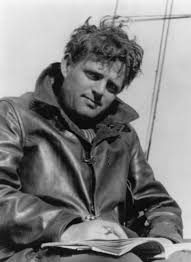
H.L. Mencken
Press of Atlantic City/August 30, 1929
The best psychologist in these parts is the Hon. William F. F. Broening, LL.B., imperial wizard of the Moose and, so I hear everywhere, the next Governor and Captain-General of the Maryland Free State. Long before anyone else paid any heed to the polesitter, he was out visiting the first champion and making a speech that will probably live as long as Lincoln’s harangue at Gettyburg. His intuitions in such matters are singularly apt and searching. It took him only ten seconds to perceive that pole-sitting would fetch Baltimore, and it took him only a minute or two more to reach the ringside. Has Baltimore got columns of valuable publicity out of the new Olimpiad? Then Dr. Broening has got the same.
When I speak of this publicity as valuable I simply accept the local standard, formulated officially by the experts in this art and mystery. If it profits us to send out news that a new soap factory is to be opened on Locust Point, or that the Tall Cedars of Lebanon are to hold a parade, then why shouldn’t it profit us to send out the pioneers still bubbles and festers in Baltimore’s infantry? Dr. Broening, in his historic speech, was quite right, it takes more than mere patience to sit on a pole for ten days. It takes, for one thing, moral courage, for the prevailing moves are against it. It takes toughness, especially posteriori. Above all, it takes self-reliance.
When these high qualities appear in the young it is not time for the judicious to cough sadly behind their hands, it is time for them to get out their best jugs and make whoopee. For what the phenomenon has to teach, speaking concretely, is that the young are still sufficiently limber to leap from under the steam-roller. With playgrounds everywhere, manned by hordes of assiduous ma’ms, they yet prefer to make their own games even at the cost of wet skins, stiff knees and parental glares. Let us rejoice that this is so—that some, at least, escape the uplift. For one boy on a pole, contemplating the world with easy independence, is worth a thousand in a squad, laboriously drilling to pedagogical commands.
That the sport looks idiotic to most persons on the ground is a fact of no consequence, for that is how all sports look to those who take no hand in them. I confess that to me, at least, it seems a great deal less idiotic than golf. I can imagine myself, to serve some great public end, sitting on a pole in my back yard, but I can’t imagine myself playing golf even to save the republic from the Japs. Golf happens to be my pet abomination.
It not only seems idiotic to me; it also seems shameful. When I hear of a friend devoting an afternoon to it, with so many pleasant saloons open and willing. I am affected as I’d be if I heard that he had been converted at a Methodist revival. I regard it as an attentat against human dignity. It is a disgrace to the human race.
But this, of course, is only a prejudice, and fundamentally irrational. No doubt it is possible, given the right attitude of mind, to play golf with decency, just as it is possible to spit at a mark with decency. Maybe my low opinion of the game is due to a subconscious blood thirstiness—a secret resentment of the fact that it so seldom kills. All I can say on this point is that I am aware of no regret when I hear that some fat and elderly golfer, making an obscene show of himself in the hot sun, has staggered, turned blue and barged into heaven, to the relief of his heirs and assigns. If there were more such fatalities on the links, the game would better justify its existence. But even if a dead wagon followed every foursome I’d still not play it.
In any case, pole sitting is better, if only because it is not done at country clubs and in grotesque and unsightly costumes. The pole sitter pursues his chosen folly on his private estate, in the manner of a gentleman, and does not rig himself out like a movie actor on a holiday. If candidates for high office choose to come and make speeches to him, he hears them with dignity, but does not commit himself. He does invite them to join him. He does not talk pole sitting. He joins no club. If he is absurd, then it is only in the sense that everyone who follows undeviatingly a difficult course is absurd. If he is laughed at, then so was Columbus laughed at, and St. Simeon Stylites, and Lindbergh and Coolidge.
Human beings, in fact, spend a great deal of their time laughing at one another. Every man seems absurd to his neighbor, not only in his diversions, but also in his sober labors. My own favorite object of mirth is one of the most austere and venerable figures in our society, to wit, the judge. If I frequent courtrooms very little, it is only because I have a high theoretical respect for his office, and so do not want to be tempted to laugh at him. That temptation, in his actual presence, is almost irresistible. There he sits for hour after hour, listening to brawling shysters, murkily dozing his way through obvious perjury, contemplating a roomful of smelly loafers, and sadly scratching himself as he wonders what his wife is going to have for dinner, all the while longing horribly for a drink. If he is not a comic figure, then there is none in this world.
Years ago, when I had literary ambitions, I blocked out a one-act play about a judge. Now that I am too old to write it I may as well give it away. The scene is a courtroom, and the learned judge is on the bench, gaping wearily at his customers. They are of the usual sort—witnesses trying to remember what the lawyers told them to say, policemen sweating in their padded uniforms, newspaper readers and tobacco chewers, and long ranks of dirty and idiotic old men, come in to get warm. In front of the judge a witness is being examined by a lawyer. To one side 12 jurymen snooze quietly. The place smells like an all-night trolley car on a winter night.
The judge, unable to concentrate his attention upon the case at bar, groans wheezily. It is a dreadful life, and he knows it. Of a sudden the opposition lawyer objects to a question put to the witness, and the judge has to pull himself together. The point raised is new to him. In fact, it goes far beyond his law. He decides in loud, peremptory tones, notes the exception, and resumes his bitter meditations. What a life! What a finish for a man who was once a gay dog, with the thirst of an archbishop and an arm for every neck! What a reward for long years of toil and privation! A tear rolls down the judge’s nose.
As he shakes it off his eyes sweep the courtroom, and a strange thrill runs through him. There, on the last seat, sandwiched between a police sergeant and a professional bondsman, is the loveliest cutie ever seen! There, in the midst of the muck, is romance ineffable! The judge shoots his cuffs out of his gown, twirls his moustache, permits a soapy, encouraging smirk to cover his judicial glower, and gives a genial cough. How thrilled the cutie will be when she sees that he notices her! What a day in a poor girl’s life! What an episode to remember—the handsome and amiable judge, the soft exchanges of glances, “Maude Muller” all over again. He coughs a bit louder.
The cutie, glancing up, sees him looking at her. Paralyzed with fright, she leaps out of her seat, climbs over the police sergeant, and flees the courtroom.
Maybe this play won’t seem as sad to you as it does to me. If so, forget it. But don’t forget that all of us are poor fish, and that the distance between the judge and a polesitter is not, after all, very great. All of us, in this world, play the parts of melancholy clowns, and appear ridiculous to the other clowns. If your taste in humor is bitter, try to picture to yourself an elderly and somewhat rheumy man, weighting nearly 200 pounds and full of all sorts of rare and valuable learning—picture such a man sitting in his underclothes on a hot, sticky night, writing such stuff as the foregoing. Yet the kingdom of Heaven is full of such fellows, and others swarm in Hell.
The pole-sitters are no better and no worse. They are less dignified than judges, but more rational. They don’t know much, but what they know is true—that there are fewer flies in the air than on the ground, that hard boards grow softer when one is used to them, that people are easily entertained and easily gulled, that a statesman making a speech is a gruesome spectacle, that sitting on a pole is a great deal better than going to school. A judge knows more, but very little of it is true; his mind, if he sticks to his trade, becomes a junkheap of lugubrious nonsense. He, too, sits on a pole, but it teaches him nothing.
 The Archive