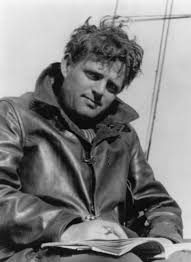
Ray Stannard Baker
Harper’s/September, 1899
It was said of Kitchener of Khartum: “Other generals have been better loved; none was ever better trusted.”
These words fit as if they had been spoken of Admiral William T. Sampson. There have been those who wondered why a junior officer, captain of a ship—when there were many rear-admirals, commodores, and even captains of higher rank and longer experience in the navy—was appointed to the supreme command of the greatest fleet ever gathered under the American flag, and that with the almost universal commendation of the men who knew him best, not excepting the officers who had thus been superseded. The great public is well informed regarding this particular advancement, and yet it was only one of many in Sampson’s unusual career. Sampson became superintendent of the Naval Academy as a commander, when the post had been filled for years previously by rear-admirals, commodores, and captains. He was elevated to the important position of Chief of the Bureau of Ordnance as a captain, a position usually held by an officer of higher rank. He was selected while yet a captain for the distinguished honor of representing the United States Navy at the International Maritime Conference. He was the first commander of the largest of American sea-going battle-ships—the “Iowa.” He was the man naturally selected from all the navy as the president of the board which was to inquire into the “Maine” disaster. It was no sudden freak of political or popular favor—indeed, Admiral Sampson is not a popular man, so called—that made him chief at the naval battle of Santiago. All through his long career, his appointments have come without reference to the political color of the existing administration. He has held intimate advisory positions under both Republicans and Democrats, and has been equally trusted by each. He never had a political friend, in the commonly accepted meaning of that term; he never in his life sought any position, either directly or indirectly. He was always called up; he never forced himself up.
All this argues unusual qualities of mind and unusual moral fiber; but it argues, more than anything else, a certain superb trustworthiness. “There is no man more thoroughly trusted by the Department and by all his fellow-officers in the navy than Admiral Sampson,” said Secretary John D. Long, of the Navy Department. It is a trustworthiness of that rare yet homely sort that grows best in Anglo-Saxon soil. It regards not only the interests of the country and of the navy; but, higher than either, it governs Sampson’s own interests, for he is without personal ambition.
It will not do to draw the parallel between Kitchener and Sampson too closely, for in many of the deeper things of character they are widely different; and yet I cannot refrain from quoting another characterization of the conqueror of Khartum, the man “who has worked at small things and waited for great, marble to sit still and fire to smite; steadfast, cold, and inflexible.” This somehow suggests Sampson. At least, it may well be borne in mind in reviewing Sampson’s career.
It is sometimes difficult to account properly for a man. At first glance, it would seem that Admiral Sampson grew in meager and unfriendly soil. His father was a plain day laborer, an Irish immigrant; his early home was in the woods of central New York; his opportunities for schooling were limited; his incentives to rise were few. And yet this north of Ireland stock, nurtured in poverty and Presbyterianism, vital of body and light of heart, is fertile in good men. Somehow genius seems always smoldering just beneath its surface, ready to leap forth when opportunity arises. In this case, as in that of many other famous Americans, the opportunity came with the stimulation of emigration. The Admiral’s father and mother, James Sampson and Hannah Walker, came to New York in 1836, and settled at Palmyra, on the bank of the Erie Canal. The elder Sampson was a man of great physical strength and endurance, although of little ambition. He was steady, plodding, silent, even dull-minded; he possessed few of the active virtues, but in those of a negative sort he was rich. Thus he was temperate, clean, self-controlled; he was kindly in his family; he worked steadily for his day’s wages, and spent his evenings at home; he saved what money he could. These virtues he bequeathed as the best of legacies to his children.
What he lacked—a touch of the fire of imagination and spirituality—his wife, the Admiral’s mother, made up. Mrs. Sampson was a woman of rare native refinement and ability. She was sweet, even beautiful, of face, and strong and steady and kindly of character. She was proud of her children—the Admiral was the oldest of a family of eight—and ambitious for them with all the keen ambition of mother-love. She was deeply, but practically, religious. An old friend of the family in Palmyra told me that he had often seen her on a Sunday morning with her little flock of children around her, all neatly dressed in honor of the day, coming down to the Presbyterian church—a walk of a mile. Although weighed down with the heavy duties of a poor man’s family, she yet found time to read much and to spur her children on in their development. The Admiral and his sister Lizzie were both naturally studious, and between these two and the mother there sprung up a warm companionship and friendliness, which meant more to them, perhaps, than their kinship. The close relations between brother and sister continued for years, the Admiral, while still in the struggling stages of his early career, sending his sister to Mount Holyoke Seminary, that she might complete her studies.
It was a good, green country, with weather-colored houses and big red barns, this central New York, where Sampson grew up, the kind of country in which an imaginative boy might expand. His opportunities were few, but he made the most of them. From the very first he was at the head of his classes in school. His mother would assume any burden rather than disturb her children in their education. Mr. Pliny B. Sexton, president of the village bank of Palmyra, who was a schoolmate of Sampson’s, said of him: “He was the busiest boy I ever knew. Many times I have seen him run all the way home from school to help his father. I don’t think he ever played ball or went skating in his life; he was too busy. He was one of the best-liked boys in the school, although never what could be called popular. We called him ‘Will,’ never ‘Billy’—which you will recognize as a tribute to his dignity.”
Miss Hannah Sampson, the Admiral’s sister, who still lives in the old family home, says that the boy was a great reader. He devoured all manner of books on history, mechanics, and branches of natural science, and he even enjoyed mathematical works. Novels did not interest him. Before he was sixteen years old he had borrowed and read, so Mr. Sexton told me, nearly every book in town, except story books. And most of this reading was done, like Lincoln’s, early in the morning or late in the evening, for there was always hard work to do as long as daylight lasted. During school vacations, young Sampson worked steadily with his father, sawing wood, spading gardens, digging ditches, and doing odd jobs about the village. For a time he worked for twenty-five cents a day in a brick-yard.
And thus he came to his seventeenth year—he was born in 1840. At this time there was a vacancy in the Naval Academy to be filled from the Palmyra congressional district, and Congressman Morgan of Aurora had the right of appointment. Two boys of influential parentage were named for the position, but owing to the objection of their mothers, the offer was declined in both instances. Then Mr. Morgan asked the principal of the Palmyra school for the name of his brightest boy. The answer came without a moment’s hesitation, “Sampson.” The Admiral’s mother was overjoyed at the opportunity thus opened, but his father objected. The elder Sampson was growing old, the boy was now strong enough to do a man’s work, and he was needed at home. But Mrs. Sampson laid her hand on her husband’s shoulder, and her words are now historic in Palmyra. “I want one son,” she said, “who won’t carry a sawbuck on his shoulder all his life.”
It so happened that, when the official announcement of Sampson’s appointment reached Palmyra, a number of politicians were gathered in the office of the local newspaper, in Main Street. One of them looked out of the window. There in the street were James Sampson and his son digging a ditch connected with some public improvement. “Gentlemen,”’ he said, “if you wish to see the future Admiral of the United States Navy, look out the window.”
And so young Sampson left his native town for the first time in his life, to go to the Naval Academy. In the sifting which follows when a hundred boys are thrown together in the same class, Sampson came out, as usual, at the top. Admiral John W. Philip, who was a member with Sampson of the class that entered in 1857, showed me a yellowed old book in which he had kept the class standings. At the Naval Academy four is the perfect marking. Well, it was amazing to see with what regularity Sampson won fours. Apparently it made not the slightest difference whether the subject was mathematics, French, moral science, or seamanship, his grade was nearly always four. “I remember well,” said Admiral Philip, “the struggle of the four S’s—Sampson, Stewart, Stone, and Snell. They fought for first place all through the course, but Sampson came out ahead. He was graduated number one.”
Such scholarship as this sometimes makes a boy unpopular with his classmen, but it was quite the reverse in the case of Sampson, for he was not given to conceit or pomposity; he was sane of mind and simple of heart—a gentleman by nature. But he was much too quiet and dignified—even cold, if you will—to become a boy’s good-fellow, although no midshipman in the academy was more thoroughly respected and trusted. In his last year, he won the greatest honor that can come to a cadet: he was appointed adjutant of his class—a position bestowed not so much for scholarship as for the general qualities which go to make up a good seaman and soldier. So far as I could learn, Sampson never appeared in any of the games or sports of the academy; he received few demerits; he never was in a rough-and-tumble fight, although he had muscles of steel and unusual physical endurance—a boy who could study eighteen hours out of the twenty-four and retain his vigor and health. Years later, during the long blockade of Santiago, he never retired until after midnight, and he was invariably up at four in the morning. All through the years at the academy he was developing the stern self-discipline which was to carry him to many honors. His intellect was of the kind that Huxley describes as “a clear, cold logic engine, ready to be turned to any kind of work, and spin the gossamers as well as forge the anchors of the mind.” It mattered not what subject was before him, he went at it steadily, methodically, unrelentingly.
“It wouldn’t have mattered,” said a friend who has known the Admiral ever since his academy days, “what Sampson had set out to be; he would have mastered any subject. He would have made a good scientist—in fact, he is a good scientist; he would have made a first-class college president, a lawyer, a doctor, or even a preacher—or, rather, a theologian. No matter where he has been placed in the navy, whether to make astronomical observations at Washington or to fight Spaniards at Santiago, he has done everything well. It is the quality ot genuine greatness.”
During Sampson’s first furlough home from Annapolis, he wore the first overcoat he had ever owned—the one he drew with his uniform as a cadet. His father was still laboring about the village, and the young midshipman, without a thought of his position, took up the shovel and sawbuck and worked out his furlough. It was at this time that he met his future wife, Miss Margaret Aldrich. The Aldriches were prominent people in Palmyra, living in a fine old place some distance out from the village. During Sampson’s furlough they gave a party, and there was some question about the advisability of inviting the young cadet, who had been seen that week ditch-digging with his father. Social distinctions in a small town are as sharply drawn as in a great city, but Miss Aldrich insisted that Sampson be invited. He came; they were married three years later. Following his graduation from the Naval Academy in 1861, he was appointed a master, and in 1862 he became a lieutenant, and was assigned to the old sailing-ship “John Adams,” then used as a practice-ship for naval cadets. One of the officers—then a cadet—who accompanied him on a cruise from Newport to Port Royal, South Carolina, speaks of his qualities as an officer: “He was never excited, and never hurried, and he never seemed to raise his voice, and yet his orders could be heard distinctly by the men at the weather-earing when reefing topsails.”
Captain French E. Chadwick, the Admiral’s chief of staff, knew him as an instructor in the Naval Academy, a position which he held in 1862. “The first time I ever saw Sampson,” this officer writes, “I was going down Pelham Street—I was then a midshipman—and I met a new officer coming up on the opposite side. I knew him to be Lieutenant Sampson, just arrived. He was at that time of the mature age of twenty-two; sufficiently old from my period of view, and naturally of interest as a new ‘instructor.’ But what most impressed me, and what has always remained in mind, was his extraordinary beauty of face and color, which I have always thought was the finest I ever saw in a young man. Later on, I came to recognize another quality of like enviable kind: a remarkably clear, musical, and resonant voice, low in talking, but one that could be heard with ease anywhere on a ship—a gift the value of which in those days of canvas can hardly now be appreciated.
“Along with this unusual personal beauty (I use the word advisedly, and I mention it only because it was so marked), there was a great absence of self-consciousness. I am sure Sampson never gave a thought to his personal appearance beyond what ordinary personal care demanded. Posing is as far from him as it was from Abraham Lincoln; he has always been the simplest of men; of a simplicity which is the highest type of manners.”
At this time the country was in the midst of the Civil War, and Sampson was anxious to go to the front and put in practice some of the precepts of the Naval Academy. His opportunity finally came in 1864, when he was assigned to the ironclad “Patapsco,” then doing duty with the blockading squadron off Charleston. It was dreary, nerve-wearing work, but it fitted the young officer, perhaps, for another and more notable blockade thirty-four years later. Just at the close of the war, the “Patapsco” met with a most dramatic and terrible fate; and Sampson’s conduct was what one would expect it to be from later knowledge of the man: cool, self-possessed, and perfectly courageous. The ship had been sent one night, in accordance with the usual custom, to cover the patrol-boats. It crept in toward Charleston under cover of dense darkness. Sampson was in the pilot-house with the captain; the other officers were forward in the wardroom. Of a sudden there came a violent shock; the bow of the iron vessel was lifted bodily from the dark water, and upward through the decks came a crushing burst of water, steam, and fire. At first, Sampson thought the ship had been struck by a heavy shot; but a sharp lurch forward and a swift settling in the water told the story of a torpedo. Every officer in the forward wardroom had been instantly killed; the ladder leading up from the berth-deck had been thrown down by the shock, so that most of the seamen died struggling below. The captain stepped from the turret into one of the boats, which floated from its cradle as the ship settled. But Sampson, springing to a boarding-netting near by, caught one of his feet in the meshes, and was drawn down with the sinking ship, the waters rushing in above him. Most men under similar circumstances would have struggled desperately, only to become more hopelessly tangled in the ropes. But Sampson’s cool, methodic mind served him well; he took his time to it, waiting until the terrific downward strain was somewhat diminished; then, twisting his foot carefully, slipped it from the mesh, and shot to the surface of the water, and was rescued.
Succeeding the Civil War came several long cruises, interspersed with the shore duty of a long peace. Sampson was with the flag-ship “Colorado” on the European station from 1865 to 1867, and on the “Congress” in 1871-1873. He commanded the “Swatara” on the Asiatic station from 1879 to 1882, and the “San Francisco” in the Pacific from 1890 to 1892.
Sampson’s discipline on shipboard is as rigid and faultless as his own self-control. He never raises his voice, nor storms; he rarely praises; and yet he is obeyed and respected as few men ever were. This is no doubt partly due to his absolute courage. “You can’t frighten him; you can’t even startle him,” a gunner said of him.
Sampson has always taken a keen interest in the boat races and other sports of his men, and at one time, while he was on the “San Francisco,” so Coxswain Fraser told me, he released a prisoner from the brig to help win a famous race against a boat crew from one of Her Majesty’s ships. And when he finally left the “San Francisco,” the board of inspection not only complimented the ship in unusual terms, but the seamen manned the rigging and gave him three cheers—a mark of honor only accorded to a well-beloved officer.
Sampson’s shore service has been largely that of the trained scientist, a department of work to which his methodical and penetrative mind turned with great avidity. He was twice connected with the Naval Academy as instructor—five years in all—before he became its superintendent, in 1886. His work dealt chiefly with physics, chemistry, metallurgy, and astronomy, in all of which he was singularly proficient. His scientific attainments were so well known that, as far back as 1878, he was sent to Creston, La., to observe a total eclipse of the sun. Nor was he ever content with a mere superficial knowledge. A naval officer who knows him well told me that, when he served at the Naval Observatory (1882- 1885), he spent night after night, weeks at a time, making personal telescopic observations and familiarizing himself with the intimate details of the work. Many men in the same position have been content to attend exclusively to the executive work of the institution and permit the government astronomer to make all of the observations. Later, his work at the Newport torpedo station (1885-1886), of which he was superintendent, dealt largely with the difficult technical and scientific aspects of making and testing ammunition, powder combinations, and a hundred and one other intricate, but vastly important, details in the great machine of the navy. His high attainments in the technical side of war were recognized in his appointment as a member of the Board of Fortifications and Defences and as the delegate of the United States to the International Maritime Conference. Indeed, between November 1, 1884, and June 1, 1885, he was assigned to important special duties no fewer than twenty-one times. He was selected for all of these positions because he had the rare ability of going straight to the heart of a subject and of drawing his conclusions with eminent clearness and common sense.
“He is one of the clearest-headed men I ever knew,” said ex-Secretary of the Navy Hilary A. Herbert; “he has a remarkable facility in stating a proposition lucidly and in the fewest possible words. In this respect I never knew anyone to equal him.”
Sampson’s shore duties have also included the executive direction of some of the Government’s greatest business institutions. Few even of the wealthiest corporations in the country spend $6,000,000 a year, and yet Sampson directed the expenditure of more than that amount annually during his four years (1893-1897) service as Chief of the Bureau of Ordnance—one of the most distinguished positions in the gift of the Government. Here, and at the Naval Gun Factory, of which he was superintendent in 1892, Sampson’s scientific attainments found their greatest scope and purpose. He had supreme charge of providing the armor plate for the vessels of the navy, and of buying and testing projectiles, ammunition, and small arms, and, at the gun factory, of building the great guns. And thus he was instrumental in building and arming many of the ships which he fought so successfully at Santiago. He knew, perhaps better than any other man with the fleet on that July morning, just what his ships would do, just how perfect they were as war engines, how much they would stand in defense, how much they could offer in offense. What better man could have been chosen to the supreme command?
While at the head of the Bureau of Ordnance Sampson also made many important innovations and improvements. During his term of office he developed the plans for the superposed turrets in the two new ships “Kearsarge” and “Kentucky,” and upheld his belief in their efficiency against many opponents. He devised many new and valuable tests for armor plate and ammunition, even going so far as to construct a section of a battleship in model with the framework arranged exactly as in a full-sized ship. He had become convinced of the resisting power of armor plate, but he did not feel altogether sure that the interior construction would bear the terrific impact of great shells; this question was settled by the model. He tested and adopted the new small arms now used in the navy, and to him more than to anyone else was due the successful exposure of the celebrated armor-plate frauds at the Carnegie steel works, which saved the Government many thousands of dollars. “I do not think the Bureau of Ordnance ever had a more efficient and more able chief,’ ex-Secretary Herbert said of him.
During these years of service in the Bureau of Ordnance, Sampson was constantly called upon for consultation by the Secretary of the Navy and even by the President. He never offered advice unless it was asked, and what he said always carried great weight. He had so evidently eliminated the personal element, had so subordinated the worker to the work, that there was never a taint of prejudice or even of preference in his recommendations. Says Professor Philip R. Alger, who worked with him four years in the Bureau of Ordnance: “He was especially characterized by fairness and openness of mind. He was entirely without prejudices, and, unlike most men, he always considered a proposition on its merits alone. Another characteristic was his trust in his subordinates. When he assigned a certain duty to any one of them, he always seemed to have perfect confidence that it would be done, and well done—a sure method of encouraging zeal in anyone worthy of encouragement.”
Sampson carried his trait of personal disinterestedness to its utmost limits. It is the privilege of officers assigned to the command of a vessel to make selection of the junior officers who are to compose their staff. Sampson never in his career exercised this privilege but once, in the case of a single flag lieutenant. When he was ordered to the “Iowa,”’ an officer of high rank in the navy came to him at his office in the Bureau of Ordnance to request a position for a friend. Sampson heard him through quietly; then said: “I never make a practice of selecting my officers, and those I do get have to do their duty.”
This element of stern fairness, that asks nothing, but demands its rights to the uttermost, has given Sampson the reputation of being cold, but it has also placed him on an unapproachable plane of respect and admiration. If an officer or a seaman does his duty, he knows that Sampson is a steady and a powerful friend; if he is derelict, he knows exactly what to expect and that no influence from any source can save him. “If Sampson had only made a few mistakes and failures,” a naval officer said to me, “we should love him as much as we respect him.”
I repeated this remark to another officer, and he responded: “If he could tell a good funny story—”
And yet, in the very inner circle of his friends, and in his family. Admiral Sampson is as genuinely loved as by those outside he is respected; and he even tells the “funny story,” although it partakes rather of the nature of wit, often rapier-like in its keenness, than of humor.
Early in 1897, Sampson was ordered to the command of the “Iowa,” with the construction of which he had been so closely identified. The events of February, 1898— the destruction of the “Maine” and the imminence of war with Spain—found him next in rank to the commander-in-chief of the North Atlantic Squadron. Admiral Sicard’s health was such, at this critical period, that he found it necessary to give up the command, and Sampson was at once appointed to fill his place.
“No one was more surprised at this than Sampson himself,” said Captain Chadwick; “this I know to be a fact. The captains of the squadron were unanimously wishing that he might be selected, hoping—rather against hope—that the few months intervening until his promotion to the rank of commodore might not stand in the way. Whatever was said in favor of the appointment was not said by Sampson or with Sampson’s knowledge. The navy knows its own, and whatever urging was necessary in the Department (and I do not know that any was necessary) was done by naval officers only, two of whom, I was much later informed, mentioned the hope to the Secretary. But the selection was the Secretary’s own. He told me after the war that no influence of any kind whatever was even mentioned; that the appointment was wholly due to what he knew of Sampson’s character in the short intercourse he had with him before he left the Bureau of Ordnance to command the “Iowa.”’ To Sampson himself, the idea of reaching out for an appointment would never occur; it is simply that self-seeking is entirely absent from his nature; it could not come to him. He came to the command with the thorough confidence and affection of every captain in the fleet, a step toward victory in itself, and it was a confidence and affection which never wavered.”
There were four great stratagems in the campaign against Cervera, and they all originated with the commander-in-chief—Sampson. The first was the sinking of the “Merrimac,” a plan devised by Sampson long before he reached Santiago. The second involved the close blockade of Santiago, in which the ships were stationed in a semicircle six miles from the harbor mouth by day and four by night, and later closer, instead of ten or twenty miles out, the usual disposition of the fleet prior to Sampson’s arrival. The third, and possibly the most important, was the continued use of a search-light covering the harbor mouth during the night. Cervera himself has said that this prevented him from making a night sortie. And fourth, the plan of the battle itself was Sampson’s. He had provided for every possible contingency. If the Spanish ships came straight out and offered battle in deep water, every American captain knew just what to do; similarly, if the Spaniards went east, or went west, or divided, every captain had his orders, so that he could fight the battle, as it was fought, without signals. It is not the naval battle of Santiago itself which awakens the admiration of the men who know, so much as the blockade that preceded it. There are few outside the service who can appreciate the terrible strain and responsibility which a commanding officer on blockade duty must bear. A fleet is not like a slow-moving army; its strides are three hundred or more miles a day. For nearly ten days, it now appears, Cervera was perfectly free to leave Santiago; and to know whether he had done so, and if he had done so, where he had gone, was a serious problem. Moreover, a whole nation was watching Sampson intently, and waiting to pass judgment. He knew not at what moment to expect an attack, for there were alarms at every hour of night and day. Through those long, hot weeks before Santiago, he never wavered, never lost his temper, and bore with magnificent restraint and steadiness the clamors of his impatient country and the alarms incident to the blockade. He brought to bear the self-discipline of a lifetime. Neither by word nor look did he show that the responsibility was unusual. But he came back, Mrs. Sampson told me, looking older and grayer by ten years than when he went away. Sampson came to Washington only twice during the entire summer following the battle; and then quietly, on strictly official business. He did not go to any of the clubs, nor to the Capitol; and of the hundreds of social invitations with which he was flooded he accepted few.
It was not that Sampson did not feel as keenly as any American the wonder of the great victory; but he would not be lionized for it. He had done his duty; every other man in the fleet had done as much; why, then, should he be praised above the others? That was his way of looking at it. And yet there never was a man more keenly gratified than he in winning the admiration of those who really appreciate the strategical perfection of his campaign. One should no sooner expect to see Sampson accepting an honor he had not earned than to find him clapping a senator on the shoulder and asking him for his influence with the Secretary of the Navy. At one time, while he was Chief of the Bureau of Ordnance, a visitor addressed him as commodore, a designation to which he was entitled by virtue of his position, but he said: “Do not call me commodore; I am a captain.” That is the spirit of the man.
Sampson was much worn after the Santiago campaign, but he did not ask a leave of absence; instead, he returned to Havana almost immediately, to take part in the trying labors of the Evacuation Committee. Following that, he made an extended cruise with his ships in the West Indies, and up to the time of the writing of this article he has not had a moment’s respite from service.
Sampson’s home life has been as unpretentious and as devoted as his naval service. His first wife died in 1878, and in 1882 he was again married—to Miss Elizabeth Burling. He has four grown daughters, two of whom have married naval officers; and two sons, aged eleven and nine. During the Santiago campaign, Mrs. Sampson lived in a beautiful home at Glen Ridge, New Jersey. The Admiral’s relations with his children are more those of a kindly older brother than of a father. Indeed, the real man is best seen in his home. He is full of quips of speech at table, bits of story and information, his keen mind playing upon and sharpening the minds of his boys. Cheap wit has always disgusted him, but he enjoys good humor as much as anyone, although he rarely smiles, except with his eyes; and he detests vulgarity and profanity. His wife told me she never saw him excited nor out of temper; and only once, when he happened to see a torpedo-boat blown up within plain view of the window at which he was sitting, did she see him hurry. His habits of studiousness, acquired as a boy, still cling to him, and he reads many books of substance and information. Of late years he reads more novels; “David Harum” pleased him greatly. He cares for music, but not greatly for the drama; he never makes a speech when he can avoid it. He never voted but once—for Lincoln at his second election. He is a man of deeply religious instincts, although in this respect, as in all others, he is thoroughly unostentatious. He attends the Presbyterian church as regularly as his sea duties will permit, and is always present at services aboard ship. His religion is a matter of character rather than of form, and yet in his account of the bombardment of Santiago, he says: “Captain Philip having called my attention to the fact that it was Sunday, I decided, as it was not necessary to bombard on that day, to postpone operations until the same hour on Monday.”
Although methodical of manner, Sampson is a man of much physical agility and strength. For years he has been a good tennis player, never neglecting an opportunity for a game even in a foreign port—and he plays with remarkable activity. He is also a bicycle rider, but more for exercise than for enjoyment. In person he is a man somewhat above medium height, rather slender and straight and well knit. He is always dressed with scrupulous neatness, down to the last detail. He never wears a uniform when away from his ship, if he can avoid it. At first sight, one might take him to be a college professor, and yet he wears the unmistakable distinction of command. His forehead is broad and full at the temples; his hair is iron gray and rather thin; his beard is short and always recently trimmed; his nose is sharply cut and perfectly molded. His eyes are remarkably brilliant and expressive. They are large and dark and clear, and while the remainder of his face is somewhat immobile, they tell every changing emotion.
Even in its sea phases, Sampson’s life has not been marked by the startling and heroic incidents that seize so readily upon the popular fancy. Yet the faithfulness to every routine of duty, the close attention to discipline and order, the constant striving for greater efficiency, that have peculiarly distinguished him during all his career, were the best possible preparation for such work as the country required of him in the spring of 1898. It was the same with Farragut. Barring Farragut’s presence as a very youthful midshipman in the famous fight made by the “Essex” against the “Phoebe” and the “Cherub,” there was no “event” in his career until he came to the great command which made him famous. But there was the same steady hold on the appreciation of his fellows, the same hard application to work, that is found in Sampson’s career. When you come to think of it, Sampson spent about forty-two years in winning the battle of Santiago. During all of that time he worked in almost total obscurity, so far as the American people at large were concerned. His name was not as well known, except in a limited circle, as that of many a boy politician. I was shown a scrap-book in which Mrs. Sampson has kept the notices of her husband for years past. There were perhaps a score of them, all short, and dry with the dates and duties of a naval man’s “record.” I think his picture was printed twice in the newspapers before the Spanish War. In a single July day he became famous the world over. But it was not a change in the man; Sampson was as great in January, 1898, as he was in July: only the people did not know it.
 The Archive