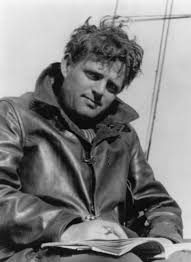
Dorothy Thompson
Indianapolis Star/January 20, 1940
THE ACTION of the United States Congress in the matter of the loan to Finland is simply incredible. In one of the most critical moments of history Congress has chosen to behave with supreme frivolity. in a moment when every small neutral in Europe is trembling in fear of an extension of undeclared war; when all Scandinavia fears a breakthrough of the Russian armies, and when Holland and Belgium fear an assault from Germany, the world’s greatest neutral has slapped Finland’s face in the most ostentatious way and in view of the whole earth.
Finland would never have applied for a loan had there been the slightest indication that it would be refused. The refusal is a staggering political blow. It is the greatest bloodless victory that Stalin has had thus far. It is, at the same time, aid and assistance to the most immoderate forces in Germany. The moderates have been trying to stay Hitler’s hand by telling him that another aggression against a neutral state would outrage all neutral countries, particularly the great United States.
Now the Congress has given notice that our outrage will only be expressed in sending a handsome wreath to the funeral, bearing the inscription, “He was an upright man and paid his debts.”
We will collect money from individuals to feed the innocent neutral victims of the Russian or German steam roller. Millions for bandages and food, but not 1 cent for a gun with which to defend yourself.
Save your money, friends. Dead men don’t eat.
We must bring ourselves to realize that every action taken by the United States government today has positive diplomatic and political effects, outside and inside the United States.
The international effect of Congress’s refusal to distinguish between declared wars among great powers and undeclared assaults on neutrals is to strengthen revolutionary gangsterism all over the world outside this country and inside it as well.
The Communist Daily Worker, the mouthpiece of the Soviet government, published right in New York and distributed to American workers, is jubilant this morning.
Does the American Congress not know that the very subversive elements for the investigation, of which Congress has already given millions to the Dies committee, are all rejoicing today?
The essential propaganda of the Christian Front and the Communist party and the German-American Bund, whose leaders are at this moment under indictment or already condemned for fraud or planned violence, is that there are war-mongering profiteers.
It is no concern of ours, according to them, whether Finland, Sweden, Norway, Holland, Switzerland, the solid, solvent nations embodying as deep a Western culture as exists—are cynically erased off the map tomorrow.
For in the welter of destruction and despair that will follow such collapse the gangster with the gun will be the sole rallying point. Meanwhile, in the United States, a bland and complacent feeling of security and isolation will have been created. The distinctions between right and wrong, between aggression and defense, between civilization and barbarism, will have been broken down. “If we lend money to the Finns we shall be dragged into war,” must be put alongside Earl Browder’s statement before the Dies committee that he would try to make a civil war in the United States if this country were ever in hostilities with the Soviet Union.
Does not the Congress see the connections between these things?
And where is the consistency in our policy? We refuse to recognize territorial changes brought about by force. We do not recognize Manchukuo or the Bohemian-Moravian state carved by Germany out of Czecho-Slovakia. We stand for the sanctity of treaties and the rule of international law. We have exacted from the nations of the world a solemn pledge not to resort to war as an instrument of national policy. We have lent money to China and refused to apply the neutrality act in the Far East. We have in all our words stood for order and recognition of law.
But if we turn down the loan to Finland we shall stand for international anarchy and hope that, by repressive measures at home, we can stop it from spreading here—while we give notice to the world that the United States is scared.
But this time I think Congress has made a mistake. It is wrong in gauging public opinion. The American people want to send substantial help to Finland with the object of helping Finland and all the other neutrals resist invasion. Conversation with any man you speak to in the street shows it. The people have a far better instinct than Congress has. They know that the earth is round and that if this anarchy spreads we shall suffer.
The behavior of Congress indicates, however, that the nation is at present without leadership and without policy. The party leadership has collapsed. The Republicans are not following anyone, and neither are the Democrats. There is no direction in foreign policy. Congress is not accepting the views of the Department of State. We are not, in short, being governed or being allowed to govern ourselves.
What happens from day to day depends upon how senators and congressmen have laid their bets on the political roulette wheels. This preposterous irresponsibility sows confusion abroad, breaks down the confidence of this nation and leaves us open to intermittent and inexplicable waves of fear.
This is unfortunate. We are not behaving like ourselves.
 The Archive