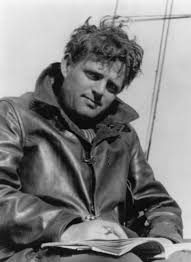
Ray Stannard Baker
The Outlook/January 5, 1895
THE Lexow Committee finished its hearings, at least for the present, last Saturday night, after a week crowded with interest—indeed, altogether too crowded as regards the number and importance of the witnesses to make their examination as thorough as might be desired. Inspector Williams listened to the rehearsal of his brutal and corrupt conduct for many years with a stolidity gained in many previous trials. He made no confessions; brazenly denounced all his accusers (including grand juries, mayors, and citizens) as liars; declined to explain why he had not closed infamous resorts except because they were “fashionable;” admitted that he had in unexplained ways acquired a fortune out of a small salary; admitted that a man interested in a brand of whisky which Williams has been accused of “booming” by his influence on liquor-dealers had given him $6,000 without any apparent cause; claimed ignorance of pretty much everything that as an efficient officer he ought to know; offered no explanation as to the direct charges of bribery brought by Captain Schmittberger and others; and finally retired from the stand to receive the warm congratulations of his friends that he had not said anything which would aid in sending him to jail!
Inspector McLaughlin’s testimony and the impression made by his conduct on the stand were much like those of Williams. Commissioner Martin’s evidence was of little importance, the most significant thing being his admission that appointments and promotions were made mainly through political favoritism. This was confirmed by Superintendent Byrnes, who declared that political jobbery was the curse of the Department and the obstacle against which he had struggled in vain in attempting to enforce discipline and prevent corruption among the captains and inspectors. Mr. Byrnes claimed efficiency for the police in many ways, and declared that the patrolmen were a splendid body of men, who needed only to be well officered to be the best force in the world. He warmly advocated the abolition of the “bi-partisan system.” He frankly admitted that he was worth $350,000, and said that his services in a semi-official capacity to Jay Gould and other rich men had led them to aid him in fortunate investments. Superintendent Byrnes caused a sensation by reading a letter he had sent to Mayor Strong, authorizing the latter to send the Superintendent’s resignation to the Board of Commissioners at any time after the first of the year.
Thus ends the investigation into the facts; it is for the Legislature to say whether it is to be resumed, and to determine upon the best plan of reorganization and reform. That reform and reorganization are necessary is now questioned by none. With the new year a complete system of civil service rules governing the police force of Chicago will go into effect. This reform, emphasized by the public clamor for a police investigation, will, it is hoped, release the department permanently from the domination of political machines. The primary cause for the change was the same that gave birth to the Lexow Committee—an aroused public opinion. The agitation began more than a year ago with the formation of the Civic Federation. All the machinery of reform was in place, and it required but the unrestrained outrages committed under the eyes of the police during the recent election to set it in motion. Public indignation reached a high pitch. Two or three powerful organizations took up the work of prosecution, and the City Council, overwhelmingly Republican, and bitterly opposed to the domination of the Democratic City Hall machine, threatened an investigation. To forestall an attack on the administration, Mayor Hopkins realized that something must be done, and done promptly. On November 19, thirteen days after the election, he appointed a Police Reform Commission, and gave it power to place the force under civil service rules. The members of the Commission, John W. Ela, John H. Hamline, and Harry Reubens, are all prominent lawyers of undoubted integrity. Two of them are Democrats, and one, John H. Hamline, a Republican. Encouraged by a hearty public sympathy, the Commission took up its work with enthusiasm, and on December 11 a report was made to the Mayor, and promptly approved by him and Chief of Police Brennan.
The new rules of this Commission not only apply to future applicants for positions, but provide for placing the whole force at once on a reform basis. An examination is ordered for all patrolmen and officers who have not seen ten years of service—about 3,000 out of a total of 3,500. In order to pass, the applicant must have an average of sixty-five per cent, but officers now on the force will be credited five points for each year of experience—thus placing a premium on length of service. Tests, both mental and physical, are to be applied to all applicants, and strict rules for promotions established. The Chief of Police is the only appointive officer and the only one who is not subject to the examination system. All charges against policemen will be tried before a non-partisan trial-board of citizens, to be selected at will by the Commission and changed at will by the Commission. Appeals may be taken from the trial-board to the Commission in cases dealing with political interference in appointments. The strictest rules are laid down against the use of political influence by police officers in any way. The present Commission has been fully empowered to put its plans in operation, and Mayor Hopkins expresses confidence that the rules will be in such thorough working order by the next municipal election that a new administration will not dare to go back to the old system. But, to provide against even this possibility, the Commission is now engaged in drafting a bill, to be presented to the Legislature at its next session, which covers the main features of the new plan and makes it a permanent institution. In the meantime the question of In the meantime the question of a thorough police investigation has been vigorously agitated, and this, no doubt, has had much to do in spurring Mayor Hopkins to getting his Commission into working order as promptly as possible. Alderman Kerr succeeded Alderman Kerr succeeded in having a special committee appointed by the City Council to conduct an investigation, and he then came to New York to look into the workings of the Lexow Committee. When he returned, however, the opposition in the Council had grown strong enough to refuse an appropriation for carrying on the work. But the necessary money may be raised by popular subscription and the investigation pushed forward.
 The Archive