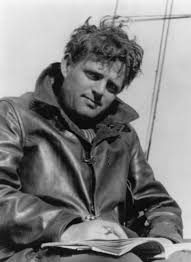
H.L. Mencken
The Morning Union/December 13, 1925
I.
The centenary of Johann Strauss the Younger, which fell on Oct. 25, seems to have passed almost unnoticed in the Republic. In Berlin and in Vienna it was celebrated with imposing ceremonies, and all the German radio stations put “Wein, Weib und Gesang” and “Rosen aus dem Suden” on the air. Why wasn’t it done in the United States? Was the pestilence of jazz to blame—or the scarcity of sound beer? I incline to answer No. 2. Any music is difficult on well water, but the waltz is a sheer impossibility. “Man Lebt Nur Einmal” would be as dreadful in a dry town as a Sousa march at a hanging.
For the essence of a Viennese waltz, and especially of a Strauss waltz, is merriment, good humor, happiness, Gemutlichkeit. It reflects brilliantly the spirits of a people who are eternally gay, war or no war. Sad music, to be sure, has been written in Vienna—but chiefly by foreigners: Haydn, who was a Croat; Beethoven, whose pap had been a sour Rhine wine; Brahms, who came from the bleak Baltic coast. I come up on Schubert—but all rules go to pot when he appears. As for Strauss, he was a 100 per cent Viennese, and could no more be sad than he could be indignant. The waltz wandered into the minor keys in Paris, in the hands of the Alsatian Jew, Waldteufel. At home old Johann kept it in golden major, and so did young Johann after him.
The two, taking it from Schubert and the folk, lifted it to imperial splendor. No other dance form, not even minuet, has ever brought forth more gaudy and lovely music. And none other has preserved so perfectly the divine beeriness of the peasant dance. The best of for the Strauss waltzes were written in the most stilted and ceremonious court in Europe. But in every one of them, great and little, there remains the beery, expansive flavor of the village green. Even the stately “Kaiser” waltz, with its preliminary heel clicks and saber rattling, is soon swinging jocosely to the measures of the rustic Springtanz.
II.
It is a curious, melancholy and gruesome fact that Johann Strauss II. was brought up to the banking business. His father planned that he should be what in our time is called a bond salesman. What asses fathers are! This one was himself a great master of the waltz, and yet he believed he could save all three of his sons from its lascivious allurements. Young Johann was dedicated to investment banking, Josef to architecture, and Eduard, the baby, to the law. The old man, died on Sept. 25, 1849. On Sept. 26 all three were writing waltzes.
Johann was the best of the trio. In fact, he was the best composer who ever wrote waltzes for dancing, and one of the really first-rate musicians of his time. He took the waltz as his father left it, and gradually built it up into a form almost symphonic. He developed the introduction, which had been little more than an opening fanfare, into a complex and beautiful thing, and he elaborated the coda until it began to demand every resource of the composer’s art, including even counterpoint. And into the waltz itself he threw such superb melodic riches, so vast a rhythmic inventiveness and so adept as mastery of instrumentation that the effect was often downright overwhelming.
The Strauss waltzes, indeed, have not been sufficiently studied. That other Strauss, Richard, knows what is them, you may be sure, for the first act of “Der Rosenkavalier” proves it, but the musical pendants and pedagogues have kept aloof. What they miss! Consider, for example, the astonishing skill with which Johann manages his procession of keys—the inevitable air which he always gets into his choice. And the immense ingenuity with which he gets variety into his bass—so monotonous in Waldteufel, and even in Lanner and Gung’l. And the endless resourcefulness which marks his orchestration—never formal and obvious for an instant, but always with some new quirk in it, some fresh and charming beauty. And his codas—how simple they are, and yet how ravishing!
III.
Johann certainly did not blush unseen. He was an important figure at the Austrian court, and when he passed necks were craned as if at an ambassador. He travelled widely and was received with honor everywhere. His waltzes swept the world. His operettas, following them, offered formidable rivalry to the pieces of Gilbert and Sullivan. He was plastered with orders like an Otto Kahn. He took in, in his time, a great deal of money, and left his wives well provided for.
More, he had the respect and a little of the envy of all his musical contemporaries. Wagner delighted in his waltzes, and so did Brahms. Brahms once gave the score of one of them to a fair admirer with the inscription, “Leider nicht von Johannes Brahms” –unfortunately not by Johannes Brahms. Coming from so reserved a man, it was a compliment indeed; nor was it mere politeness, for Brahms had written plenty of waltzes himself, and knew that it was not so easy as it looked. The lesser fish followed the whales. There was never any clash of debate over Strauss. It was unanimously agreed that he was first-rate. His field was not wide, but within that field he was the unchallenged master.
He became, in the end, the dean of a sort of college of waltz writers, centering at Vienna. The waltz, as he had brought it up to perfection, became the standard ballroom dance of the civilized world, and though it had to meet rivals constantly, it held its own for two generations, and even now, despite the murrain of jazz, it threatens to come back once more. Disciples of great skill began to appear in the Straussian wake—Ziehrer, with the beautiful “Weaner Mad’e, “ Linoke with “Ach, Fruhiling, Wie Bist Du So Schon,” and many another. But old Johann never lost his primacy. Down to the day of his death in 1899 he was primus inter omnes. Vienna wept oceans of beery tears into his grave. A great Viennese—perhaps the ultimate flower of old Vienna—was gone.
IV.
Strauss wrote nearly 400 waltzes, with not a bad one among them. He wrote, too, a multitude of gallops, polkas, schottisches, mazurkas, and other such dances of his time. His “Pizzicato Polka,” when I was a boy, was banged out upon every piano in Christendom. He also wrote ballets, marches, and even a couple of tone poems for orchestra. But next to his waltzes his most important compositions were his operettas. The jazz bilge has engulfed them, but how pleasantly they remain in memory: “Die Fledermaus,” “The Gipsy Baron,” “The Merry War,” “The Queen’s Lace Handkerchief.” They began in 1871 and ran on until 1899, a whole generation.
Into these operettas the man threw all of his genius, and so they remain unrivalled to this day. For example, “The Queen’s Lace Handkerchief.” All that remains of it now is the waltz, “Roses from the South”—and what a waltz!—but it is really a work of immense merit—dramatic, full of humor, and stuffed to the brim with enchanting tunes. And so with “Die Feldermaus,” which also survives mainly as a waltz: the imcomparable “Du and Du.” And so, again, with “The Gipsy Baron.” It was the father of “The Merry Widow”—by a mother, I fear, of an inferior house. Lehar, Leo Fall, Oscar Strauss—they were all the pupils of old Johann. And Sullivan, too, learned something from him. And Victor Herbert learned a great deal more.
Now he is dead a hundred years. But surely not forgotten, despite shadows over the moon here and there. The man who makes lovely tunes has the laugh on Father Time. Oblivion never quite fetches him. He goes out of fashion now and then, but he always returns. There was a time when even Bach seemed to be forgotten. What a joke! Bach will last as long as human beings are born with ears; in the end, perhaps, he will be all that the world remembers of the 18th century. And Strauss, I suspect, will keep on bobbing up in the memory of the race so long as men have legs and can leap in 3-4 time—at all events, so long as there is good malt liquor anywhere on earth. Prohibition, it is conceivable, may eventually kill him; in a dry universe he would be contra bonosmores. But jazz can do him no more permanent damage than a dog visiting his grave.
 The Archive