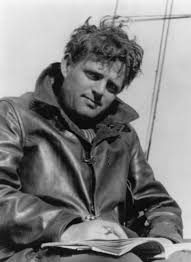
H.L. Mencken
The Smart Set/January, 1921
§ 1
On Criticism.— (1) The notion that a critic, to be competent, must be a practitioner of the art he criticizes; (2) the notion that a doctor, to cure a bellyache, must have a belly-ache.
§ 2
In Extenuation and Apology.— There are two kinds of dramatic critics: destructive and constructive. I am a destructive. There are two kinds of guns: Krupp and pop.
§ 3
The Journalist.—The fiction of such romantic fellows as Jesse Lynch Williams and the late Richard Harding Davis is probably responsible for the widespread notion that newspaper work makes for a high degree of sophistication, and that old newspaper men are all very sharp and skeptical fellows, with keen eyes for quackery and very hard to fool. This is actually true of only a small minority of them. The average newspaper man, young or old, is quite as credulous and sentimental as the average stock-broker or delicatessen-dealer. It was an appetite for romance that took him into the profession in the first place, and that appetite is constantly fed and fostered by the somewhat childish excitement of his daily life. The events that chiefly concern and arouse him are not genuinely important events, but merely melodramatic events. In other words, the typical newspaper man is one who reacts to terrestrial phenomena like the typical reader of his paper, i.e., like the typical idiot. His so-called nose for news, so much praised by persons who confuse it with the colour sense of a Velasquez or the delicate ear of a Brahms, is simply a capacity for determining instinctively what a car-conductor or a Baptist clergyman will regard as interesting. This, nine times out of ten, is something that is utterly uninteresting to a civilized man. It takes a naive and hollow fellow to develop any such talent. He must start off with a profound ignorance of all genuine human values, and he must reinforce that ignorance with a vast knowledge of bogus values, painfully acquired and taken quite seriously by himself. To say that the possession of this blowsy and imbecile knowledge is sophistication is to say nonsense. If it is, then so is the knowledge of a Swedenborgian theologian or a negro witch-doctor. The burden of it eventually destroys all that remains of the logical sense of its possessor. No man is easier to fool than an old journalist. The politicians, in fact, make a regular trade of fooling him; he must be fooled before the rank and file of the boobery may be fooled. Press agents find him an easy mark. He is constantly victimized by the hocus-pocus of such mountebanks as the Hon. A. Mitchell Palmer. He believes childishly in all the heroes of the proletariat, from the Hon. Babe Ruth to the Hon. Herbert Hoover. He is so far out of contact with the intellectual life of his race and time that he is quite unable to comprehend it. He sees the world essentially as a police sergeant or a ward heeler sees it. His instinctive antipathy to all civilized culture and aspiration is the instinctive antipathy of obtuseness. He hates intelligence because intelligence is the enemy of his habitual sentimentality.
Journalism, of course, also has room for a quite different sort of man, to wit, the cynic. This cynic is attracted to it by its very imbecility; he delights in belabouring the boobs with their own bosh, and even more in having fun with other journalists. Often a streak of boyishness is in him; he likes the uproar, the mountebankery, the combat. Such a cynic was the late Charles A. Dana. He believed in nothing. To him the battle of ideas was a mere spectacle. His intelligence revolted against the assumptions made by both sides. Another journalistic cynic of high talents is Hearst, a man much hated by his inferiors. Yet another is Watterson. But such superior intelligences are rare in journalism. Few journalists have their sharp sense of reality, their serene immunity to emotion, their capacity for intellectual detachment. The average is a fellow who believes in his own balderdash. In brief, a fellow indistinguishable from a Congressman, a clergyman or the owner of a prosperous sash-weight factory.
§4
The Galatea Complex.—A man, when taken with a woman, seeks to make her over in accordance with his own standards and ideals. The more she responds to his sculptor’s chisel, the more his admiration for her is augmented. But, presently, when the statue is completed and perfect, the man turns to another slab of uncut marble by way of fresh experiment for his unsatisfied vanity.
§5
Patriis Virtutibus.—That Prohibition has taken from the American one of his most amusing pastimes, the Prohibitionists loudly challenge. They assert that if drinking and becoming pleasantly alcoholed is an amusing pastime, then the American is better off, and eventually happier, without that pastime. Speaking for one American, I deny it. I do not care for golf; it doesn’t amuse me; and it makes me lame. Cocktails do amuse me, and they do not make me lame. Furthermore, if I drink cocktails with a man, I enjoy his conversation. It is livelier, gayer, more interesting than the idiotic conversation about strokes, putts and holes that I have to listen to if I play golf with him. Nor do I care for the other so-called sports; I can see neither profit nor pleasure in running across a lot after a leather ball that some other bonehead has hit with a round piece of wood, or in sitting up half the night waiting to be given a playing card that will make my hand worth $1.50 in I. O. U.’s, or in walking three miles through the Park inhaling the smell of monkeys and Italians. Reading is part of my profession; I like to get away from it when I have play-time. What is there left? I live in New York. I am a bachelor. I have no lawn to mow, no wife to fight, no children to put didies on. What is left, obviously, is a cocktail or two. When the five o’clock whistle blows and I roll down my sleeves and throw my lead pencil into the spittoon, I want to sit down with a friend and spill two-thirds of gin and one-third of vermouth into me. I have been doing it for the last twenty-two years; my father did it before me; my grandfather— God rest his old red nose!—did it before him. I am happy, healthy, prosperous. My father was happy, healthy, prosperous. My grandfather was happy, healthy, prosperous. I want to keep on being as I have been, and as they were. If the Prohibitionists insist upon my going out and getting lumbago on a sport moor instead of staying comfortably indoors and getting mildly and healthfully snooted, then I say the devil take ’em. I had my first drink, at the table of my parents, at the age of nine: a bit of claret. I shall have my last drink at my own table—God willing, with my mother—if I have to put on a pair of greasy whiskers, turn my collar hind-end foremost and, thus disguised as a Methodist clergyman, sneak it across the Canadian border myself.
§6
Query.—If, born over again, you had the choice of being any other man living in the world today, which man would you select? I ask the question purely out of idle curiosity. As for me, I’m darned if I can pick one.
§7
On Patriotism.—Patriotism is conceivable to a civilized man in times of stress and storm, when his country is wobbling and sore beset. It then appeals to him as any victim of misfortune appeals to him. But when it is safe, happy and prosperous it can only excite his loathing. The things that make countries safe, happy and prosperous—a secure peace, an active trade, political serenity at home—are all intrinsically disgusting. It is as impossible for a civilized man to love his country in good times as it would be for him to respect a cheese-monger.
§8
The Eternal Proletarian.—It is curious that no one has ever thought to test the practical efficacy of popular education by subjecting a few thousand normal individuals of the lower classes to a rigid intellectual test. The current school statistics reveal nothing. They show that the average plowhand, say in Qhio, can read and write after a fashion and is able to multiply 8 by 17 after four trials, but they tell us nothing about his stock of fundamental ideas or about his capacity for elementary logic. Is such a fellow appreciably superior to the villein of the Middle Ages? Sometimes I am inclined to doubt it. I suspect, for example, that the belief in witchcraft is still almost as widespread among the boobery, even of such advanced states as Iowa, as it was in the year 1500. Surely the negroes of the hinterland all believe in witches, and no doubt most of the whites are with them, though not disposed to talk about it. The belief in ghosts penetrates to very much higher levels. I know very few Americans, indeed, who are wholly innocent of it. One constantly comes upon grave defenses of the imbecility by college professors. I venture the guess that an honest and secret poll of the Harvard faculty would show a large majority on the spooky side. In the two Houses of Congress it would be difficult to find a dozen men willing to denounce such nonsense publicly. It would not only be politically dangerous for them to do so; it would also go against their consciences.
When one comes to the more attenuated varieties of supernaturalism one may almost say that the American people, despite a century of education, are still unanimously believers. There are whole states in the Republic in which it remains social suicide for a man to let it be known that he does not believe that he will turn into a gaseous vertebrate when he dies and sit upon the right hand of God. All the current religions of the land hang upon the theory that there is an immortal soul in every one of us, proof against both the embalmer’s formaldehyde and the crematory’s fire. To question this theory is still a form of social indecorum ; no newspaper ever does it, even by inference; even such godless sheets as the Nation, the Freeman and the New Republic never do it. For simply mentioning the matter in this place, I will be denounced by 100% Americans in all parts of the country, and no doubt this issue of The Smart Set will be barred from the Long Island roadhouses, the Lambs Club and the Albany night-boat.
§9
Spiritual Values.—One sniffing at such puerile tosh as the Woodrows, Billy Sundays and Bryans of the world unload is always accused of being anaesthetic to spiritual values. The charge is more tosh. I do not despise spiritual values, messieurs; I simple despise the ignoble spiritual values of ignoble men. My plea is for honesty, justice, self-respect, dignity, decency, honour. In other words, the things I ask for are precisely the things that none of the professional mongers of spiritual values can comprehend.
§10
Munsey.—Biographical crescendo of the publishing genius of Frank A. Munsey: The Golden Argosy, The New York Star, The New York Continent, The Live Wire, The Ocean, The New York Daily News, The Boston Journal, The Scrap Book, The Cavalier, The New York Press, The Philadelphia Times, The Railroad Man’s Magazine, The All-Story Magazine, The New York Sun. . . .
§11
Safeguarding the Young.—During the past three or four years the Comstocks have managed to suppress two American books of high and dignified quality and to prevent the publication of perhaps three or four more. Meanwhile the leading advertisement in the leading American literary journal is that of a dealer who offers a long list of frankly pornographic works. Such, in brief, are the fruits of the regulation of the arts by pigs.
§12
The Cinema as an Instrument of War.—That the movies were the one great factor in assisting the government of the United States to prosecute successfully the late war against Germany and make the world unsafe for Pschorrbrau must be apparent to any professor who studied the situation with an open mind. For example, that the sinister workings of the Wilhelmstrasse would have remained a cryptic menace to the United States had it not been for the complete exposé of those deviltries by the sagacious films, few can longer doubt. While the American Secret Service was still baffled by the uncanny activities of the German spy bureau, while it was still utterly in the dark as to the precise mysterious manner in which this spy system was subtly accomplishing its nefarious ends, the movies came to the rescue of the nation, showed up the entire business and put a spike into the whole doggone shebang.
Take, for instance, the amazing movie entitled “Behind Hunnish False Whiskers,” produced for the information and enlightenment of the baffled United States Secret Service by the Super-Excelsior Film Company. Until this picture was flashed upon the screen, the United States Secret Service had laboured under the false impression that what the agents of the Wilhelmstrasse were most eager to accomplish was the general weakening, in one way or another, of America’s military and naval efficiency. On this indefinite theory the American Secret Service was expending all its effort and wasting precious money and invaluable time while the German spies were left free to the consummation of the dirty work they were, unperceived by our Secret Service, actually up to. Imagine the surprise of our Secret Service agents and the officials of the United States government, therefore, when they drifted casually into “Behind Hunnish False Whiskers” (scenario by the eminent military expert, Miss Mae Alys Winckmann, of Los Angeles) and learned to their intense consternation that what the German spy system was really centering all its energies on was not the debilitating of the mass of American fighting forces on land and sea, nor the blowing up of warehouses and ammunition works, nor yet the plotting against railroad shipments, nor the sowing of discord among labourers in the shipyards, nor the buying up of senators from the Middle West, nor the arming of a vast horde of aliens along the Canadian border, nor anything like this, but the blowing up of what was apparently the most important strategic bridge in all America, the blowing up of a bridge that, once destroyed, would completely disrupt the military plans of the United States and render those plans practically useless, the blowing up of a bridge whose enormous importance had not even occurred to the American officials—the bridge, to wit, that spans the small creek back of the Bull Durham billboard in the vacant lot two blocks to the left of the Super-Excelsior Film Company’s studio over in Fort Lee, New Jersey!
I betray no secret when I tell you that it was directly as a result of this startling exposé that the United States Secret Service agents arrested Herman Schmierkàse’s son-in-law, August Rinderbrust, and found, in the back room of his delicatessen store—and not three hundred yards from the bridge—a Brownie kodak and several undeveloped snapshots of the Fort Lee ferry, Grant’s tomb and Olga Petrova.
Consider, too, the now famous case of the manner in which the eyes of the officials at Washington were opened by the movie entitled “Inside Secrets of the Kaiser’s Wiener Schnitzel, or, How the Berlin Spy System Has Enveloped America in a Net of Marinierte Rostbraten,” written by the celebrated military strategist, Miss Minnie P. Dingle, of Goshen, N. Y. (winner of the Grandioso Film Company’s prize of ten dollars in gold for the best 25,000 word motion picture scenario dealing with the war), and produced by the Grandioso Film Company, J. Pierce Stonehead directing, in its California studios at an expense of no less than $80,000, of borrowed money. (It will be remembered that, up to the time this masterly movie was presented, the authorities were resting complacent under the delusion that the Kaiser’s agents in this country were directing their chief intrigue toward such ends as disabling American ships and German ships that had been taken over upon the declaration of war, spreading insidious propaganda, making blue-prints of coast fortifications and harbour works, and the like.) It was “Inside Secrets of the Kaiser’s Wiener Schnitzel, or, How the Berlin Spy System Has Enveloped America in a Net of Marinierte Rostbraten” that disclosed the true intent of the enemy and permitted the authorities to take action and save the country before it was too late. This movie—and here I but repeat what is now history—gave the first inkling that what the Huns were up to in America was by no means what the United States authorities ignorantly and foolishly supposed but, quite to the contrary, that what they were up to and what they were bending all their energies to accomplish was nothing less than the chloroforming of William A. Brady’s daughter Alice, and the snitching from her of a blue-print which, so I have been informed, contained the valuable secret of the exact amount of open floor space available in the Famous Players’ studio in West 56th Street for Elsie Ferguson’s next picture.
The part that the movies played in stirring up the patriotism of the nation and keeping that patriotism at white heat—an essential thing in the successful prosecution of the war—cannot be overestimated. Who so callous that he could resist the appeal, for example, of the movie showing the ruins of the Bon Ton Shirt and Collar Factory at Thirty-second Street and Tenth Avenue after its recent fire and labelled “What Was Left of the Village of Fromage de Brie after the German Hordes Had Passed Through It”? And who so without soul that he could remain passive before the display of a few hundred feet clipped out of an old movie of “The Two Orphans” and set forth as “View of Two Little Belgian Kiddies Whose Father Was Shot by the Huns?” But the value of the movie as an adjunct of war by no means rests here.
That the movie may serve as a record of the war, as a history of the war, one can doubt no more than one can doubt what I have already proved in these other important directions. For instance, let me recall to your mind the famous movie entitled “With the German Armies on the Eastern Front,” displayed promiscuously in this country before we entered the war and announced as “official” and as having been taken by a staff of German government photographers directly on the firing line. Can one forget the vividness of this remarkable record? Can one be oblivious to its value to the school-children of the future in learning the methods of warfare, the manner in which the enemy carried on its Russian campaign, etc., etc. Who, for instance, can fail to appreciate the value as a strategic military document of the well-remembered scene in this movie showing German soldiers drinking beer out of tin cans, of the equally unforgettable scene showing the Kaiser attending a garden party at Stuttgart in 1905 and labelled “Ovation to the Emperor in Warsaw After the Recent Taking of that City by His Troops,” of the remarkable scene showing two young German soldiers washing their socks, and of that never-to-be-forgotten picture of German efficiency showing a Prussian lieutenant successfully shaving himself in front of a broken mirror? That the movies assisted, more than any other thing, in making America realize, while we were still a neutral nation, the imperative necessity for preparedness, is now fully obvious. The manner in which these movies brought home to us the horrors consequent upon an invasion of the United States by an armed and relentless foe and so awakened us to an immediate need for a sufficiently big and powerful army and navy, is readily recalled.
Chief among the movies which eloquently proved this to us was the one called “The Fall of a Nation.” As I remember this stirring screen document, it brought home to us the terrifying realization that down on Long Island there lived a blonde against whom the whole German army had evil designs. That the United States was as a nation asleep and that it was all-vital that it wake up instanter and put a couple of million trained men in the field and build a fleet of a thousand new battleships to keep the Boches from imprinting unwelcome kisses on the mouth of this Long Island blonde, the movie demonstrated so clearly that the government at Washington got busy at once. And I violate no confidence when I tell you that the sinking of the Lusitania, supposed by many misinformed persons to have been responsible for the waking up of the country to German frightfulness, had very much less to do with it than the scene in “The Fall of a Nation” which showed the Freeport virgin being chased around the room by a bibulous Hun file-closer.
Then, too, there was the similar movie put out by Mr. J. Stuart Blackton and called, if I am not mistaken, “Defenseless America” or something of the sort. This movie, a powerful plea for Preparedness, brought to the attention of our government the error in “The Fall of a Nation” and explained that it was not a Freeport blonde that the German army had its eyes on, but a New York brunette. The moment the enemy landed in America, this movie showed us, it was due to make a bee-line for the home of this dark metropolitan chicken and surround the house while its Commander-in-Chief went up to the library on the second floor and made a lascivious eye at the houri.
Plainly enough, such things were enough to make any nation, however backward, sense at once the need for a strong fighting force. And so I confidently repeat that movies like this and the many allied movies were the one great and incontrovertible aid to our government in its prosecution of the war. Without these movies, I shudder to think what might have happened.
§13
Two Definitions.—Democracy, on the one hand, is the desire to be impertinent to one’s superiors. On the other hand, it is the yearning to be respected by one’s inferiors.
§14
A Simple Complex.—Imagine a respectable and (intellectually) well-ironed young man grown stage-struck. Imagine him a bit conscience-smitten, and eager to purge his soul. Imagine him setting about it by seeking for virtuous elements in the thing he admires. Imagine him finding them—for example, intellectual purpose. Imagine him now seized by a pedagogical passion to impart his discovery to other respectable folks. Imagine them grateful to him for relieving their minds. Imagine—but you have already imagined a worthy man, Prof. Brander Matthews de l’Académie Américaine, A.B., LL.B., D.C.L., Litt. D , LL.D.
§15
The Red Gospel.—It is commonly urged against the so-called scientific Socialists, with their materialistic conception of history, that they overlook certain spiritual qualities that are independent of wage-scales and metabolism. These qualities, it is urged, colour the aspirations and activities of civilized man quite as much as his material condition, and so make it impossible to consider him simply as an economic machine. As examples, the anti-Marxians cite patriotism, pity, the aesthetic sense, and the yearning to know God. Unluckily, the examples are ill-chosen. Millions of men are quite devoid of patriotism, pity and the aesthetic sense, and have no desire to know God. Why don’t the anti-Marxians cite a spiritual quality that is genuinely universal? There is one readily to hand. I allude to cowardice. It is, in one form or other, visible in every human being. It almost serves to mark off the human race from all the other higher animals. Cowardice, I believe, is at the bottom of the whole caste system. In order to escape going to war himself, the peasant was willing to give the warrior certain privileges—and out of those privileges has grown the whole structure of modern society. Go back still further. Property arose out of the fact that a few relatively courageous men were able to accumulate more possessions than whole hordes of thoroughly cowardly men and, what is more, to retain them after accumulating them. Socialism would go aground on this rock, as communism has gone aground upon it in Russia.
§16
Genealogical.—Paul, geb. Saul: the primordial Stammvater of Bloomingdale geb. Blumenthal, Noblestone geb. Edelstein, Belmont geb. Schoenberg, and Robinson geb. Rabinovitz.
§17
Philosophy I .—If I had my life to live over again, I would live it precisely as I have lived it. Well, precisely is probably going a bit too far. One thing, at least, I would have done differently. I would have laid in a bigger stock.
§18
The One-Legged Art.—To me, at all events, painting seems to be half an alien among the fine arts. Its credentials, of course, are sounder than those of acting, but they are surely not as sound as those of music, poetry, drama, sculpture and architecture. The trouble with painting is that it lacks movement, which is to say, the chief function of life. The best the painter can hope to accomplish is to fix the mood of an instant, the momentary aspect of something. If he suggests actual movement he must do it by palpable tricks, all of which belong to craftsmanship rather than to art. The work that he produces is comparable to a single chord in music, without preparation or resolution. It may be beautiful, but its beauty plainly does not belong to the highest order. The senses soon tire of such beauty. If a man stands before a given painting for more than five or ten minutes, it is usually a sign of affectation: he is trying to convince himself that he has more delicate perceptions than the general. Or he is a painter himself and thus engrossed by the technical aspects of it, as a plumber might be engrossed by the technical aspects of a fine bathroom. Or he is enchanted by the story that the picture tells, which is to say, by the literature that it illustrates. True enough, he may go back to a painting over and over again, just as a music-lover may strike, and restrike a chord that pleases him, but it can’t hold him for long at one session—it can’t move his feelings so powerfully that he forgets the real world he lives in.
Sculpture is in measurably better case. The spectator, viewing a fine statue, does not see something dead, embalmed and fixed into a frame; he sees something that moves as he moves. A fine statue, in other words, is not one statue, but hundreds, perhaps even thousands. The transformation from one to another is infinitely pleasing; one gets out of it the same satisfying stimulation that one gets out of the unrolling of a string quartet or of such a poem as “Atalanta in Calydon,” “Heart of Darkness” or “Faust.” So with architecture. It not only revolves; it also moves vertically, as the spectator approaches it. When one walks up Fifth Avenue past St. Thomas’s Church one certainly gets an effect beyond that of a beautiful chord; it is the effect of a whole procession of beautiful chords, like that at the beginning of the slow movement of the “New World” symphony or that in the well-known and much-battered Chopin prélude, opus 28, No. 20. If it were a painting it would soon grow tedious. No one, after a few days, would give it a glance, save perhaps strangers in the city.
This intrinsic hollowness of painting has its effects even upon those who most vigorously defend painting as the queen of all the fine arts. One hears of such persons “haunting the galleries,” but one always discovers, on inquiry, that it is the showrooms that they actually haunt. In other words, they get their chief pleasure by looking at an endless succession of new paintings: the multitude of chords produces, in the end, a sort of confused satisfaction. One never hears of them going to a public gallery regularly to look at this or that masterpiece. Even the Louvre seldom attracts them more than a dozen or so times ina lifetime. The other arts make a far more powerful and permanent appeal. I have read “Huckleberry Finn” at least forty times and “Typhoon” probably twenty times, and yet both pleased me as much (nay, more) the last time as they did the first time. I have heard each of the first eight symphonies of Beethoven more than a hundred times, and some of Haydn’s quite as often. Yet if Beethoven’s C Minor were announced for performance tonight, I’d surely go to hear it. More, I’d enjoy every instant of it. Even second-rate music has this lasting quality. Some time ago I heard Johann Strauss’s waltz, “Geschichten aus dem Wiener Wald,” for the first time in a long while. I knew it well in my goatish days; every note of it was still familiar. Nevertheless, it gave me exquisite delight. Imagine a man getting exquisite delight out of a painting of corresponding calibre— a painting already so familiar to him that he could reproduce it from memory!
§19
The Celluloid Artist.—Much of the prevailing sniffing at moving-picture actors, in this place and elsewhere, is plainly based upon a bilious and impotent jealousy. The movie mime is simply one who approaches more closely than any other familiar man to the ideal life of the standard American vision. That is to say, he does little work for a great deal of money, achieves heroic acts without running any risk, and is constantly pursued by women of an oriental and sinister voluptuousness. This is precisely what every normal American young man, graduated from a reputable American college, hopes to come to himself: the dream well mirrors the high aesthetic and ethical flight of the American people.
§20
Finis.—A charming woman is any woman who believes that you are not a fool.
 The Archive