Beach Reveries

O.O. McIntyre

Fort Worth Star Telegram/May 7, 1932

NEW YORK May 7—I’ve just had a dip in the surf, which concludes my surf dipping for this year of grace thanks. I’m a creek person anyway. In a fancy city bathing suit I rate several notches under zero. But on the end of a log, O boy! I’m a good speller and sum fairly well, too.

I wasn’t halfway across the beach until some smartie, jerking his thumb at me, halloed: “Hey Mike, get a load of Gwendolyn!” The scum. Beaches always attract the overflow from the pool rooms. You’d think my bathing suit was flounced with lace. Or run with baby ribbon.

It’s an ordinary suit—perhaps a little red upstairs, but the trunks are a modest green. You can’t let yourself go altogether in bathing costumes. I have a few colors for business wear. And, of course, when I go back home. It is then I give until it hurts for the locals.

When I go out to swim I want to swim. But does anyone else? No they must throw a big medicine ball around, play baseball or cover each other with sand. You can do all that in the back yards. Bathing these days is just a way to show off your figure of which I have none to speak about.

I wasn’t built for beaches. I look dandier neck deep in water. From the way it smells there must be a sick eel around somewhere. I wish I could hide my feet. Nothing you can do for old feet. Young Apollo wants to show me how hard he can throw the medicine ball.

So I must cope with that. My coping days really ended with the market crash. You know something! Want in on a secret. Straining for the medicine ball has done me no good. It might happen any moment. The puckering string holding my pantalettes is not what it was.

But go ahead. Certainly, I’ll play leap frog and I hope it happens while I’m in midair. I’d like to shock Countess Sourpuss over there with her lorgnette under the big sun parasol. And see that? While I’m looking at her somebody socks me in the mush with the medicine ball.

I don’t care to play anymore. Go on with your childish games. I’m off for my dip. Loll there and gape, offsprings of the beaches! Titter as I pass. I know I look like something the cat dragged in. But I haven’t been well lately. My side hurts. (This is what the public wants—the higher type of columning.) You should see me when I’m all filled out and my hair brushed back slick like Harry Silvey’s. What care I for sniggers? They sneered at Columbus when he put to sea.

The water is a bit coldish. Not that it matters. Anyway I like to stand at the sea edge in reverie. It’s the poet in me. Ah, the phosphorous toss of foam. The majesty of the mighty expanse. The skimming gull with a glad cry spirals upward to greet the dawn. That’s all the reverie for this time. Tomorrow: “The Dying Swan”—I’ll flex my muscles awhile and mosey out to get attuned to the coolth. No use rushing into things. Leave that to bankers. Here’s an ideal depth to kinda-inda let-tet myself brr-r. I don’t care to dip. I should have been home an hour ago.

This is cowardly. Remember, you are a McIntyre. A quick plunge and how have you been! But no hurry. The sun won’t be down for an hour or so. Those people out on the raft are trying to attract my attention. Probably making cracks about my bath suit. I’ll act as though I didn’t hear. They might not be my sort. Probably riff-raff. A fig for their guffaws. Make it two and a tangerine.

Here goes! See you around the bowling alley. It-t-t-t’s not bad. Just the first shock. Now for the Old Australian crawl. Is Johnny Weissmuller in the house? Not that I care he might pick up a few ideas. The raft is further than I thought. But since I cut out cigarets my wind is great.

Like bananas it’s great! I’ve run out of it already. Of course, the life guard would be looking the other way. I suppose the usual crowd will collect when they untangle me from sea weeds and roll me across a barrel. Still I won’t know about that. Just 50 more strokes and I would have reached the raft. Goodby world! Give my raccoon coat to Bert Lytell. Here I go! Shucks, it’s not even over my head.

Standard

A Place of Marvels

Ray Stannard Baker

Century/August, 1903

[THE account here offered of the aspects of Yellowstone Park, as it is now under government supervision, will be read with particular interest by those who remember the first magazine papers to bring the subject prominently before the public. They appeared in the early numbers of this periodical, within one and two years of the discovery of this remarkable region. Ex-Governor N. P. Langford’s two papers on “The Wonders of the Yellowstone” were printed in this magazine for May and June, 1871; in the November issue of the same year Truman C. Everts described the incidents of his “Thirty-seven Days of Peril” while lost in the Yellowstone, having become separated from the Langford company; and to the February number of the following year (1872) Dr. F. V. Hayden contributed a fully illustrated paper on his adventurous visit of the previous year.— THE EDITOR.]

AT first, approaching the Park, we felt the pressure of our desire to reach the ultra-natural attractions which have made this a place of marvels for all the world—the remnant volcanoes dying out in geysers, the strangely ebullient pots of mud, the thundering earth-rents discharging clouds of sulphurous steam, and the many other evidences of a world in the process of making. But as we proceeded—we had come in by the little-traveled south entrance of the Park, through Idaho and Wyoming, along the splendid Tetons, the wildest of wild country, desert basin, and mountain pass—we seemed to forget the objective point of our journey in the natural glory of this Rocky Mountain wilderness, the every-day joy of the road, sleeping underneath the trees, bathing in the noisy streams, tramping off alone through beguiling bypaths of desert and canon. Here the wilderness is so commanding and omnipotent that the dim, winding human trail among the rocks and sand seemed almost of yesterday’s making, giving us the feeling of the intrepid discoverer. Think of coming suddenly to an opening among the trees and, all unexpectedly, beholding a fine, brawling stream tumbling down a mountain-side, or a snow-clad mountain peak with the sun upon it, or an elk or a deer starting from the very road, pausing a moment with startled alertness, then bounding off, a flash of brown and white, through the woods!

So long we loitered among these beauties, common to all the Rocky Mountains, that we were slow in reaching the wonders of the Park itself. Perhaps these days of adjustment to the wild and natural prepared us the better for what we were now to see.

In the morning of our second day within the Park we beheld afar off a valley rolling full of steam. It was as if a city lay hidden there, with smoke rising through the bright, cool air from a hundred busy chimneys. For a moment, so vivid was the impression, we almost expected to hear the city noises and smell the city smells; then we felt again, not without a pleasant sense of recovery, the solemn quiet of the forest spreading illimitably before our eyes, the splendid mountain-tops, the glimpses of blue lake, the charm of the winding road.

But the populous and smoky city of the imagination was now the eager desire of the heart. Certain sulphurous odors, suggestive of volcanic activity, had come to our nostrils; we had already seen a number of smoking rivulets oozing out of the earth near the roadside and creeping down through varicolored mud to the brook, and we had dismounted to dabble our fingers in the tepid water of our first hot spring. Now we rode out of the forest, and there before us, on the shore of Yellowstone Lake, stretched the bare volcanic formation, a glaring white in the sunshine, steam rising from a score of grotesque mudcones and boiling pools—nature’s imitation of a smoky city.

Here is a veritable miniature volcano, crater and all; a wooden sign names it a paint-pot. We stoop over and look into the steamy crater: a lake of pink mud is slowly rising within, rumbling and emitting sulphurous smells. Opening suddenly, it hurls the hot mud in air, splashing it almost into our faces, and slowly subsides with much grumbling, to repeat the operation again in a few minutes, as it has been doing these fifty thousand years and more. Not beautiful, but mysterious, curious, uncanny.

Here is a placid hot pool a dozen feet wide, set like a white-rimmed basin in the hard formation, with water so clear that one can see the marvelously colored sides extending deep into the earth—evanescent blue, cream-color, pink, red—attractive because so strange. A Chinaman has planted his laundry where he can dip up water heated by the earth’s eternal fires for his washtubs. His clothes-line, with a brave array of new washing, cuts off a large portion of the volcanic landscape. Down at the lake-brink a number of girls are trying, with unaccustomed fishing-rods, to perform the feat, without which no visit to the Park would be quite successful, of catching a trout and cooking it, wriggling, in the hot pool behind them. A few rods away are the lunch-stations of the transportation companies, where the regular visitors in the big coaches stop for a meal, or possibly to stay for a night on their way around the Park. At each wonder-center such a station may be found, buzzing with visitors, every one in ecstasies over the geysers, setting up cameras, snapping buttons, filling little bottles with hot water or little boxes with pink mud, all very jolly, all expecting to be astonished, and all realizing their expectations. Indeed, a nameless exhilaration seems to affect every Park visitor, so that everything seems especially beautiful, especially marvelous—perhaps the effect of the clear, pure air, or the altitude: for we are here more than seven thousand feet above the level of the sea.

They tell one that the Thumb—this point of Yellowstone Lake is thus described—is nothing. “Wait until you reach the Upper Geyser Basin! Wait until you hear the Black Growler at Norris! And wait, oh, wait, until you see Old Faithful in eruption!”

And so one mounts his horse with a cheerful sense of pleasures to come, and half a day later rides into the fuming valley of the Upper Geyser Basin, the greatest of all the centers of volcanic activity. As one emerges from the forest, Old Faithful is just in the act of throwing its splendid column of hot water a hundred and fifty feet in air, the wind blowing out the top in white spray, until the geyser resembles a huge, sparkling, graceful plume set in the earth. The geyser holds its height much longer than one expects; but presently it falls away, rallies often, throws up lesser jets, and finally sinks, hissing and rumbling, into its brown cone, leaving all the rocky earth about it glistening, smoking with hot water. The little crowd of spectators on the convenient benches press the buttons of their kodaks once more, and hurry to the next geyser on the list. All this valley smokes with pools and hot rivulets flowing into the Firehole River; there are many curious, grotesque cone formations very appropriately named, each bearing its label on a white stake. And on the hill stand the big, ugly eating-house, swarming with tourists, and a store where one may buy photographs of the wonders, and souvenir spoons, which will help to convince the friends at home that no wonder has been missed.

Beyond the Upper Basin one cannot escape a veritable succession of marvels. At the Fountain there are many strange forms of geysers and hot springs, often gorgeous in coloring, surrounded by water-formed rocks in many curious and beautiful designs, and veritable caldrons of bubbling mud, and bears in the garbage-piles, and I know not how many other wonders. At Norris there are growling, jagged holes in the earth, belching forth huge volumes of hot steam, which, having killed and bleached all the verdure of the near mountain-side, has given the whole valley an indescribable air of desolation, as if the forces of nature had gone wrong—the very work of the devil, after whom so many of the marvels are named. Farther along one shudders under the brow of Roaring Mountain, makes a wry face while sipping water from the Apollinaris-spring, wonders at the Hoodoo rocks, or admires the gorgeous-colored pulpits and terraces of the Mammoth Hot Springs.

And yet after all these things, amazing as they are, one turns again to the road and the mountains and the trees. Undue emphasis may have been laid upon the odd, spectacular, bizarre—those things, dear to the heart of the American, which are the “biggest,’’ the “grandest,” the “most wonderful,” the “most beautiful” of their kind in the world. But the Park is far more than a natural hippodrome. The geysers appeal to one’s sense of the mysterious: one treads on the hollow earth not without an agreeable sense of danger, thrills with the volcanic rumblings underneath, waits with tense interest for the geyser, now boiling and bubbling, to hurl its fountain of hot water into the air; one is awed by these strange evidences of a living earth, guesses and conjectures, as the scientists have been doing for centuries, and then, somehow, unaccountably weary of these exhibitions, turns to the solemn, majestic hills, to waterfall and marshy meadow, to the wonderful trail through the forest. For, after all, the charm of the Park is the charm of the deep, untouched wilderness, the joy of the open road.

Indeed, the very name Park, associated as it is with smooth lawns and formal, man-guarded tree-groups and streamcourses, seems out of place when applied to these splendid mountain-tops. Here is a space nearly sixty miles square—a third larger than the State of Delaware, and, with its adjoining forest reserves, which are really a part of the public wilderness, nearly as large as Massachusetts or New Jersey. Visitors see only a narrow road-strip of its wonders, though the best; upon vast reaches of mountain and forest, lakes, rivers, geysers, canons, no man looks once a year; probably many areas have never been seen by human eyes. The United States regular soldiers who guard it keep mostly to the roads, the boundaries of the Park being for the most part so wild and rugged that even poaching hunters could not cross them if they would.

It was a carping German traveler who complained that this Park was no park.

“Look at your dead trees and burned stumps in the woods,” he said, thinking perhaps of the well-groomed, man-made forests of his native land, “and your streams, full of driftwood. It is not cared for.”

And Heaven help that it may never be cared for in that way! Not a park, but a wilderness, full of wild beauty and natural disorder, may we keep the place as nature left it, disturbing no land-slide where it lies, no natural dam of logs and stones heaped here by mountain freshet, no havoc of wind-storm or avalanche. The windfall, with its shaggy spreading roots full of matted earth and stone, rapidly being covered with grass and moss, and the river-bed full of bleached driftwood, each has its own rare quality of picturesqueness, its own fitting place in this wild harmony. There is beauty even in the work of the forest fire, which has left whole mountain-sides of freshly scorched pine foliage, a deep golden red smoldering in the sunshine; and many a blackened bit of forest, longer burned, leaves an impression of somber shadows, of silence and death, which cannot be forgotten. One even comes to begrudge this wilderness its telephone poles, its roads, and the excellent stone embankments which keep them from slipping down the mountainsides into the swift streams below; for they detract from its wild perfection.

We may behold nature in its softer and more comely aspects almost anywhere ; but every year, with the spread of population in our country, it becomes more difficult to preserve genuine wilderness places where hill and forest and stream have been left exactly as nature made them. Already our indomitable pioneers have driven the wilderness into the very fastnesses of the mountains, so that only remnants now remain. And this great Yellowstone Park remnant has been fortunately set aside by the government for the enjoyment and inspiration of the people forever.

And not only for the enjoyment of the people, but for practical use as well. Nothing gives the American keener joy than to plan a pleasure and then find that he has also developed a business opportunity. So Yellowstone Park, set aside for the wonders of its geysers and its great canon, turns out to be the very continental fountain of waters. Here in the tops of the Rockies, within the Park or near it, rise the greatest of American rivers. At one spot the traveler may stand squarely upon the backbone of North America, the continental divide: at his right hand a stream flows outward and downward, finding its way through the Snake and Columbia rivers to the Pacific Ocean; at his left a rivulet reaches the Yellowstone, the Missouri, the Mississippi, and thence the Gulf of Mexico. And to the southward of the Park rise the headwaters of the Platte and the Colorado rivers, and to the northward the headwaters of the Missouri. Protecting these mountains, preserving the forest, excluding cattle and sheep, help to conserve and maintain the water-supply and keep the flow of all these rivers steady and sure, a need which grows greater with every year’s development in the irrigated desert land.

We come, at last, to the final glory of the Park, the splendid canon of the Yellowstone. Yellowstone Lake, a deep basin of snow-water, 7721 feet above sea-level, debouches at its northern end into the narrow Yellowstone River. Flowing for a dozen miles or more through a wild and rugged country, this turbulent stream comes suddenly to a rocky ledge, over which it leaps 112 feet downward into a resounding gorge. Gathering itself in a huge, swirling pool, foam-flecked, it flows onward a few hundred feet and takes another tremendous leap, this time 311 feet, straight into the awful depths of the Grand Canon. So great is the fall that most of the water, bending over the brink of the precipice, smooth, oily, and green, is dashed into spray, widening out at the base and drifting against the steep canon walls, which the constant moisture has clothed with soft green mosses and other minute water-growths. Thence it collects in a thousand gleaming rivulets, gathers in brooks and cascades, and gushes back into the river-channel. From the summit of the awful precipice above the fails one may trace the stream along the depths of the canon—seen at this distance a mere hand’s-breadth of foamy water broken by varied forms of cascades, pools, and rapids, and all of a limpid greenness unmatched elsewhere.

Niagara is greater, more majestic in the plenitude of its power, having twenty times the flow of water; but it cannot compare with these falls in the settings of canon and forest, in the coloring of rock, water, sky—all so indescribably grand, gorgeous, and overpowering.

Somehow I had thought of the canon as rock-colored, gray, somber, perhaps like the gorge of Niagara; and it was with a thrill that I first saw it in all its savage glory of reds and yellows, greens and blues. Surely never was there such a spectacle. Imagine, if you can—but you never can—a mighty cleft in the level earth a third of a mile wide, its brinks sharp, precipitous, reaching over twelve hundred feet downward, sometimes almost perpendicular, sometimes banked with huge heaps of talus or buttressed with spindling pinnacles and towers often surmounted with eagle-nests, and all painted, glowing with the richest color—vast patches of yellow and orange, streakings of red and blue, with here a towering abutment all of red, and there another all of yellow. At the bottom flows the gleaming green river, and at the top the dark green forest reaches to the canon-edge, and sometimes, even, rugged and gnarled pines, the vanguard of the wood, venture over the precipice, to find footing on some ledge, or to hang, half dislodged, with angular dead arms reaching out into the mighty depths, a resting place for soaring eagle or hawk. The sides of the canon, being not of solid rock, but of crumbling, soft formation, have furnished plastic material for the sculpturing of water and wind, which have tooled them into a thousand fantastic forms. One’s eye traces out gigantic castles, huge dog forms, bird forms, titanic faces—all adding to the awful impressiveness of the place.

For miles the canon stretches on northward from the lower falls. From numerous well-guarded outlooks the spectator, grasping hard upon the railing lest the dizziness of these heights unnerve him, may behold a hundred varied views of the grandeur, looking either toward the falls, which seem to fill the canon-end like a splendid white column of marble, or off to the northward, where the stupendous gorge widens out, loses some of its coloring, admits more of the forest, and finally disappears among rugged mountains.

Everywhere the view is one that places the seal of awed silence upon the lips; it never palls, never grows old. One soon sees all too much of geyser and paint-pot; of this, never. At first the sensation of savage immensity is so overpowering that the spectator gathers only a confused sense of bigness and barbaric color; but when he has made the perilous descent to the canon bottom below the falls, when he has seen the wonder from every point of view, he begins to grasp a larger part of the whole scene, to form a picture which will remain with him.

One turns away from the canon not with the feeling with which he left the geysers and the mud-pots, yet contented to go back to the simple, familiar beauties of the trail. Occasionally it is well to feast on a grand canon, but these hills and streams are much the  better steady living. These soothe and comfort.

Next to the natural wonders of the Park, one will be most interested in the human procession which passes constantly up and down within it. Gradually, after days spent steeping one’s self in the wild and lonely glory of the wilderness, he will come again to watch the people riding, tramping, all in ceaseless course, around the Park, each taking his wonders in accord with the eccentricities of his temperament.

It is hardly safe in these days to define a wilderness, it contains so much that is unexpected. We must refuse to be convinced by the unsatisfied one who finds incongruity in the ugly red hotels, the yellow coaches, the galloping tourists, the kodaks. After all, every age is entitled to its own sort of wilderness, and ours seems to include the tourist and the hotel; the traveler is to-day as much a part of the Rocky Mountains as the elk or the lodgepole pine. No picture of the modern wilderness would to-day be complete without the sturdy golf-skirted American girl with her kodak, the white-top wagon, the Eastern youth turned suddenly Western, with oddly worn sombrero and spurs. It was a shock to one traveler’s sensibilities (but it converted him) the day he went poetizing up a faint trail through the deep wood. “This,” he was thinking, “is the forest primeval; this is the far limit of the wilderness. Surely no human foot has ever before trod upon this soft timber grass!” I think he expected momentarily to see a deer or a bear spring from its secure resting-place, when, lo and behold, a party of girls! Here they were miles from their hotel, tramping alone in the woods, getting the real spirit of things, and as safe, bless them! as they would have been at home. He found he had yet to learn a few things about a modern wilderness.

But most of the tourists remain pretty snugly in their coach-seats or near the hotels. One meets them in great loads, some wrapped in long linen coats, some wearing black glasses, some broad, green-brimmed hats. Wherever they may come from, they soon acquire the breezy way of the West, and nod good-humoredly as they pass. Occasionally one sees them devouring their guidebooks and checking off the sights as they whirl by, so that they will be sure not to miss anything or see anything twice. Usually they come in trains, a dozen or twenty or even forty great coaches one after another, and when they have passed one sees no more of them until another day.

And such fun as they have, such acquaintances as they make, and such adventures as there are! One old gentleman, accompanied by his stenographer, after each excursion sat on the piazza, guide-book in hand, and dictated an account of what he had seen. And then there is the tourist who has brought a fine new pair of field-glasses through which he is constantly seeing more wonderful things than anyone else; the old lady with the lunch-basket; the young person who is absorbed in altitudes, and who wishes to be constantly informed how high up she is now.

And then there are the dusty campers with white-top wagons or pack-horses trailing slowly along the roads or making camp at the stream-sides. Many of them have been through before; many are from near-by Montana or Utah, and have come for their regular summer outing, turning their horses to graze in the natural meadows. We met one young married couple thus spending their honeymoon, looking from the front of their wagon, a picture of dusty joy.

Standard

Variations Upon a Favorite Theme

H.L. Mencken

Baltimore Evening Sun/November 16, 1931

I

Prohibition, I take it, is now definitely doomed, but the last sad scene is certainly not upon us. It may be postponed for many years, even for many decades. The death struggle may last as long as that of slavery, which began to die in 1783 but was not buried until April 9, 1865. More than once, during those years, slavery sat up in bed and seemed about to recover—for example, in 1820. And more than once the Abolitionists started to bury it before it was really dead—for example, in 1861 and 1863. Prohibition, for all I know, may hang on quite as long, baffling the coroner again and again. There is a magnificent vitality in it, due to its complete imbecility. For among ideas, as among men, the most tenacious of life are those of the lowest mental visibility. The idea of Hell will survive whole herds of Einsteins, as it has survived whole herds of Galileos and Darwins. Every President of the United States so far, with perhaps two exceptions, has cherished it, and every current aspirant to the White House is willing to subscribe to it, with his eyes rolling and his plug hat over his heart.

My belief is that Prohibition, of late, has been gaining quite as much as it has been losing, especially in the big cities. One hears less murmuring against it than aforetime, and what murmuring one hears is less bitter than it used to be. The change is probably due to the Hon. Amos W. W. Woodcock, LL. D., who went into office promising that he would stop the slaughter of innocent people by Prohibition agents, and has pretty well kept his pledge. His gallant scoundrels, at the moment, are doing very little murdering, and that little is mainly of persons who die unregretted. The days when they assassinated one of the leading Elks of Buffalo in broad daylight, and shot an eye out of a United States Senator on Capitol Hill, are now of the past. How Woodcock managed to tame them I don’t know, but he has undoubtedly done it.

At the same time he doesn’t seem to have purged them of enlightened self-interest, for they are letting more booze get by than ever before, and on the whole it is better than ever before. The whole East, indeed, is flooded with excellent stuff at very neat prices, including even sound beer. No boozer has to worry any more about wood alcohol. Thus there is nothing for public indignation to get its teeth into, and Prohibition is damned less generally than it used to be. 

II

So much for the big cities. In the rural districts I see no sign of any very widespread change of mind. The clodhoppers, in these hard times, hate the voluptuous city man, with his warm speakeasies and his hospitable breadlines, harder than ever before, and are thus not likely to give up any scheme to harass him. A fair poll of Kansas, or of any other such cow state, would probably show a substantial majority for Prohibition—maybe not as large as in 1920, but certainly quite as large as in 1928. The farm folk, when sorrow oppresses them, always resort to religion, and so come directly under guns of their pastors. These pastors are still there, howling against the wickedness of the cities, and preaching Prohibition as a sure cure for it.

I doubt that the doings of Monsignor Cannon have hurt the holy cause in the Bible country. In the big cities, plainly enough, he has done a great deal of damage, if not to Prohibition, then at least to Methodism, and many of his church’s former customers are deserting it, but Methodism was never really strong in the cities; it is essentially a rustic faith. Even those city men who patronize it are predominantly country-bred, though in many cases they have got somewhat urbanized, and submit docilely when their pastors put on chasubles, light candies in the sanctuary, make retreats, and engage in other such Romish carnalities. Where the cows low and the woodbine twineth there is no such compromise with Satan. The yokels remain true to the ancient American faith in all its branches.

In particular, they remain true to its cardinal dogma that every man is his brother’s keeper, and has been ordained of God to spy upon him and annoy him. That is the essence of evangelical Christianity everywhere in rural America, and it will probably remain so for many years to come. For it has the capital virtue of giving the sturdy plowman a feeling of moral superiority. As the professors of moral science say, it is ethically self-enhancing. Here the movies undoubtedly help.

Every time they screen a scene showing a loose city man lolling in a vile den with a $5,000 a week female star on his knee and a flagon of absinthe in his hand, they confirm multitudes of envious rustics in the Wesleyan revelation. 

III

I refrain specifically, out of respect for the judicial process, from expressing any opinion about the criminal charges which now confront Dr. Cannon, but it is certainly no indecorum to predict that, on other fields, he will probably give his enemies a sound thrashing. This is not because he is the mastermind that romantic newspaper reporters have made of him; on the contrary, he is plainly a man of limited ideas, and some of the most salient of them are obviously unsound. But it is always to be remembered that he is fighting, not philosophers, but politicians, and that he is as far superior to the common run of the latter as he would be inferior to the former. 

His strength lies in the fact that he is a bold and resolute fellow, whereas practically all politicians are scardy-cats. When he went up against Tom Walsh and the late Senator Caraway of Arkansas, he went up against two of the toughest babies ever seen in Washington; nevertheless, he got them on the run in two minutes, and simply by showing his teeth. His Grace also has the measure of his fellow Methodists, and knows precisely how to operate on them. When, a few weeks ago, one of his episcopal colleagues undertook to spit in his eye, he was on the poor man’s back in an instant, and made a lot of capital out of the episode. As for the rank and file of the faithful, nine-tenths of them country people, he has only to show his wounds to set them to howling horrible hosannas. 

Many wets make the mistake of regarding him as a comic character. This is a great foolishness. He is actually no more a comic character than John Brown was. Despite the most powerful assaults from nine directions, he keeps firmly on his legs, and is probably more influential than ever before. Lord Hoover is in his vest-pocket, peeping out in constant alarm, and will undoubtedly remain there until the Tuesday following the first Monday of next November. After that—who knows? My own prediction is that Hoover, if re-elected, will go damp at once, and so ditch the bishop. But if he does so, there will certainly be some gaudy fireworks from the ditch. 

IV

It is quite as likely, I believe, that the Democratic aspirant, if he beats Hoover, will turn somewhat dry. Politicians, in fact, are seldom quite as wet after they get into offices as they were as candidates. The sad case of the late Dwight W. Morrow was but recently spread before us, and that of the Hon. Mr. Bulkley of Ohio is still on view, though it seems to attract little attention. Dripping wetness makes a grand campaign cry, at all events in the more civilized states, but it becomes inconvenient afterward, for the wets lack a legislative programme. If they had such a programme they could make a loud uproar in Washington, even though they remained in a minority, but without it they are impotent, and the more intelligent of them, grasping the fact, quickly subside into spooky silence. 

The wet cause has been gravely damaged and impeded by a tactical error: open admission, by the chief wet hullabaloos, that the saloon was wicked, and must not come back. This admission not only grants at least half the case of the Anti-Saloon League: it also causes painful discontent and disharmony in the wet rank and file. I know very few honest wets who are actually against the saloon. Three-fourths of them, unless I err gravely, would welcome it back with hearty cheers. What they demand today is not booze, for they have it now; what they demand is freedom to drink it openly, publicly and in good society, according to the immemorial custom of Christian men. The saloon, in brief, has become the national symbol of liberty in America, as a beautiful woman of easy amiability is the symbol in France, and the great majority of conscientious wets are determined that it must and shall be rescued and revived. 

Once the wet leaders grasp that fact, and cease their idiotic poll-parroting of Anti Saloon League propaganda, they will make much better progress than they have made in the past. But despite all their errors, and the inevitable setbacks that I have spoken of, the cause they serve is bound to prevail in the long run. Its real heroes are the bootleggers, who will be out of jobs when the day of Armageddon comes. They have not wasted any time arguing against Prohibition. They have simply, by their delicate art, made it preposterous. They have reduced it to the level of low comedy. What is going to bust it in the end is a general realization that all its grandiose aims are impossible of attainment, and that it can never be anything save a silly nuisance.

Standard

World War II Heroes Have Few Shrines Erected Yet to Their Memories

Westbrook Pegler

Columbus Ledger/January 20, 1956

Can anyone explain why our Second Big War and the Korean War have produced so few statues to individual heroes and parks or squares named after generals or admirals? There are practically none of the proud patriotic landmarks which have been the tradition of organized nations and homogeneous peoples even in defeat.

If I mention the statue to the Marines raising the Stars and Stripes on Iwo Jima I believe I have almost covered that phase of the story. But if there are other such monuments they are relatively few and this strange change may be observed negatively in all the other countries, except probably Russia. Incidentally a young West Point lieutenant of infantry remarked at the time of the Iwo flag-raising that it seemed strange to him that it took so many Leathernecks to plant a flag-staff weighing a couple of pounds. Of course that may have been the corps spirit speaking.

I saw a story of a strike riot recently which gave sidelong mention of a square in a small eastern city named for General MacArthur. But where are memorials equivalent to Grant Park, Sheridan Road and Logan Square in Chicago? Pershing Square in New York, Los Angeles and Danbury and Father Duffy Square in the confluence of Broadway and Seventh Avenue? Horace Greeley is honored with a square in New York but is General Patton?

We had Franklin D. Roosevelt Drive and La Guardia Field in New York long before those statesmen were laid away, even though both had technically disapproved monuments to living persons. Roosevelt’s practical if somewhat immodest acknowledgement of his-own grandeur had been plainly implied by his preparations for the memorial library and for his grave, which soon got formal designation by the Department of the Interior as a “shrine.” His mother barely missed ennoblement in the consecration of a lounging place for skid row bums and children and their mothers on the lower East Side. Robert Moses, a churlish Republican who built this untidy reservation after a stretch of old tenements had been knocked down, frustrated La Guardia’s reverent purpose by neglecting to order the street-corner signs His primary reason for that was the old lady’s parsimony in reversing the cost of a 50-cent phone call from Hyde Park to tell him she could not be down for the dedication because she had a cold. The city paid the 50 cents but saved something on the traditional scaffolds for the orators and other dignitaries and the wages of men to tack up the bunting and take it down.

Is there an Eisenhower Boulevard somewhere that I have not heard of? It seems to me that the only memorial to Ike was a temporary and unofficial salute tinged with sarcasm in London, where Grosvenor Square, an American center, was commonly called “Eisenhower Platz.” There is in this square a big bronze figure of Roosevelt in the naval cape, a defined honor to which he was never entitled and surly Americans of contrary political and moral principles have have threatened to get drunk and desecrate it. Would I be thought ill of if I should say that this would be a good idea?

The French and the Italians have a lighthearted, mercurial way of exalting heroes temporarily and tearing them down permanently. I have often marveled that the name of President Wilson remained on a street in Paris as long as it did, but I did not make observations last trip and it may have been renamed in honor of some Communist by now. In Rome recently I met Italians who scoffed when I told them the Spanish square at the foot of the stairs had been renamed briefly by Benito Mussolini the Square, or Place, of Marshal De Bono after some successful skirmish of his in Abyssinia. The change was made on strips of paper pasted over the old signs. But his glory vanished long ago when an unfortunate victim of political change and indomitable Italian incompetence in major war condemned him to temporary ignominy at the hands of a Facist firing squad.

The West Germans have no monuments and men who surely must have been combat fighters wear nothing in their lapels. But neither do Americans nor British, and Frenchmen seem to lay more value on their Legion of Honor, which is very cheap, than on their military medal, almost as hard to come by as our Medal of Honor. Many Germans, however, and women as well as men and young persons of both sexes display proof that they were there. These are the blind, who wear a yellow brassard with dots on it, which not only identifies them as casualties of the war, but permits them to beg, and those who lost an arm or a leg. The German civilians took terrible punishment from our bombers and women and children suffered about equally with the men.

We have discouraged the Germans from honoring their heroes with massive statues and clearings. They seem not to mind but perhaps they only share the apathy which controls our strange conduct in this matter.

Most of our small towns, North and South, still maintain in their central squares those rain-washed limestone figures of the soldiers of a terrible war, and there came in the ‘twenties a good crop of that conventional Doughboy in the flat iron hat charging with a bayonet, a tedious exercise of the training areas seldom invoked in battle.

But the monument industry has failed to exploit the market since 1915, and one reason may be that we are hatefully divided on the merits of General Marshall and General MacArthur and so on down the line.

I doubt that I shall live to see a statue of Harry S. Truman, even in Kansas City.

Standard

Sympathy

Annie Laurie

San Francisco Examiner/October 27, 1909

I waited for a train at the station the other day, and a woman I know came and talked to me.

“Where’s yur rabbit foot?” said the woman I know. “You must be wearing it this morning, somehow. You just missed Joe Johnson. It’s the first time I’ve seen him since he was married—and, dear me, what a bore he’s developed into.

“He sat here for ten minutes telling me about his wife and their new house and their new baby. Why, he’s a perfect affliction. How a man can be so entirely changed-there’s my train, good-by.”

Just as the woman I know whisked out of the door another woman I wish I knew better than I do slipped into her vacant seat.

“You’re waiting, too, are you?” said the woman I wish I. knew better. “I’m glad I came early. I Just met Joe Johnson. You used to know him, didn’t you? Well, It was a delight to see him.

“He used to be rather a listless, self-conceited fellow, or so he seemed to me, but he is so happy now that he’s absolutely transfigured.

“You ought to hear him tell about the baby. Why, it would make a hermit want to get married just to see his face at the very mention of that child. And his wife, he tries to be sensible about her; but, dear me, he’s so dead in love that he’s got to lug her name in somehow every sentence or two. I never liked him very well before, but now I see just what it was that made his wife fall in love with him.

There’s my train,” and the woman I wish I knew better left me, too.

In the distance I caught a vanishing view of the far-famed Joe Johnson.

Sure enough, he had changed—why, he was carrying a package. I’ll warrant there was a rattle in it or a rubber doll, and he couldn’t wait to have it sent home—bless his heart, and bless the heart of the woman I wish I knew better.

As for the woman I know—I wonder if she realizes how much real pleasure she’s missing in this world, just because she can’t sympathize with other people’s little follies and joys.

I’d rather have a blase brain than a blase heart for a life companion any day in the week—wouldn’t you?

Standard

A Communication

Ray Stannard Baker

The New Republic/December 5, 1914

SIR: It was an excellent custom of the older statesmen—Burke, for example—to stand aside from time to time and examine the state of the nation. Whither, they asked, are we drifting? What is the prevalent thought or tendency of our times? Are events shaping themselves to the true advantage of our nation or are they not?

Never was there a moment in our own history when it seemed so important to stand aside from the daily event, to be calm, to examine dispassionately the state of the nation, and to inquire what effect the monstrous cataclysm of Europe may have upon the thought of our country. The period since the close of the Spanish-American war sixteen years ago has been one of the great epochs, in some ways the greatest epoch, in the history of the United States. It is a fact patent to all men that great changes have been going on in the fundamental thought of the American people.

We may inquire what this one idea is that has been at work in America during the last sixteen years, shaping the events of the time and determining their ultimate issue. At the close of the Spanish War it was said with some grandiloquence that we had at length attained our majority, had taken our place as a world-power. It was said that the logic of events had now driven us to assume the “white man’s burden” of foreign colonization. Expansion was the thought of the hour. We were momentarily thrilled with the knowledge that the sun never set upon the stars and stripes. But it was soon evident that the “great idea” at work was not the idea of colonial expansion. Neither commercial nor military arguments convinced us. No sooner had we established a stable government in Cuba than we withdrew; we apparently neglected a great opportunity for territorial aggression and influence in China.

It is a remarkable thing in history that a victorious nation, filled with a new sense of greatness and power, should at once turn upon itself and its institutions the remorseless eye of self-examination. The period of exposure and “muck-raking” followed close upon the war. We began to ask ourselves what sort of a nation we really had, what political parties stood for, whether justice was being done in America. Eight or ten years ago I heard J. A. Hobson, the distinguished British economist, who was then visiting this country, say that the most remarkable feature of our life appeared to him to be the willingness, yes, the eagerness, of Americans to know the worst about themselves. The corruption of cities, the abuses of public service corporations, the tyranny of riches—all these things were spread boldly before the people. At first the work was done by private investigators and writers in magazines, but it was soon taken over by well-financed popular committees, by state legislatures, and finally by the Federal Congress and Federal commissioners. It is probable that no other nation ever before submitted itself to such a searching self-examination.

This interest and curiosity has shown itself everywhere in our life. We want to know how the other man lives. Consider the flood of books and articles which have appeared during the last ten years describing the life of the poor, the prisoner, the prostitute, the idle rich, the energetic rich, the tramp, the criminal, the foreign immigrant, the negro. Peary’s explorations to the Pole were not more eagerly followed than the early adventures of Jacob Riis and Jane Addams among the tenements. In fiction the leading characters have often been burglars, detectives, tramps, street women, boss politicians, negroes. Every part of our life has been written about, investigated, surveyed.

This era of self-examination has been curiously unemotional. It was not dictated by hunger or want; nor has it ever approached physical revolution. The country all along has been relatively so prosperous that to many a conservative it has been a mystery why there should be all this conscience-questioning restlessness. It is noteworthy that in States where conditions were best, most prosperous, there were the fewest evidences of injustice or inequality, as in Wisconsin, Minnesota, Kansas, California, the movement has been most virile, and that in States where social conditions were darkest, as in Pennsylvania, the desire for self-examination has seemed to be weakest. No, this was the cool self-examination of a full-grown nation.

Probably we should soon have begun to look inward even if there had been no Spanish War, for the vast physical and mechanical changes in our life during the past fifty years would have made it necessary for us soon or late to pause and take account of ourselves. But undoubtedly the Spanish War made us suddenly self-conscious. We began to be profoundly interested in one another, in our institutions, in our politics. We had learned how to struggle and win separately, now we wanted to know how to struggle and win collectively, as a people.

This examination, then, has naturally resulted in a great body of new laws and institutions, the purpose of which is to make America a more comfortable home for all of us. We are beginning to hold down tyrants of property, beginning to secure a juster distribution of wealth and power. These reconstructive movements, affecting rich and poor alike, were not prompted merely by want and envy and bitterness. There have been revolts, indeed, among the hungry submerged, like that of the I.W.W. at Lawrence, Mass., but so far as I know not one important leader in the new movement has come from that element. The revolution, as distinguished from sporadic revolts, has been led by men and women, mostly cultivated men and women, whose souls have been stirred by the sight of injustice in a free country; who have asked themselves, passionately, “Who hath given to me this sweet, And given my brother a crust to eat, And when will his wage come in?”

In short, during the last few years in America we have been developing with all our energy the highest art of all arts—the art of living together. I believe this to be “the one idea more powerful than any other” that is shaping the events of the time.

Foreign travelers who come to our shores often compare our civilization unfavorably with that of Europe. They charge us with producing no vital art, no literature, no drama, no music. It may be so; it may not be so; we can tell better fifty years hence. But should not a nation, like an individual, be judged according to its excellence in the art which it is seeking most sedulously to cultivate? We are primarily engaged in the business of discovering better ways of living together, and it is significant that at every point at which art or science or education or religion touches this “one idea,” there it is virile and original, there it is making history.

Those artists, for example, who are doing the most original work in America are those who are seeking ways of helping men to live together more beautifully. I think we do not appreciate yet the significant work of a group of artists, architects and engineers who have begun to mold the unformed and individualistic cities of America—the “city-planners.” Burnham of Chicago was an artist of vision and original power, and Arnold Brunner of New York is a worthy successor. These men are trying to grasp the modern city as a whole, and clothe its growth with beauty.

Another example may be found in the drama. We may not be cultivating Barries or Shaws, but wherever the drama is really in touch with the “one idea” of the epoch, there it is spontaneous, vital, lives from within. This is to be seen in the almost spontaneous growth of pageantry in America. A community creates a pageant or a masque out of the materials of its own life and history, its own citizens do the acting, its own people support the work. Why blame us for not producing a certain kind of drama when we are actually developing a dramatic art of unknown potentiality that is sincerely trying to express the spirit of the times? For the same reason religion is vital at those points at individually may escape the common struggle and be “saved,” there it is failing; but wherever it is inspiring men to practice the art of living nobly together, there it is having a new birth.

Similarly it is the political party that defends private interests against public interests that is passing away; while the party with a social vision and a social program which aims to help us along with the “one idea” of our times is the party that is growing strong. In education likewise it is not the old college which seeks to raise individuals to a lonely isolation of culture that is growing fastest, but rather the State university, with its virile extension departments, the aim of which is to let no ignorant man escape.

Where have American scientists recently been making their greatest advances? Probably the most notable contributions have been in medicine, that science which lies closest to the “one great idea.” Recall the work of the great sanitarians in cleaning up tropical cities; think of Gorgas at Panama; consider the campaign against tuberculosis, hook-worm, typhoid fever, cancer. Such scientific campaigns to make the nation a healthier and therefore a better place to live in were never before known. Such has been the prevailing tendency in this nation such is “the one idea more powerful than any other” which has been shaping the events of the time.

Now comes the explosion in Europe, an unpredictable event which has shaken all the world. What effect will it have upon America? Already there are signs that the opportunities presented by a prostrate Europe where half the people have stopped producing, stopped shipping, stopped trading, have whetted the ardor of that type of mind in America which seeks individual advantage. Here are unique possibilities of fortune and power; let us seize the trade of Europe while it is prostrate, let us set up new manufacturing establishments to do the work which they have done, let us invade South America and the Orient.

Now the danger of all this is that it will damp the enthusiasm with which we have been studying the precious art of living together. Where there is a chance for a man to get rich quickly, for example, he easily forgets his neighbors. He begins to wish to live above them, not with them. And what is true of individuals in this particular is true also of nations. It is in a moment like this that we should stand aside calmly and consider the state of the nation, examine the precious thing we have, and reflect upon the dangers which threaten it.

Standard

Seen in Turkey

Ray Stannard Baker

The Outlook/October 4, 1902

THOUGH my first experience on Turkish soil was not of a nature to be comforting, it was at least highly illuminative; a glimpse through the doorway gave a pretty clear idea of the disorder of the house. The boundary station at the Servian frontier was a substantial stone building set in the midst of a wide, rolling plain that somehow recalled our own lonely Montana prairie. The moment the train stopped, a strapping fellow in wide trousers and a sash filled with knives came and carried off my luggage, and I soon found myself entangled in a perfect maze of officials, all in fezes, but wearing many sorts of uniforms. I had been somewhat prepared for a customs ordeal—the familiar bugaboo of every frontier—but here were new experiences, typical of the strange country into which we were now being initiated—and initiated is the word that applies most appropriately to our adventures. First, an officer in a gorgeous though tarnished uniform (all uniforms in Turkey are both gorgeous and tarnished) came and demanded my passport, the strong armor of the stranger in Turkey. Two or three others went into my luggage, and though they seemed to be intent on confiscating a good deal of it, they did their duty with unexpected politeness. I had a dozen or more books which they unceremoniously gathered up and carried off, including several notebooks which could not be replaced. My camera they carried into an adjoining room, and by the condition of some of the films when I had them developed the officials must have opened it to make sure that it contained no dynamite. Every scrap of printed matter, even to the old newspapers in which I had wrapped my shoes, was confiscated. When they had ransacked my bags and made sure I had no more printed matter which might be seditious, no revolvers or bombs, no tobacco or spirits, and so on, I was allowed to pack up again. Then I made a plea for my camera, and a very polite little man in a fez led me into an adjoining room where an old gray Turk, also politeness itself, was sitting, legs drawn up under him tailor-fashion, in a low armchair. He was surrounded by five or six clerks. With my camera before him on the table he filled out a blank and pasted several stamps upon it. I held out a handful of Austrian money, and when he had picked out what he wanted he returned the camera with a low bow. He had charged me about a dollar duty. Then I tried for my books in the other office. Here I found another half-score of officials arranged around a small, close room. A few were smoking cigarettes, and several had the inevitable Turkish coffee-cups on the table before them. My books were distributed about among a number of the inspectors. I explained that they were perfectly inoffensive books, that they contained nothing derogatory to the Osmanli Government or the Mohammedan religion; but they seemed in no hurry to return them to me. Indeed, they appeared to be wholly unable to understand what I wanted; and as the train was now ready to start, I resorted to the universal language—the usual method by which the stranger in Turkey gets what he wants: my hand went into my pocket. It was amusing to see with what alacrity my books were now gathered up—all but three, selected apparently at random— and returned to me. Several weeks later I succeeded, by applying through an American Consul, in getting back even these confiscated volumes. I now applied for my passport, upon which the officers had written an indorsement in Turkish, and I was finally privileged to enter the Sultan’s domain. I have spoken of this common experience somewhat at length owing to its significance, for the methods here pursued were typical of all Turkey. Here in this little outlying station were four departments of the public service, each represented by a considerable force of men: first, the customs; second, the censor; third, the police; and, fourth, the soldiery. Excluding the military guards, of whom there were perhaps a score in immediate view, all armed and in marching order, there were twenty-five civil officials, perhaps more, employed to do work which in Germany or in America would easily be done by three men. The train on which I came contained not to exceed half a dozen passengers, and only two, so far as I could make out, had any luggage to be examined. Indeed, there were only two passenger trains every twenty-four hours, and perhaps a freight train in the same time, and yet here was a force of twenty-five officials to examine luggage, passports, and freight (or such of it as was examined before reaching its destination). Administrative officialdom and police supervision exist in Germanay to the weariness of the American visitor, but they are of a wonderfully different sort. Germany is one of the best administered of nations, its machinery is the most complete and perfect, and, if there is too much of it, at least it runs with perfect smoothness. But Turkey, with infinitely more machinery, is quite the worst administered. Anyone who wishes laboratory experience in political economy and sociology need only follow a visit in Germany with an experience in Turkey.

A little later, as I became more familiar with Turkish affairs, I began to read other meanings in all this officialdom. It is perhaps a common idea that Turkey is inhabited by Turks as England is inhabited by the English, or even the United States by Americans, and it comes as a surprise to find how few real Turks there are in Turkey, especially in European Turkey, in comparison with other nationalities; and that, of course, is one of the great sources of discord and disorder. In Macedonia, for instance, the real Turks— the Mohammedan Turks—are very much in the minority. Here dwell the remnants of half a dozen ancient and tenacious peoples, not only of differing nationalities, but even of diverse race and religion. Bulgarians in great numbers live side by side with Greeks, Servians, Albanians, Wallachians, Spanish Jews, Armenians, and scattered representatives of other peoples—all jealous, all now awakening, under the spreading influences of education, to national pride and hope, and all subject to the ineffective and often cruel domination of the military Turk.

All the officials of the frontier post of which I have spoken, therefore, were real Turks, and their great surplusage in numbers was due to the fact that only two occupations are open to the young Turk of good family—the army or the civil government. The Turk has no business or professional ability or ambition. He is just what he was when he conquered the country centuries ago—a rude and successful soldier; though representatives of a better class of Turks are sometimes thinly veneered with French culture. The warrior blood of the Osmanli keeps them still in the ascendency, though they have never acquired the art of civilized government. Flocks of young Turks crowd into the civil service every year and begin plotting for advancement. Many of them serve without even a nominal salary, and in cases where there is a salary attached to the more important offices, it is rarely paid by the bankrupt government. Consequently the only way in which this vast number of officials can get a living is to steal right and left, directly and indirectly. The average Turk regards it no sin to take what he can from the Christian, who is ever a dog. But not only does he accept bribes from outsiders, but he steals with equal facility from the Government which he serves; not without excuse, it is true, for the Government always owes him. Every Turk of high rank maintains an expensive establishment, a harem, and an endless number of servants, and he must have money from some source and have it regularly. Therefore, if he is buying supplies for his regiment, for instance, half the money sometimes goes into his own pocket, besides the bribe which he gets from the German or the English or the Austrian merchant who sells him undergrade goods. If he is building a road, he skimps on the bridges so that they soon fall to pieces, he saves on the grades, pares away wages, and all the surplus goes to swell his own income. Naturally, this system cannot exist except in an atmosphere foul with suspicion: every official watching every other, trying to make his way into the favor of the Court so that he may obtain better places and steal more money. And the Sultan in his palace suspects and fears all. Of the twenty-five officials at the frontier post, several, at least, must have been spies. I might, indeed, have enumerated the spies as a fifth class.

There are two sorts of real Turks, or Osmanli, for the Turk never calls himself Turk. The first is the official or governing class already mentioned—corrupt, proud, ignorant, hospitable, polite, cruel. The second are the Mohammedan peasants, mostly herders and primitive farmers, in many respects an admirable people—indeed, the rock on which the Turkish Government really rests. To their deep and usually fanatical religious belief, to their loyalty to the Sultan as the head of the church, and to their fatalistic intrepidity as warriors, the Osmanli in a large degree owe their survival as a power. They are a patient, honest, frugal, temperate, hospitable, even merry people, though ignorant and often fanatically cruel. Between these two extremes of the Mohammedan Turks are the great masses of the other peoples, from Armenians to Bulgarians, largely Christian or Jew, who conduct the business and fill the professions of the Empire, and from whom the parasitic official Turk takes his living. The Turk is no match in business or in wit for the Armenian or the Greek, and he knows it. Even in the government offices Armenian or Greek clerks often do all the real business, and in cases where a Turk appears as the nominal owner of a business house it is practically certain that the manager and all the clerks will be Christians or Jews. Even the large Turkish landowners employ Christian managers and borrow money of Jewish bankers. It is a mistake to infer that the Turk hates the Christian or wishes he were out of the country. By no means. The attitude of the Turk is one of supreme contempt; to the followers of the Prophet the Christian is a dog, but a very useful dog, one who earns the money which the Turk makes it his pleasure to get as best he may. He is so contemptuous that he does not even persecute the Christian for his religious beliefs; he simply does not care what the Christian believes. I have sometimes heard it said in the Turk’s favor that he tolerates the missionaries, but (I confess my ignorance) I was surprised to find that the missionaries in Turkey do not attempt in any way to reach or to convert the real Turks (Mohammedans). That would not be permitted for an instant; their sole work lies in raising the standard and converting to Protestantism the subject races of the Empire, who are already Christian (Greek Orthodox) in name. They are no more missionaries to the Turks than they would be if they were in Greece or in Russia. But while the Turks do not object to the missionaries on the ground of their religious teachings, they do fear their educational work, for education always means a revival of independence, a hope of political liberty. Bulgaria is said to have won its independence from Turkey as the result of the educational work of Robert College.

The Turkish army is made up wholly of Mohammedans; none of the great Christian population is armed or permitted to carry arms, for the Turks recognize the fact that what they have won by force must be held by force. And this Mohammedan army is constantly employed in putting down Christian uprisings. It is a mistake to say that the massacres in Turkey are the result of religious hatred, though the calculating Turkish official sometimes stirs to blood the deep-seated fanaticism of the peasant Turk, and accomplishes his purposes by inciting a “holy war.” When ten thousand Armenians perish in a day or two in Constantinople, it is because the Armenian is beginning to feel his education, is growing too rich. The Turk uses the only argument known to the dull master of a clever servant—that of brute force.

Over all this diverse mass of Christians, the nationalities hating one another only less than they hate the Turks, and over the patient Mohammedan peasant rules the small, corrupt official class of Turkey, living in shabby luxury and caring not the least what becomes of their country or their cities or anything else so long as they can get money to spend. As a result, the stranger in Turkey is impressed at once and everywhere with a profound sense of disorder, disorganization, decay, and the Turk reposing among his ruins with a serenity so monumental as to be almost admirable—the serenity of perfect self-assurance, religious infallibility, and fatalism. Indeed, serenity is to the Turk what stolidity is to the German, sprightliness to the Frenchman, and energy to the American—a sort of keynote to his character. Does his coffee come in cold, is his tobacco wet, has his brother been thrown into jail, is his country threatened with dismemberment; never mind, he rolls his cigarette, blows out a cloud of smoke, and goes about his business with a smooth brow. What is to be, is to be, and there is an end of it! And so his cities fall into disrepair, he has hardly a good road in the Empire, his railroads and other important public works are nearly all controlled by foreign companies, but he goes on living serenely, constructing nothing, creating nothing, his only works of importance being mosques, palaces, barracks, and fountains, and in all of these not a glimmer of originality in architecture. If the Turk were driven from his Empire to-day, he would leave absolutely nothing in art, science, invention, government, or even in military science to show for his centuries of occupation; nothing but a blot of misrule and a lowered moral resistance. So far as he is concerned, the country is worse off to-day than it was when the Sultans first crossed the Bosphorus.

Lacking administrative and executive capacity, the Turk has sought refuge in multiplicity of regulations, the enforcement of which by hordes of officials and soldiers not only cripples and limits business enterprise and the development of a naturally rich and fertile country, but arouses the antagonisms of  the governed. Turkey is always on the verge of revolution. In Macedonia, for instance, the country districts are now practically in the hands of enemies of the Empire, though rebellion only smolders as yet, here and there breaking into flame. Turkish soldiers are everywhere. Armed guards patrol all the railroads; one often sees them standing at attention when the train passes. Every railroad station, every town, swarms with them. At night the policemen, even in towns as large as Salonica, go armed with rifles. A foreigner is not allowed to travel anywhere in the interior without a guard, for fear of brigands. Indeed, heavy penalties in the form of fees are set on traveling even for the natives, for no person is permitted to travel from one town to another or to leave the country without a yol tezkereh (traveling permission). When I wanted to go from Salonica to Seres and Constantinople, I found it necessary to apply several days in advance through the American Consul, tell where I was going, establish my identity as an American citizen, and pay a fee. When I was ready to take the train, I had to have my tezkereh examined and approved before I could purchase my ticket.

It is not difficult to imagine how such a system hampers business of every sort. And that is not the worst of it. One is not only hindered in his movements, but he is watched and spied upon continually, especially if he is connected with suspected Christians or his business in the country is not thoroughly known. The ordinary tourist sees comparatively little of these unpleasant phases of Turkish officialdom because he rarely goes anywhere except to Constantinople, where he lives in the European quarter and furnishes a profitable source of revenue to officials and merchants alike. In short, the Turk suspects everybody and everything, and no private act, no seclusion, is safe from his intrusion. Every telegram sent from the public offices is at once reported to the authorities. No one can safely send a letter by the Turkish post unless he is willing to have it opened and read, and take the chances of having it confiscated if the censor finds anything that can be twisted into an insult to Mohammedanism. As a result of this condition and the inability of foreigners residing in Turkey to communicate with any certainty with their friends, some of the great European nations have established post-offices of their own in Turkish cities, in which they employ only Europeans, use their own stamps, and watch their mail-bags until they pass beyond the prying eyes of the Turks. In Salonica there are no fewer than five post-offices—British, Austrian, French, Servian, and Turkish; in Constantinople, six. If one wishes to be sure of his mail, he must inquire at four of them at least; and if he really wants to have his letters reach their destination, he must send them through some post-office other than Turkish. For the reason that the authorities cannot be sure of a complete knowledge of all the conversation that might pass, the telephone has been excluded from the Empire; and no Turkish city is electrically lighted because, it is said, the officials discovered the word dynamo in the applications for the necessary contracts, and, dynamo suggesting dynamite, the official Turk was paralyzed with fear! So all Turkey is still candle-lighted, or at best lamp-lighted.

Whatever is Turkish in Turkey is sure to be out of order, disorganized, dirty; whatever is foreign is, by contrast, well kept. The railroads, which are nearly all operated by foreign capital, are in good repair and the service is reliable. Occasionally the inert mass of officialdom is prodded into doing some public work. For instance, a road is projected, German engineers lay it out, the money is appropriated, and sometimes, if enough is left after it gets through the hands of the officials and the German is allowed to superintend the work, the road is actually built. And then it is absolutely forgotten. A very little work each year would keep it in good repair, but that little is never done. In the first place, there is never any money with which to do it, and in the second place the Turkish officials don’t care. The military works fare a little better than the civic works, but this is usually the result of the prodding of the German officers, who are doing their best to reduce the magnificent raw material for soldiery in Turkey into some semblance of European discipline. As an example of the utter ineffectiveness of the Turk in the matter of public works, I recall a drive I took along a road which led out of Salonica. It had been built at large expense, broad enough to accommodate two wagons abreast, and once it must have been a splendid highway. Now, however, it had fallen to the exclusive use of donkey-trains and foot-passengers. We drove across the first bridge without falling through, though several boards had disappeared and many of the others were loose. The second bridge was still worse, and must have been impassable to a loaded wagon; at night it would have been dangerous even to a donkey—and this within two or three miles of one of the chief cities of the Empire. In the same way, the public buildings are out of repair, pavements are unspeakably bad, and even the mosques are falling into decay. I visited a very ancient mosque that had once been a Christian church. It had a magnificent mosaic dome, bits of which were continually falling away and no effort was made to put an end to the ruin. Indeed, the priest gathered up a handful of the gilded mosaic squares from the floor and presented them to his visitors as souvenirs, nor was he at all loth, upon our departure, to accept a few piasters as trinkgeld.

In leaving the railroad station in Constantinople one is impressed by the sight of a building which stands out as a noteworthy sight on account of its air of good order. Upon inquiry I learned that this was the Public Debts building, controlled by foreigners. Surely nothing could better typify the decadence and demoralization of the Turk than this—one of the finest buildings of his capital devoted to the control of the country’s debts, and that in the hands of foreigners!

And yet, among all the disadvantages and abuses of Turkish life, there are offsetting advantages. For one thing, living is very cheap—probably cheaper than it is anywhere else in Europe. If it were not so, indeed, the Turk could not exist at all. The tourist in Constantinople, staying at one of the hotels in Pera, does not find it out, but in the smaller cities a traveler can live at a rate that astonishes him. I remember my first experience in making a purchase in Turkey. I got out of the train at a little station in the interior to get something to eat. The only thing I could see that looked really clean was a basin of boiled eggs. I thought I would buy one or two to take with me on the train, so I handed the man a small silver piaster piece, about four and one-half cents in American money, and motioned that I wanted its worth in eggs. I thought he looked a bit surprised, hut he counted them out, and to my astonishment I found myself returning to the train with both hands full—almost a setting. He had given me eight. At the best hotel in Salonica I had a very large and comfortable room opening to the waters of the Aegean Sea, with a splendid view of Mount Olympus rising in the distance, for sixty cents a day. One can get a good table d’hote meal for from twenty-three to forty-four cents, wine included. A few cents will pay a porter to carry one’s luggage a long walk, and a beggar is glad of a tenth of a cent. For one cent one may obtain a cup of incomparable Turkish coffee. And these, it must be borne in mind, are the prices at which a stranger may live; the native, of course, spends a much smaller amount. It is said, indeed, that the poorer people live for a few cents a day.

A few of the eatables in Turkey—I mean the real Turkish dishes—are tempting even to the foreign palate, though most of the native cooking is bad enough. In Constantinople the visitor scarcely escapes the ordinary French cooking, done by Greeks, but in the smaller towns he may try the native dishes to his heart’s content—if not always to his stomach’s. The most famous of all Turkish dishes is, of course, Turkish coffee. The Turks certainly know how to make coffee, as the Viennese know how to make chocolate and the English tea. Coffee is, indeed, the national drink of the Turk. Whatever may be his other faults, the Turk is not a drunkard, though he is an inveterate coffee-tippler. As soon as he gets up in the morning he has his cup of coffee; he has another with his breakfast, another when he sits down to work, and thereafter at regular intervals all day long. The Turk’s idea of solid contentment is to sit with one leg drawn up under him, a cup of coffee on the low table at his side, and a big bubbling water-pipe near at hand—a water-pipe or a cigarette, for the ancient water-pipe is not seen as often as it once was, and the cigarette is literally everywhere, smoked by women as well as men. But I was speaking of Turkish coffee. It comes in the smallest of china cups, and it is almost as thick and sweet as syrup. Each cup is made separately in a sifiall, long-handled tin dish over a charcoal fire, and is served boiling hot. In the bottom there is always a thick sediment of grounds. A cup makes hardly more than one good swallow, but, as a stimulant, it is quite as effective as a much larger cup prepared as we make it. The Turk is famous also for his sweet tooth. He is a great maker and eater of candy, rich preserved figs, dates, fruit, and olives.

One gets mixed up over the methods of keeping time in Turkey. The Turk counts his day from sunset, and as sunset changes every day he must also change his watch if he would keep the right time. When the railroads first entered Turkey, the natives complained because the trains changed time every day, when in reality their watches were changing. Some of the more advanced Turks now carry watches with a face on each side, one regulated for Turkish and the other for “Frank” time, as they call it.

But one of the principal purposes of time in Turkey seems to be for whiling away. One of the odd things that impressed me when I first arrived was the strings of beads carried by many of the men, not worn at the waist or around the neck, but held in the hand, the fingers constantly at work telling them over. At first I thought it had some religious significance; perhaps they were saying prayers as the Roman Catholics do; but I soon saw that Jews and Mohammedans as well as Christians were addicted to the habit. I finally inquired the meaning of the custom.

“Oh,” was the answer, “they want something to help pass the time.”

Afterwards I saw this custom practiced everywhere. Once on a railroad train a fine-looking Turkish officer; got into the compartment with me. He had a string of amber beads which he told back and forth for hours. I observed also that he had allowed the nails of his little fingers to grow more than an inch beyond his fingertips. Evidently he cultivated them carefully, for they were fine and white. Think how much work such a man must do!

Taken as a whole, the impression left on the Occidental visitor in Turkey is one of the utter hopelessness and incurability of present conditions. The internal corruption is so deep-seated, the problems are so complex, the international relationships so delicate, that there seems no way out. A long-time resident in Turkey, who has been closely connected with the greater affairs of the Empire, said to me:

“Those who have been here longest are the most hopeless. One thing is certain: reform can never come except through rivers of blood.”

If there is a glimmer of hope anywhere in the darkness, it is the peasant herder and farmer, at present ignorant, downtrodden, even stupid, it is true, clinging to ancient and time-wasting customs with perverse tenacity, but honest, industrious, frugal, patient, and healthy. Let the light touch the souls of these men of the hills and the fields, and they may yet rise up and cleanse their country. I shall not soon forget a boatman on the Bosphorus, a real Turkish peasant who had come to hope. I had been attracted to him because among all the boats his was the neatest and cleanest, polished until it shone, seats carefully carpeted, rowlocks shiny and newly oiled. For himself, he was a fine, sturdy, frank-eyed fellow about thirty years old. No sooner were we seated and he had begun to row in long, steady strokes down the blue Bosphorus, than he asked my dragoman if I were not an American. Upon receiving an affirmative answer, his face lighted up, and he said that he had a brother and a sister in America, the former a railroad fireman. He told me how much his brother made—a small fortune, a year’s savings, every month, it seemed to him. I asked him if his brother was not homesick.

“No,” he replied; “it is a good country, America.”

He told me that he was saving money himself to go to America. He had just paid the last that he owed on his boat, and it was worth nearly enough to take him to New York. As a last expression of his idea of escape, he told me that his brother no longer wore a fez. He was free. Even here in this benighted land has reached the inspiration of a free country; and there are many signs that the leaven of hope, filtering in by way of railroads, newspapers (censored though they are), and schools, is at work deep down among the downtrodden but vital peasant classes of the Empire.

Standard

Pretoria in War Time

Richard Harding Davis

Scribner’s/August, 1900

PRETORIA reposes drowsily at the bottom of a basin, a great bowl made of hills. There is a crack in the bowl, and it is through this crack that the British army, when it comes, will enter the capital. In the meantime Pretoria, shut in from the outside world not only by her circle of hills but by censors, armies, and a blockade of warships, waits tranquilly. For none of these, even while it increases her isolation, can disturb her calm. A session of the Volksraad, when it meets here next week, may arouse her, because that is of interest to every man over sixteen years of age in the republic; but the fact that one hundred and fifty thousand British soldiers are advancing from Bloemfontein upon her, limping, it is true, but still advancing, is a circumstance too foreign to her experience to ruffle her composure.

From any elevation Pretoria is a beautiful place, a great park of tall, dark-green poplars, with red roofs shining through, and the towers of the public buildings and the gilded figure of Liberty rising over all. From a distance Pretoria has almost the look of Florence. The hills about her are so high that the white, sun-lit clouds are near enough when they pass to write their names upon them; and they continue for so great a distance that they turn, as they draw away, from a light green to a purple, and then to a misty, turquoise blue.

Pretoria down in the basin itself is not so beautiful. It is throughout half suburb and half city, with corrugated zinc cottages next to a bank building, and a State museum adjoining the meat-market, but with trees and flowers and running water everywhere. The houses are of one story, each of them set in gardens of rose bushes and many of the older ones roofed with thatch; but the Government buildings, the shops, the banks and business houses are metropolitan. They suggest a new city of our West, and some of them, the banking houses around the city square, are of the best style of architecture as it is adapted to homes of business. But the red dust, the chief characteristic of South Africa, and the ox-cart, the moving home of the Boer, destroy the illusion of a city.

The trek-wagons are as incongruous as are the costers’ donkey-carts in Piccadilly. They are the most picturesque relics which remain to us from the days of the emigrant and of the pioneer. The caravan of camels still obtains, but it belongs to a people who have never left anything behind them, who have never progressed one stride in advance of the camel, and to whom the caravan with its rolled-up tents and bales of merchandise is still a part of their daily life. But the trek-wagon exists in a land of railroads and telegraphs, and rubs wheels with victorias and tram-cars. It is much like the great hooded carts which the empire makers of our West drove across the prairie, the real “ships of the desert,” that carried civilization with them, and that blazoned forth on their canvas as the supreme effort of the pioneer, “Pike’s Peak or Bust.” The ox-cart is the most typical possession of the Boer, and it and the lion, and the man with the rifle in his hand, are the three emblems of the national coat of arms.

The cart is drawn by from five to ten pair of oxen led by a small Kaffir, the “voortrekker,” and belabored from behind by another Kaffir, with a whip as far reaching as a salmon line. In the front seat sits the head of the family and behind him are his women folk in a mysterious zenana, from which they emerge clad in white starched linen, showing that the cart must contain, besides its bunks and mattresses, as many ingenious wardrobe-boxes and cubby-holes as the cabin of a ship. At the back of the long wagon sit the Kaffir women and their naked, beaded children. The rifle hangs ready at hand beside the box-seat; water-kegs, pots, and pans swing between the wheels, and tools and fodderboxes hang from either side.

The calm of the Pretoria streets is the calm of the people. In travelling from Ladysmith to Pretoria I have found nothing to be in greater contrast than the composed acceptance of the war by the Boer with the Englishman’s complete absorption in it. In London, Cape Town, in Durban, in Ladysmith, on the steamers, in the field, the Englishman reads, talks, thinks of nothing else. Here the chief men of the Government find time to meet at a club twice a day to smoke and talk on almost any other subject. Yet each of them has been to the front for a month at a time, or for three months together, and each of them is going back again, but he speaks of his having been there without boasting or excitement, much as though he were a neutral who had run down to the battlefield to take photographs and collect exploded shells as souvenirs. I have heard one of them secure the entire attention of every man in the club by recounting his adventures on a hunting trip which he had taken during his leave of absence from his commando, and his friends were much more keen to know how his pointers and setters had behaved than what his men had done in the firing line. I commented on this, and one of them told me that during a reconnaissance which the British made from Ladysmith and when the burghers were firing upon them, a couple of deer ran from the hills back of the Boer position. Instantly almost every burgher whirled about, and turning his back to the enemy, opened a fusillade on the deer. Owing to this diversion the English made a considerable advance.

What makes the remarkable resistance which the Boer has shown to the British forces, the more remarkable, is this fact of his leisurely indifference to it all. He goes from the farm to the firing-line and back again to the farm almost at will, and what is even more surprising is the fact that when he is in the field he apparently only takes part in an engagement when he feels inclined to do so. I have been told again and again by men of all nationalities who have been frequently with the Boers in action, that it is a usual thing for a hundred of them to lie in a trench protecting the position, and opposed sometimes to a thousand men, while the remaining three or four hundred of their comrades, who do not wish to fight, will be seated a hundred yards down the kopje smoking and eating. At Sand River, within three hundred yards of the artillery which was firing desperately on Lord Roberts’s advancing column, I saw a thousand Boers, and not one of them was apparently conscious that a battle was going forward or that his services were badly needed. They sat among the rocks and talked together, or slept in the shade of a mesquite bush, or mounted their ponies and rode away. The small number of men required to hold one of these defensive positions seems almost incredible, and I am convinced that throughout the war one man to ten has been the average proportion of Boer to Briton, and that frequently the British have been repulsed when their force outnumbered that of the Boers twenty to one. What terrible losses the burghers would have caused had they occupied the trenches in force is something the nations which next meditate going to war with modern magazine rifles should weigh deeply. The Boers tell you casually when leading up to some other point, that at such and such a fight they placed ten men on one kopje and on another twenty. At Spion Kop the attack on the hill was made by forty men, so few indeed, so they claim, that one of the English colonels surrendered, and then on seeing, when the Boers left cover, to what a small force he was opposed, threw down the white flag and cried, “No, we’ll not surrender,” and fired on the Boers who were coming up to receive his rifles. One can imagine what an outcry such an incident as this would have called forth from the English papers had it been the Boer who first raised the white flag and then thought better of it. But the comment the Boer made on this “treachery” was, “It was probably a mistake. Perhaps someone without authority raised the white flag, and the colonel did not know that. He wounded seventeen of our men, but I believe it was a mistake.”

A number of Pretorians were at Nicholson’s Nek, and they tell that at that place their men were so few in proportion to the eleven hundred British soldiers who surrendered, that when the burghers sent a detachment from the trenches to take the Englishmen’s arms, their own men were entirely swallowed up in the crowd, and they lost sight of them altogether. Every burgher, which means every man over sixteen years of age who can carry a rifle, is allowed twelve days’ leave of absence out of each three months. If he overstays his leave, which the women, who are even more keen than the men, seldom permit him to do, he is brought back to his regiment or “commando” under arrest. But for this there appears to be very little punishment. What there is consists of fines, which the burghers cannot pay and which are remitted indefinitely until “after the war,” and of enforcing pack drill, and police work around the camp. It is almost always the same men who force the fighting, that is, the same forty men out of a commando of three hundred will always volunteer to fight in the trenches, while the remainder help them from time to time exactly as they see fit. Knowing this, the wonder grows as to what would have happened to the British forces if the Boer had been a relentless foe with a taste for blood-letting and slaughter, instead of one quite satisfied to hold his position with the least possible exertion, and with the least danger to himself. The accounts of his successful marksmanship are undoubtedly correct. It is to this and to his ability to judge distances in this peculiarly deceptive atmosphere that has made his fire, coming though it does from so few rifles, so fatally effective. Eighty per cent of the men in each commando are what we should consider sharp-shooters; and as opposed to them the Boers tell me that after a charge they have often picked up the English rifles where the soldiers have fallen a hundred yards from the Boer trench, and found that the sights on the Lee-Metfords were adjusted for eight hundred to eleven hundred yards. Of course with sights at that range no sharp shooter, certainly no Tommy, could hit a Boer at a hundred yards, even if the burgher stood up and made a target of himself.

But I hope to tell more of the Boer in the field in another article. This one must continue to treat of the Boer capital, and of the most interesting man in it, Paul Kruger, who is possibly also the man of the greatest interest in the world today; a man who, while he will probably rank as a statesman with Lincoln, Bismarck, and Gladstone, lives in the capital of his republic as simply as a village lawyer. Every day, for the few brief moments during which he is driven from his cottage to the Government buildings, surrounded by a mounted guard of honor, he rises to a degree of state to which our own President does not attain. But for the remainder of the day he sits on his front porch or in his little parlor and arranges the affairs of his Government with as little display as that shown by the poorest of his burghers. On the stoop, separated from the sidewalk by only a bed of flowers, and guarded by two white marble lions and two policemen, you may at almost any hour you pass see the President smoking his pipe and sipping his coffee. This simplicity and democracy adds infinitely to the interest he holds for you as a man. It is, of course, much more effective than any show of state. The man is so much bigger than his surroundings that his gilded carriage and troop of helmeted police do not in any way increase his dignity, neither to the burgher who never before has seen a gilt carriage, nor to the High Commissioner of Her Majesty, who has ridden in a gilt carnage of his own. The first time I heard him speak was when he received the Irish-Americans who came from Chicago to join the Transvaal Army. They were drawn up along the front of the cottage in a double file, and while he waited for the arrival of the State Secretary, Mr. Reitz, who was to act as interpreter, the President sat on the porch and regarded them through his black spectacles. When Mr. Reitz came, the President walked out to the sidewalk, and Colonel Blake, the commander of the Irish brigade, introduced Captain O’Connor of the Chicago contingent. The President said that it was to be expected that men should come from the country which had always stood for the liberty and for the independence of the individual; that the cause for which they had come to fight was one upon which the Lord had looked with favor; and that even though they died in this war they must feel that they were acting as His servants and had died in His service. He then instructed them, much as a father talking to a group of school-boys, that they must obey their commanders and that their commanders must obey the generals of the Transvaal. Then he spoke more rapidly and inarticulately, so that we guessed it was something of great moment that we were about to hear ; but it proved on translation that he was enjoining them to be very careful of their ponies, not to ride them too hard, nor to lame them. Mr. Reitz translated this rather grudgingly, as though he wished the President would speak a few more words of welcome and of thanks for the sacrifice the men were about to make. But the President had the care of the State’s ponies at heart and reiterated his injunctions concerning them. He then bowed and turned into his cottage. I think he left the Irish boys a little puzzled, as they had expected oratory of an unusual order; but nevertheless they cheered him very heartily, and then O’Shea, who is the tenor of the troop, cleared his throat and sang a hymn. Possibly had the President known the Irish boys better he would have been as much surprised by this act on their part as his own performance had puzzled them. “Jerusalem” was the hymn O’Shea sang, and the picture the men made as they stood under the trees joining in the chorus was a very curious one. They were all armed and with bandoliers crossed over their chests, and gathered around them were a few Boers and a crowd of school-children who had ridden up on their bicycles to see what was going forward. I do not know whether they sang “Jerusalem” in order to please the President or as a sort of battle-hymn, but whatever the motive, it was very effective. They said afterward that they thought President Kruger was a very fine gentleman, but that somehow he had “scared” them.

My first meeting with President Kriiger Was very brief, and I learned little from it of him then which has not been made familiar to everyone. Mr. Reitz brought me to his house and we sat on his porch, he loading and re-loading his cavernous pipe the while and staring out into the street. The thing that impressed me first was that in spite of his many years his great bulk and height gave you an impression of strength and power which was increased by the force he was able to put into his abrupt gestures. He gesticulated awkwardly but with the vigor of a young man, throwing out his arm as though he were pitching a quoit, and opening his great fingers and clinching them again in a menacing fist, with which he struck upon his knee. When he spoke he looked neither at the State Secretary nor at me, but out into the street; and when he did look at one, his eyes held no expression, but were like those in a jade idol. His whole face, chiefly, I think, because of the eyes, was like a heavy waxen mask. In speaking, his lips moved and most violently, but every other feature of his face remained absolutely set. In his ears he wore little gold rings, and his eyes, which were red and seared with some disease, were protected from the light by great gold-rimmed spectacles of dark glass with wire screens.

So many men had come to see him and to ask him to talk on a subject for which the day for talk was past, that he had grown properly weary of it all; and before I could ask him for the particular information I hoped to obtain, he said, “I say what I have said before, we are fighting for our independence.” He kept repeating this stubbornly several times, and then spoke more specifically, saying, “They are two hundred thousand, we are thirty thousand.” “They have turned the black men on the border against us.” “We have all their prisoners to feed.” “It is like a big bully fighting a boy.” I asked him in what way he thought the United States could have assisted him. “By intervention,” he answered. “It can intervene.” I pointed out that the President had already offered to intervene and had been snubbed for so doing, and that it was not at all probable he would do so again, but that there was much sympathy in America; that there were many people anxious to help the Transvaal, and I asked him to suggest how they might put their sympathy to account. “They have sent us a great deal of money for the Red Cross,” he said, “and many of them have come to fight; but we cannot pay the passage money for others to come here, and we cannot ask for help. If they give us sympathy, or money, or men, that is good, and it is welcome. We thank them. But we “will not ask for help.” He struck his knee and pointed out into the street, talking so rapidly and violently that the words seemed as though they must be unintelligible to everyone. But Mr. Reitz said that the President had returned again to the simile of the big bully and the little boy.

“Suppose a man walking in the street sees the big bully beating the boy and passes on without helping him,” was what the President had said when he spoke so excitedly. “It is no excuse for him to say after the boy is dead, ‘The boy did not call to me for help.’ We shall not ask for help. They can see for themselves. They need not wait for us to ask.”

He talked on other subjects, but the greater part of what he said was a repetition of what I have written—the injustice of the English, the fact that his people fought only to protect their liberty, and the unfairness of the odds against them. In many ways he reminded me greatly of one of our own presidents, Mr. Cleveland. Both men have a strangely similar energy in speaking, a matter of stating a fact as aggressively and stubbornly as though they were being contradicted. There is also something similar in the impressiveness of their build and size which seems fitting with a big mind and strong will; something similar even in the little trick each has of shaking his head when an idea is presented to him which annoys him, as though he could brush away its truth with a gesture, and in the way neither of them looks at the person to whom he speaks. Resolution, enormous will-power, and a supreme courage of conviction are the qualities in both which after you have left them are still uppermost in your memory.

Strangely enough, the chief sign of war in Pretoria is not shown by the Boers themselves but in the presence at the capital of the English prisoners. Every night when the town is hidden in darkness there arise from outside its narrow boundaries the two great circles of electric lights which shine down upon the Pretoria racecourse, and the camp of the British officers. When you drive home from some dinner, when you bid the visitor “good-night,” and turn for a look at the sleeping town, the last thing that meets your eyes are these blazing, vigilant policemen’s lanterns, making for the prisoner an endless day, pointing out his every movement, showing him-in a shameless glare.

Early in the war General Buller declared his intention of eating his Christmas-dinner in Pretoria, and so frequently did his officers and men surrender, and in such large numbers, that at one time it looked as though, unless he was exceedingly careful, his boast would come true.

When the first of the prisoners began to arrive they were placed in the Pretoria race-course, which had also been the temporary home of the Jameson Raiders; but later the officers were moved into the residential quarter of the town, which is a pretty suburb called Sunnyside.

There they were given accommodations in the Model School House, until for several reasons they again were moved, this time into a camp especially prepared for them on the side of a hill, at the opposite edge of the town. In the meanwhile the number of captured Tommies had increased to such proportions that they were taken several miles from the city to an immense camp at Waterval, and the race-course was reserved for civil prisoners and as a hospital for those who were sick or wounded.

The officers were very comfortable at the Model School House, and in comparison with what the camp offers them the change was for the worse. The School House is just what its name suggests, a model school, with high, well-ventilated, well-lighted rooms, broad halls, and, what must have been particularly welcome to the Englishman, a perfectly appointed gymnasium and a good lawn tennis court. It is a handsome building outside, and when the officers used to sit reading and smoking on its broad verandas, one might have mistaken it for a club. They were given a piano and all the books and writing material they wanted, they could see the calm life of Pretoria passing in the street before them, and, on the whole, were exceedingly well off. And, so far as I can learn, they have no one to thank for their removal to their present undesirable quarters save themselves. It is the tradition of many wars that the generous enemy treats his prisoners with a consideration equal to or even greater than that which he gives to his own men. The moment his enemy surrenders he becomes his guest, and the Boers certainly provided much better accommodations for the officers than those to which their own men are accustomed either in the field or at home. The attitude of the prisoner to his enemy should be no less courteous. But the British officers, in their contempt for their captors, behaved in a most unsportsmanlike, ungentlemanly, and, for their own good, a most foolish manner. They drew offensive caricatures of the Boers over the walls of the schoolhouse, destroyed the children’s copy-books and text-books, which certainly was a silly performance and one showing no great sign of valor, and were rude and “cheeky” to the Boer officials, boasting of what their fellow-soldiers would do to them when they took Pretoria. Their chief offence, however, was in speaking to and shouting at the ladies and young girls who walked past the school-house. Personally, I cannot see why being a prisoner would make me think I might speak to women I did not know; but some of the English officers apparently thought their new condition carried that privilege with it. I do not believe that every one of them misbehaved in this fashion, but it was true of so many that their misconduct brought discredit on all. Some people say that the young girls walked by for the express purpose of being spoken to; and a few undoubtedly did, and one of them was even arrested, after the escape of a well-known war correspondent, on suspicion of having assisted him. But, on the other hand, any number of older women, both Boer and English, have told me that they found it quite impossible to pass the school-house on account of the insulting remarks the officers on the veranda threw to one another concerning them, or made directly to them. At last the officers grew so offensive that a large number of ladies signed a petition and sent it to the Government complaining that the presence of the Englishmen in the heart of the town was a public nuisance, and in consequence of this they were removed from their comfortable quarters and sent to the camp.

When I went to see them there, the fact that I was accompanied by a Boer officer did not in the least deter them from abusing and ridiculing his countrymen to me in his presence, so that what little service I had planned to render them was made impossible. After they had sneered and jeered at the Boer official in my hearing, I could not very well turn around and ask him to grant them favors. It was a great surprise to me. I had thought the English officer would remain an officer under any circumstances. When one has refused to fight further with a rifle, it is not becoming to continue to fight with the tongue, nor to insult the man from whom you have begged for mercy. It is not, as Englishmen say, “Playing the game.” It is not “cricket.” You cannot ask a man to spare your life, which is what surrendering really means, and then treat him as you would the gutter-snipe who runs to open the door of your hansom. Some day we shall wake up to the fact that the Englishman, in spite of his universal reputation to the contrary, is not a good sportsman because he is not a good loser. As Captain Hanks said when someone asked him what he thought of the Englishman as a sportsman, “He is the cheerfulest winner I ever met.” There were many sober-minded ones among the prisoners, and one of these devoted himself to covering the walls of a room in the school-house with maps of Natal and of the Orange Free State. These maps were so remarkably well executed that the Director of the school has preserved them for the education of the children. He even wrote to the Government officials asking them to invite the officer who had made the maps to return daily from the camp and complete one he had begun of the Transvaal. I told the officer in the camp of this, and he was much amused and pleased, and said he would be only too happy to oblige them.

The escape of Winston Churchill also helped toward the removal of the officers from the centre of Sunnyside to a more secluded spot, although the difficulty of the escape really began after Churchill was clear of Pretoria. His first danger, which was in leaving the school-house, was made feasible by the fact that when he slipped over the fence the sentry was looking the other way, either by accident or “for revenue only,” as is variously stated. After Churchill was once in the street he was comparatively safe, as there are so many strange uniforms in the Boer army that a man in full khaki might today walk through the streets of Pretoria unchallenged. It was the long journey through the country which made the leave-taking of Churchill, and later of three brother officers, remarkable.

The chances of escape from the camp are almost impossible. It might be done, however, by tunneling under the fence, or by cutting the wires of the tell-tale electric lights, and, after throwing mattresses over the barbed-wire entanglements, scrambling over them into the darkness. If this were done at many different points along the fence, some men would undoubtedly get away, and the others would undoubtedly be shot.

I visited the camp only once and found it infinitely depressing. The officers are enclosed in a rectangular barbed-wire fencing about as high as a man’s head and one hundred and fifty yards in length, and about fifty yards across at either end. At one corner of this is a double gate studded with barbed-wire and guarded by turnkeys. The whole is a sort of a pen into which the officers are herded like zebras at the zoo. Innumerable electric lights are placed at close intervals along the line of this wire fencing, and make the camp as brilliant as a Fall River boat by night. There is not a corner in it in which one could not read fine print. In the middle of the enclosure is a long corrugated zinc building with a corrugated zinc roof. It is hot by day and cold by night and is badly ventilated. At one end are some excellently arranged bathrooms with shower-baths, and at the other the kitchen and mess-room. The messroom is as bare as an earth floor, deal tables and benches, and zinc walls can make it. In the sleeping apartment one hundred and forty-two cots are placed almost touching each other. They are in four long rows with two aisles running between. There is no flooring to this building, but slips of oil-cloth stretch down the two aisles. In between the cots the dust settles freely. There is, of course, no possible privacy, although some of the men have surrounded their beds with temporary screens, and the wall at the head of almost every cot is covered with a strip of blanket or colored cloth, and on these the owner of the bed has pinned pictures from the illustrated weekly papers. It makes the long room look less like a barrack than the children’s ward of a hospital. If one can decide from the number of their portraits, the Queen and Marie Studholme seemed to be, with the imprisoned officers, the most popular of all English people, with Lord Roberts a close third. In judging the treatment the Boers have meted out to their prisoners one must remember that the cots in the zinc shed, the mess-hall, and the bathrooms are as luxurious as anything to which the majority of the Boers are accustomed. We must take his point of view as to what is comfortable and luxurious, not that of men accustomed to White’s and Bachelors. It is also to be considered that had the officers been decently civil to the Boers, which need not have been difficult for gentlemen—for I have never met an uncivil Boer—they might have been treated with even greater leniency. The camp seemed to me worse than any prison of stone and iron bars that I have ever visited, because it showed freedom so near at hand. The great hills, the red-roofed houses, the trees by the spruit which runs only a hundred yards below the camp, the men and women passing at will, beyond the dead line of fifty yards, the cattle grazing, the clouds drifting overhead, all seemed to tantalize and mock at the men, who are not shut off from it by a blind wall, but who can see it clearly through the open cat’s cradle of tangled wire.

I went to the prison with Captain Von Loosberg of the Free State Artillery. He himself had taken several prisoners at Sannahspost and was returning to them a Bible and two prayer-books which he had found in their captured kit and which had been given to these officers before they left England by their children. From this the officers could not have thought that he had come to gloat over them, and the fact that he was in an equally bad plight with themselves, with his head in bandages and his arm in a sling owing to their shrapnel and Lee-Metfords, might have appealed to them in his favor. But in spite of his reason for coming, one of them was so exceedingly insulting to him that Von Loosberg told the man that if he had him on the outside of the barbed wire he would thrash him. His brother officers ordered the fellow to be quiet and hustled him away. It seemed so strange to hear a British officer insulting a man when he himself was in a position in which he could not be touched nor chastised. And besides, there are so few circumstances when one can insult a man with his arm in a sling.

I was surprised to find that the habitual desire of the Englishman to be left severely to himself did not follow him into prison. I had expected that I should walk around with the Boer officer, who was sent with me to see that I did not say anything to the officers which I should not, in as lonely state as though I wore a cloak of invisibility. On the contrary almost all of the prisoners came up at once like children rushing to a Punch and Judy show, and gazed and asked questions. Their eagerness over the slight variety which our coming brought to the awful routine of the prison-camp, their desire to learn some new thing, to get a fresh whiff of knowledge from the outside world, was so pathetic and disturbing that I do not know that I ever spent a more uncomfortable hour. The Commission on Prisoners do not allow the officers to hear any news of the war except as it is misrepresented in the Volksstem, a single sheet of no value. It is a foolish and unnecessarily hard restriction, but as it exists I had to obey it and was not able to tell the officers anything that they cared to know. Some of them played the game most considerately, appreciating that I could not answer certain questions; but others, when I did not answer, or pretended not to hear, abused the Boers violently, which made it most unpleasant for the Boer officer with me, and did not help to make me more loquacious. But these men were the exception. The majority were only too glad to gain any information from outside without wasting time abusing anybody.

Before the electric lights were lit we stood outside the zinc shed near the gate, and as it grew dark they separated me from my Boer guide and crowded in closer, so that in the dusk I could only see vague outlines of figures and hear voices whispering questions without seeing from where they came. Those nearest me under cover of these voices from the outside circles pressed me for some word as to the chance of their release, the probable length of their imprisonment, the nearness of the attacking column, and the safety of friends and relatives. They were so little of the class with which one connects imprisonment, their voices were so strongly reminiscent of the London clubs, the Savoy, and the Gaiety, and so strange in this cattle-pen, that one felt supremely selfish, and, when going away, both mean and apologetic. The fact of being able to pass the barbed wire while they still stood watching one seemed like flaunting one’s own good fortune and freedom.

What I liked best about them was their genuine and keen interest in the welfare of the Tommies of their several commands who were imprisoned at Waterval.

“Is it true they’re sleeping on the ground?” they whispered. “Do you know if they have decent medicines ?” “Do they get their money?” “Won’t you go and see them, and tell us how they are?”

It was good to find that most of them suffered for their men even more keenly, because unselfishly, than for themselves. For these I wished to do anything which might help the dreary torture of the camp, but in what I tried to do I was unsuccessful.

They form the most picturesque, the most painful, and, as I have said, the only war-like feature of Pretoria. For nights after my visit to them I was haunted by the presence of that crowd pressing close and whispering questions, speaking eagerly from far back in the darkness. “Can you tell me was General Hilyard wounded at Pieters? He is my father.” “Is it true my brother was shot at Spion Kop? He was with Thorneycroft.” “Do my people know I am here?” “Will you tell Hay I must see him?” “Will you cable my people that I am all right?” “Do the papers blame us for surrendering ? It was not the Colonel’s fault that we had no outposts!”

In the dusk, they were like a chorus of ghosts, of imprisoned spirits, of “poor little lambs who had lost their way,” and who, caged on the side of a Boer kopje, were trying to get back into the fold of the great world again.
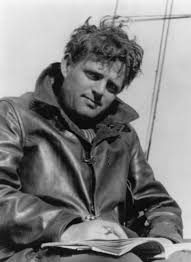
Standard

The Awful Cruelty of the Mud Pack

Damon Runyon

St. Joseph Gazette/February 9, 1937

We note that a Long Island lady got legal separation from her husband the other day on the grounds of mental cruelty. She said her husband stays out all night playing cards. 

We are willing to concede that this practice may be developed to a degree where it constitutes mental cruelty to a wife, all right, but our own experience teaches us that it is apt to be just as cruel mentally to the husband. 

We mean the staying out all night playing cards. We know of nothing crueler, mentally, than the cold, gray morning light coming up on an all-night card game in which a husband is a bad loser, with the additionally cruel prospect before him of confronting the good wife later on.

However, that isn’t the point of our lecture. We often run into items of news about legal separations and divorces on the grounds of mental cruelty, and we are struck by the fact that on this particular ground, the wife is generally the plaintiff. 

We don’t know why husbands do not avail themselves more of this plea. It may be that they have not yet been properly advised as to some of the things that constitute mental cruelty. For instance, mud packs, when used in the home. 

Our legal department assures us that the mud pack, when used in the home, is without a doubt mental cruelty to a brutal and inhuman degree, and would be so held by any fair and impartial court of married men.

The mud pack is a species of facial treatment that has become rather popular among the ladies in recent years. It consists of the application to the features of a thick layer of a gooey substance that they call mud. 

It probably isn’t actually mud, at least not the kind of mud that sends a fellow to a form chart to see if there is anything to indicate that a steed ought to run in that kind of going. But it looks like mud, and it feels like mud, and just between all of us over here in the corner, it tastes like mud. 

It is an oily, olive-green substance in the beginning, not greatly dissimilar to the mud we used to have in the alley on rainy days back of the soap factory in Peppersauce Bottoms. But when applied to the features, and permitted to dry, it turns grayish color, lending a slightly ghastly aspect to the wearer, especially as she usually pins her hair well back so the mud will not get mixed up with it. 

At first, the ladies underwent this facial treatment somewhat surreptitiously in the cloisters of the beauty parlors, and the gentlemen knew of it only by vague rumor. 

As a completely secret practice, the mud pack could scarcely be deemed a cause for action, of course. But then the ladies got to mudding it up at home. The first disclosures of this fact being made public when a gentleman on Morningside Heights went home unexpectedly one afternoon, and, finding his good wife with her features packed in mud, took a shot at her, thinking she was a ghost. 

The gentleman might have been acquitted if he hadn’t taken two more shots after she had confessed her identity, although fortunately none of the shots took effect. The gentleman got two years, and some hinted afterwards that the jury of married men were themselves aware of the mud pack and were sore at him because he missed. 

Anyway, the ladies no longer exercise any restraint or secrecy with reference to the mud pack, and it is said to be a medical fact that cardiac cases among married men have materially increased as the result of the shock that invariably ensues when a gentleman sees his good wife in a mud pack for the first time, or even the second or third time. 

This shock reacts on the mind and becomes mental cruelty.

The mental cruelty is all the greater, our legal department advises, because the avowed purpose of the mud pack is to beautify the face, yet after the mud pack is peeled off the face revealed is invariably the same old face. 

Our legal department says that the mud pack takes its place as mental cruelty, along with the fiendish practice of wives compelling husbands who have reached the stage where they are wearing cantaloupes under their vests to attend movies in which Mr. Clark Gable is depicted taking a bath. 

If not Mr. Clark Gable, then Mr. Tyrone Power, or Mr. Robert Taylor, or Mr. Franchot Tone. It is very strange, our legal department ruminated, that the movies never depict Mr. Guy Kibbee taking a bath.

Our legal department thinks the frowner is also mental cruelty, but it isn’t sure. They said they would look it up and let us know. 

The frowner is a device that the ladies paste between their eyes to prevent frowns from turning into permanent wrinkles. Our legal department said it sounds like plenty of mental cruelty to them.

We then asked what the legal department thought of the practice of mature married ladies leaving off their stockings when they put on evening dress, tinting their toenails a bright vermilion, and forcing their husbands to escort them, in this array, before the public gaze. 

We wanted to know if that isn’t mental cruelty to the husband. Our legal department hasn’t given us a formal answer as yet, but we hear it has six of its best lawyers hurriedly preparing an advance defense to charges of disturbing the peace, just in case.

Standard

Old School AirBNBs in Saratoga

Damon Runyon

Springfield Republican/July 22, 1937

Saratoga Springs, New York, July 22— Many of the permanent inmates of this quaint little old town in the foothills of the Adirondacks have moved, or are making ready to move, to temporary habitation for the next 30 days.

It is a curious hegira that has been taking place here annually for upward of 75 years. The horse racing season opens in Saratoga next week and it is the custom of the Saratogians to rent their homes for the period of the races to the visitors.

Some visitors have rented the same homes for 20 years or more. Some take a different house every season according to the changing family requirements for space, and also perhaps according to the changing family purse. We know Saratoga visitors who have occupied 10 different houses in as many years.

The rental prices vary with reference to the size and desirability of the home and the location. The visitors refer to all houses as “cottages.” You can get a small comfortable house for $250, which is about the minimum, or one of the size of an orphan asylum, and not so comfortable, for $3000.

The highest rental we ever hoard of here was $10,000 for a most elaborate farm house just outside the city limits. Wo would guess that the average rental for a nice home is around $700, which probably goes far toward standing off the annual upkeep for the owner.

The rich old racing families, like the various branches of the Whitneys, own their houses in Saratoga, which in many cases have come down to the present generation from a racing ancestry that flourished in the great days when the California mining millionaires brought their horses here to compete against the East and the South, and when “the spa” was the seat of American fashion and frivolity.

The rich keep their Saratoga houses closed and in charge of caretakers for all but the month of August. Just now there is a great flurry of activity around these houses, with automobiles discharging cargoes of servants and with a terrific airing out and dusting up going on against the arrival of the owners.

These houses of the rich are not especially elaborate, save perhaps in size. They are furnished no more expensively and in some cases not half as comfortably as the average upstate home of a family in fair circumstances. From the old days of great display, Saratoga has changed to a place of almost ostentatious simplicity on the part of the rich. It is our guess that the rich feel they are more or less rusticating here.

There is nothing complicated about renting a house for the season in Saratoga, except digging up the required dough. You just get hold of a real estate agent, tell him exactly what you want, and how much you are disposed to pay, and the chances are he will have your house in four hours.

You do not have to bother even to come to Saratoga in advance, though unless you are experienced in house renting here, and are familiar with locations, it is not a bad idea to look around. In general, however, a Saratoga real estate agent is unlikely to stick you with a bad bargain.

He wants your business and your recommendation another season.

He will dig up a cook and any other help you require, and the cook is apt to be one of these upstate, middle-aged lady cooks who can do more tricks about a cook stove than Cardini with a pack of pasteboards. Those cooks average around $20 per week for the month, but when a transient reflects that he is perhaps depriving some worthy husband of the magnificent benefits of her culinary arts for that length of time, the wage seems little enough. This renting out of houses in Saratoga for the racing season has become so systematized that about all a visitor has to do is notify the agent of the day of his arrival, and, lo and behold, his house will be all ready and a piping hot dinner spread as he steps across the threshold.

He does not have to bother about the tradespeople, or the delivery of the daily papers, or much of anything else. The original occupants of the house remove only their personal belongings, and if they show up at all during the tenure of the visitor will be found in the main friendly and helpful.

We have often wondered where these Saratogians go after they rent out their houses. We have a vague theory that they probably move in with in-laws somewhere around town, or perhaps the surrounding hills, but we were not quite sure about that and it worried us.

We hated to think of some of these nice people wandering about without habitation in August while some stranger enjoyed the comforts of their homes, so we asked a householder about this the other day.

“Well,” he said, “I’ll tell you. I take a nice little vacation. I go to a hotel.”

Standard