Keep the Reform Fires Burning

Ring Lardner

The Morning Union/January 30, 1921

Several people has wrote to me lately complaining that they hasn’t been no new reforms suggested in the land of the free in the last couple of Wks, and it begins to look like the boys that takes care of our morals was loafing on the job and why didn’t I step in and give them some new idears to work on. 

Well, I can name a whole lot of things that could stand a trip to the cleaners only you can’t expect to reform everything at once, and you half to pick out one to start in on so why not begin with the advertising business which some of my best friends is mixed up in it, but when the public welfare is conserned a man shouldn’t let personal feelings interfere. They’s plenty of room for a moral uplift amongst the boys and gals that writes our ads and a man don’t realize how much till you make a study of it like I done. 

The way I come to get Interested in it was last fall when I was talking to a friend of mine that writes ads and I was telling him how hard it is to make both ends meet the other and he asked me why didn’t I try and write ads too which he says they was good money in it. 

So I told him I couldn’t never be a ad writer because I haven’t got no imagination, so he says that is the last thing a man needs to write ads because when you write them now days for a first class consern they won’t let you tell nothing but the truth about their goods and further and more if you don’t tell the truth the high class magazines won’t print the ads. 

So I says do you mean to say that all the ads you read in the magazines is nothing but facts, and he says you bet they are and I will give you a dollar for every miss statement you find in them so I asked him what he considered was the high class magazines and he named a few of them and I bought them and when I didn’t have nothing else to do I looked through them at the ads. Well friends, if I had of tooken this bird up on his offer he could of paid his sir tax with the change from a ruble. 

One of the first ads I run acrost was a ad of a cold cream and the people that makes it is A. No. 1 and O. K. but here is how the ad started out.

Most of us can remember when our mothers or grand mothers on retiring used to take with them to their rooms a saucer of fresh cream.

Well personly I didn’t remember no such a thing but I wanted to make it a fair test so I chose 10 people at random and says to. them one at a time: 

“Can you remember when your mother or grand mother on retiring used to take with them to their room a saucer of fresh cream?”

Six out of the 10 replied with the short and ugly word “no!” Three of them give me a dirty look and the other says: 

“I have heard that, one!” 

Investigating Further.

I come to a ad of a winter top for cars that for all as I know it may be a good winter top, but the ad says: “Bad weather is the time you need your car most.”

So I asked 4 guys when they needed their car most and 3 of them says in summer when its the golf season and the other one says whenever it’s laid up in the garage. And wile we are talking about automobile accessorys, they was another ad that said:

“Every owner wants his gold initials on side door of his automobile.” 

I made inquirys about this from 3 birds that owns cars and couldn’t get a civil answer out of none of them. 

Then they was a ad that said: 

“No gift from a father to a son could be more sensible than a razor.” 

I didn’t halt to make no inquirys about that as I have got 4 sons of my own and its just a question in my mind whether it would be more sensible to give them a razor or lock them up in a room with a mad dog.

And speaking about razors they was a shaving cream that they claimed made shaving a pleasure, but I will bet that even when the men that makes it and gets it for nothing, I bet when they are through their work and out for a good time they don’t run home and shave themselfs all the evening or they don’t never think of spending their vacation removeing thir wiskers with this here cream.

Another ad sung the praises of a certain mince meat and it said down at the bottom “Thursday is pie day and as such is observed nationally.”

Well friends how many of you gets every Thursday off or tends church services once a wk. in honor of mince meat and how many of you goes around all day Thursday saying, “Merry Pie Day,” to your friends?

“Cleanliness brings happiness and good cheer” is another bold statement which it looks like it was open to question.

For inst. I got 4 people right here in the house that ain’t happy if they ain’t dirty, and just the idear of getting cleaned up is enough to send then into a tantrums. 

Then I come acrost 2 ads of musical instruments one of which I happen to know about personly myself. It says:

“You can double your income, your pleasure and your popularity with a saxaphone.” Well one of them things was give to me 2 yrs. ago and so far my income ain’t nowheres near double,. and in the second place I can enjoy a good show or a fight just as much or even more so if I leave my saxaphone home, and as far as popularity is conserned I kind of feel like maybe we would have more callers if we traded this elegant instrument for a couple bottles of Scotch.

Ukelele Player Lonesome.

The other ad said: 

“If you can play quaint dreamy Hawaiian music or latest songs on the ukelele you will be wanted everywhere.” 

Well, I know a bird that can do that little thing and I can name 100 places he ain’t wanted, to none where he is wanted, and if the mail man didn’t have nothing to do but deliver this guy’s invitations they would lock him up as vagrant. 

And another one was the washing machine ad.

It says: 

“For a mother, young or old, no gift could be better proof of thoughtful affection.”

I know mothers both young and old that if you handed them any kind of a washing machine they would show their appreciation of your thoughtful affection with a wallop in the jaw. 

Those is only a few samples but they are enough to convince me that the advertising game is far from pure and I don’t see why the lords day alliance or somebody don’t get busy and not only make these guys tell the truth about their goods but make them tell the whole truth. 

For inst., if they are advertising say the Perfect Cord Tire, why let their ad read:

“The Perfect Cord sells for $70 and it’s pretty near as good as a $75 tire. It is a non-skid tire when the car is standing still on a dry road and it don’t hardly ever get a puncture unless you run over a mall or something. The Perfect Tire is guaranteed for 6000 miles which means that if one of them blows out when you haven’t only drove it 1000 miles, why take it to one of our agents and try to get a new one.”

Or if they was advertising a car itself: 

“The price of the Echo Six complete is $1685 F. O. B. Albany, meaning that if you live way off somewheres like Utica the chassis won’t only cost you $1750 and then all as you half to buy is a body and a steering wheel and a couple spare tires. The 7 passenger model has room for 3 grown ups and a weasel. The Echo don’t need no patent safety locking device. Her looks is her protection.”

That is the way to make them advertise, gents, and when you get a system like that working, they won’t be no more pitifull cases like the poor sap I spoke of that went and learned how to play quaint dreamy Hawaiian music on a ukulele and there’s only one place he is ever asked to go. 

Standard

Clergymen as Garbage Collectors

Ray Stannard Baker

Outlook/August 17, 1895

Following the example of Miss Jane Addams, of Hull House, who has a Garbage Inspector’s genius for originating practical reforms and putting them into operation without any preliminary fuss and feathers, three Chicago clergymen have been recently appointed garbage inspectors. As is well known, Miss Addams applied last spring for the position of garbage contractor in the Nineteenth Ward, where Hull House is located. When she was unsuccessful she immediately sought and secured the appointment of garbage inspector. Following closely in her footsteps, the Rev. Herman F. Hegner, who is at the head of another social settlement, was given the corresponding office in the Seventeenth Ward, one of the worst in the city. Then the Rev. D. S. Kennedy, also engaged in settlement work, received the appointment of inspector in the Thirty-Fourth Ward, and the Rev. C. W. Barnes, pastor of the Sedgwick Street Congregational Church and formerly connected with Hull House, was given the place in the Thirty-Second Ward. They have taken hold of the work with so much energy that the wards under their care are now among the cleanest in the city. In their positions as inspectors they have general supervision of the cleaning work in their territory, and if it is not thoroughly done by the contractor they have the power of calling in additional men and teams and charging the expense to the contractors’ accounts. They make daily reports to the city superintendent of streets and alleys, and investigate all cases of complaint. This involves continual watchfulness and a thorough acquaintance with every nook and every alley of the ward. The contractors have been held so closely to their agreements that most of them are losing money where formerly, under a lax administration, their income was large. The new inspectors have not only been doing the routine work, but, with the full sympathy of the superintendent of streets and alleys, they are advocating the cleaning of alleys every day instead of three times a week, the substitution of metallic garbage boxes for the present filth-soaked wooden ones, and other needful improvements. This new departure not only testifies to the increasing disposition of clergymen to do the drudgery necessary to secure better municipal conditions, but also to the strength of the reform sentiment in the Chicago city government. The position of garbage inspector carries with it a salary of $1,000, which under former conditions would have been used to pay for political services past and future.

Standard

Middletown Americans

H.L. Mencken

Springfield News-Leader/January 20, 1929

I

A book full of entertainment and instruction is “Middletown” by Robert S. and Helen Merrell Lynd, lately published by the esteemed house of Harcourt, Brace & Company. It is touched in sober, conscientious terms, and it runs to no less than 550 pages, including some formidable tables of statistics; nevertheless, I offer three to two that no reader who tackles it will ever put it down until it is read. It is as packed with facts as the World Almanac, and it is as exhilarating as even the dirtiest of the new novels.

In form it is a study of the normal Americano, and specifically of the Americano of the smaller cities. In methodology it borrows from anthropology. Mr. and Mrs. Lynd went to Middletown, settled down for a year and a half, and studied the life of the people, precisely as the anthropologist studies savage tribes. They took with them no prepossessions, no inconvenient poetical theories. They simply went about with their ears and eyes open, setting down what they heard and saw. They observed at work and at play, at wickedness and at prayer. They gave heed to the prevailing doctrines, political, sociological, moral, theological and epistemological. And everything went into their record.

Where Middletown may be is not disclosed. The name is admittedly fictitious. The authors say that it lies “in the East-North-Central group of states that includes Ohio, Indiana, Illinois, Michigan and Wisconsin,” and that the nearest large city has less than 350,000 population and is 60 miles away. My guess is that Middletown is Muncie, Ind., but whether it is or not is not important. The main thing is that it is a normal American town in the 25,000-50,000 population bracket, and fairly typical of all the 143 therein, and that it has been studied calmly, scientifically and at length. For the first time a really illuminating light has been let into the daily lives of a large group of highly American Americans.

II

The notion one mainly gathers from the records is that Middletown is almost as devoid of intellectual life as an army camp. Its two newspapers belong to chains, and are of the usual chain-store sort. One of them devotes no less than 21.6 percent of its reading matter space every day to comic strips, and both go in heavily for sports and personal gossip. There is what seems to be a fairly good public library in the town, but there is no sign that it has had any influence on the reading of the people. One household in every five take the American Magazine and one in every six the Saturday Evening Post, but the total circulation of Harper’s is but 20 copies and of the New Republic but 15.

The exercises of the cerebrum, such as they are, are pursued only by the women’s clubs, and seldom go beyond the cultural banalities of chautauqua. The men of the town show no interest in such fripperies. They know nothing about the fine arts, and don’t want to know anything. They never read anything save newspapers and magazines, and confine themselves in that field to publications which voice the Coolidge idealism. All ideas which lie outside its bounds seem to them to be Bolshevistic. The object of the art of thinking as they view it is to think thoughts which resemble as closely as possible the thoughts of Dr. Andy Mellon.

In the transcendental domain they take their ideas from Rotary. It is powerful in the town, and all the leading Middletowners belong to it—all, that is, save the clergy, who are barred out en masse because the other members can’t agree as to which one should be elected to represent God. The blather of Rotary, according to Mr. and Mrs. Lynd, is fast becoming a formidable rival to orthodox theology. The town Babbitts still go to church, but they are no longer literal-combustion Christians. Their yearning for higher things is better satisfied by Rotary, which combines virtue and social relaxation (not to mention business advantage) in a safe and comfortable manner. Where they used to give money to convert the heathen they now buy wooden legs for one-legged boys and blow spitballs at one another. Once a week they submit to a speech by an idealist, usually a gentleman with something to sell.

III

The authors say nothing about the booze situation in the town, and admit in a footnote that this is a shortcoming in their study. They also avoid any formal discussion of the morals of the people, though they have a lot to say about necking, petting and other such practices. My guess is that even the most elaborate investigation of this matter would not have unearthed anything alarming. The natural Americano is not a profligate. Even under Prohibition, he seldom drinks more than is good for him. As for adultery, he abhors it. Nine American husbands out of ten are completely faithful to their wives. The doctrine to the contrary is no more than an invention of wives who yearn to be martyrs, an immemorial weakness of their instructive sex.

The young folks of Middletown, according to Mr. and Mrs. Lynd, are gassy but not noticeably vicious. They neck a good deal, but seldom to their damage, and in the end most of them are respectably married. The schools they go to are apparently maintained to the one end of making them all Babbitts. The pressure against oddity in conduct or thought begins in the lowest grades, and becomes well-nigh irresistible higher up. The young buck or heifer who refuses to conform is simply put in Coventry. This enmity to eccentricity extends to matters of dress. A girl in high-school must wear precisely the right clothes, or she is nobody and will find it hard to get her diploma.

The pedagogues who run the schools are of the normal American sort. That is to say, they are mainly jackasses. Teaching, to them, is simply a series of tricks; it has very little, if any, relation to the matter taught. The Middletowners, in fact, do not esteem knowledge for its own sake. They look upon education, not as a process of becoming enlightened, but as a means to material success. A diploma is worth so much in wages, and hence in ease and prestige. To go to college is to put it over the boys left at home in the mill. Not a single man of learning lives in Middletown, if a few young doctors be excepted. The lawyers are all hacks who work for the bankers and manufacturers and serve as mouthpieces for the ideals of Rotary. The journalists are chain-store clerks. The pastors are backslappers.

IV

Such is life in an American town of the 25,000-50,000 population bracket. There are 142 others almost precisely like it; they do not differ between themselves much more than a prohibition agent differs from a bootlegger. They are all Middletowns—dull, stupid, complacent and forlorn. Life goes on in them in an endless round, with a few breaks of any sort. Sharing the prevailing prosperity, they tend to grow richer, but they do not tend to grow more civilized. When, by some act of God, a really intelligent youngster is born into one of them, he is gone before his beard has sprouted. Their leading men are opulent ignoramuses. They have no intelligentsia and don’t want any.

Are these people happy—that is, in the mass? Mr. and Mrs. Lynd present evidence which makes it doubtful. The ruling Rabbits, no doubt, get a certain animal-like contentment out of their golf, their gaudy homes and the social eminence of their wives. Their money keeps on rolling up, and Rotary convinces them that accumulating it is noble. But the majority of the people—the clerks and workmen—are probably a good deal less happy. The machinery for stripping them of their earnings is so efficient that they seldom attain to anything approaching security. Nine-tenths of them, in old age, get into difficulties. And even in their prime they seldom make more than their living.

These people—the overwhelming majority of Middletowners—live in unpleasant houses and are harassed by bitter cares. Their children, made discontented by the schools, badger them into expenditures beyond their means. They are forever paying for something that has worn out, or was useless to begin with. Their jobs are never safe. Religion, as they have experience of it, is mainly a scheme to get money out of them. When they are ill they are treated by quacks. Getting into trouble, they are robbed by lawyers and bureaucrats. Every value they are aware of is a money value—and they never have money enough. Many of them, growing old, slink back to the farms whence they came, and there, groaning and wondering, wait for death like old carthorses. It is hard to believe that they find life a great adventure.

I commend this tome by Mr. and Mrs. Lynd. There is vastly more meat in it than you will find in most books.

Standard

Decaying Classics

H.L. Mencken

Baltimore Evening Sun/May 26, 1910

Sam Walter Foss, librarian of the Somerville (Mass.) Public Library and a poet of parts, arises to sing the melancholy death song of the so-called American classics. Twenty years ago no refined American home was complete without the “works” of Emerson, Lowell, Holmes, Irving, Cooper, Bryant, Longfellow, Hawthorne, Whittier, Bayard Taylor and N. P. Willis. They were rammed into the heads of unwilling schoolboys in all the select academies of our fair republic; they were in great demand as presents; they were read religiously on the long winter evenings, as if the reading of them were some elevating and patriotic rite. It was sacrilege to scoff at them; even the compositions of Byron, Scott and Dickens were not held in greater veneration.

But no more! Today only the schoolboy remains faithful to those ancient idols, and in his case fidelity is the son of fear. Treason to Lowell brings the rattan from its sheath and a revolt against “Thanatopsis” is followed by a painful dusting of the pantaloons. For the same reason the schoolboy sweats through the ghastly stanzas of Spenser, the interminable bombast of Marlowe of “the mighty line,” the long reaches of “Paradise Lost,” the fustian of “Cymbeline,” the maudlin strophes of Donne. It is abominable, but it is held to be, in some vague way, nourishing to the mind. Such, at least, seems to be the theory of Messieurs the pedagogues. The course in “literature” at every respectable high school is still devoted, in the main, to Old Masters whose utterances, when laboriously interpreted, turn out to be not worth hearing. “Hudibras,” though long since unintelligible, is still set before the harassed jejune as a delectable intellectual victual. The pale wheezes of Irving are still labeled “humor,” and poor youngsters are ordered to laugh at them on penalty of the bastinado.

The Day of Deliverance

Naturally enough the average schoolboy when he leaves school knows very little about English literature and nothing at all about any other literature. He knows that Shakespeare was born on April 23, 1564; that Hawthorne was the greatest of American novelists; that so many feet of such and such a breed make a line of such and such a species; that Poe was an astute psychologist and Emerson a profound philosopher, and a lot of other things that are either untrue or not worth knowing, but the chief impression left upon his mind is one of confusion and discomfort. He has been convinced, in brief, by bitter experience that the field of letters is a bleak and barren expanse, with no vegetation save coarse foot-ensnaring grasses and unpalatable medicinal weeds. 

Happy that boy if fortune leads him back as an independent explorer, where once he plodded the weary miles in chains! If he has the love of books in him he will go back. Bit by bit his mind will be cleared of its useless lumber. He will forget “Comus” and “Cato,” “Tamerlane” and “Irene,” with their dreary reaches and maddening footnotes, and discover for himself the delights of “Much Ado About Nothing” and “The Old Bachelor,” “The Recruiting Officer” and “The Magistrate.” He will forget Dryden’s wire-pulling and his tedious blank verse and browse happily through the “Essay on Dramatic Poesie;” he will put Holmes and Cooper out of mind and find unction for his soul in the “Barrack Room Ballads” and the doings of the Great Gargantua, in Thackeray, Stevenson, Huxley, Zola, Meredith and Mark Twain.

Irving A Fallen Idol

As Mr. Foss points out, some of the towering giants of the schoolroom have long since shrunk to pitiful pigmies outside. There is Irving, for example. The printing of his books, for actual reading, has practically ceased. A few sets are still ground out every year from old plates and for the cut-rate trade, but no educated reader would think of making room for them on his shelves. But the publishers of schoolbooks notice no decline in the demand for annotated, classroom editions. Irving, in brief, is still forced through the skulls of the young. The poor schoolboy must assimilate his gentle humor but vacuous periods; it is assumed as a pedagogic axiom that no American who does not know him can be civilized or a patriot. 

Lowell is another fallen god whose worship is still kept up at academic altars. Bayard Taylor and Whittier are yet others. If you want the poems of Taylor today you must go to a second-hand store—or buy a school book. And if you want Willis you must go the same. As for Emerson, he has been declining steadily for a dozen years. The disciples of the New Thought, psychotherapy and other such flapdoodle still find stimulation in his speculations, but the more catholic reader has found the way to the German philosophies from whom he derived—and to those later Germans who have succeeded them.

The Case of Poe

Mr. Foss seems to be in some doubt about Poe. Is he growing or shrinking? It is probably near the truth to say that, all things considered, he is standing still. On the one hand, the old extravagant worship of him is dying out, and on the other hand, serious students of letters are beginning to admit his originality and influence. For a long time a certain flavor of romantic, inviting devilishness clung to Poe. His own actorial affectations and the libels of Griswold combined to invest him with an air of desperate immorality. But now we know that he was a quite decent and commonplace fellow, whose only vices were drunkenness and bathos.

At the moment, Poe is better regarded in France than at home, and the cause is not far to seek. There is something in the American character which revolts against the melodramatic pessimism of “The Raven,” and something, again, which scoffs at the sophomoric horrors of the prose tales. We are just a bit too healthy, just a bit too sane, to get any pleasure out of snouting through charnel houses. It is difficult to interest us in dank, mysterious forests, ruined castles and bleaching skulls. We prefer the open Mississippi, with Huck and Jim on the raft, and the clear, blue sky overhead. We have sound stomachs, and so we are optimists.

The Frenchman is of different kidney. He goes in for the more staggering, electric emotions. It is his aim, when he seizes his pen in hand, to shock the public, and if, perchance, that effort fails, he is content to shock himself. Hence the graveyard strophes of the so-called decadents. In most of them there is no poetry at all, but only thrills; just as in many of the tales of Poe there is no reality at all, but only horror. Read in cold blood, not a few of those tales must needs provoke the sacrilegious snicker—but no Frenchman ever reads them in cold blood.

The Madness of Youth

This is not saying, of course, that Poe is not read with pleasure in the United States. Far from it! He is still a very lively classic. His books are still sold. But the majority of his readers, I suspect, are youngsters. He was always a youngster himself—a sort of solemn, self-conscious Peter Pan. He never outgrew the Byronic, play-acting period. He always saw robbers behind the nearest hedge; he was always enchanted by the magic of sounding but empty words; he constantly played a part. It pleased him to think that he was the victim of dark and felonious conspiracies; to pose as a Hamlet; to lament lost loves that he never had; to stand aghast before his own devilishness. The same madness falls upon all of us when we are young. We all cultivate pessimism, and we all read Poe.

But wasn’t Poe, after all, a great poet? Well, maybe he was—ever and anon. But if “The Bells” is great poetry, then “The Battle of Prague” is music.

Standard

On Whiskers

H.L. Mencken

Baltimore Evening Sun/May 2, 1910

The ridiculous report, so industriously circulated by the Boston Evening Transcript and other sensational papers, that Governor Hughes will be compelled by the unwritten law of the judiciary to shave off his copious and unearthly whiskers when he becomes a justice of the Supreme Court of the United States has no foundation whatever in fact.

There is, indeed, no such law, written or unwritten. The learned justices have a perfect right to cultivate their hirsute garden as they list. They may go in for shaven lawns, they may decide for shrubbery before the ear, they may even devote their leisure to broad waterfall effects, straight or bifurcated. It is all one. No court-martial or board of inquiry has any authority to question their taste or to offer suggestions. A barrister who sought to enliven a tedious argument before them and mixing sly jokes about the judicial foliage would be clearly in contempt and might reasonably expect a heavy fine or a term in jail.

Whiskers On The Bench

A considerable diversity is noticeable in the vegetable adornment of the justices. The Chief Justice and Justice Holmes go in for pugnacious mustaches of the Bismarck type, without chin or cheek support. Justice Harlan wears siders, Justice Moody wears a mustache of the ragged sort popular among business men, Justice Lurton sports a toothbrush, and Justice McKenna yields to the insidious fascinations of a full beard, though his upper lip is bare.

In the past many other capillary effects have been visible in that austere sanhedrin. It is firmly established, indeed, as an axiom of jurisprudence that a justice may cut his whiskers as he pleases, just as he may divert himself with plantation toilet or the common plunge of commerce, as he pleases.

There is no purpose here, of course, to lay it down as an indubitable fact that Governor Hughes will make no rearrangement of his facial adornments when he mounts the bench. That he need not do so has been established, but that he will not do so is scarcely a matter of safe prophecy. He may, indeed, yield voluntarily to a wakening sense of the fitness of things—to some spontaneous aesthetic impulse—and so mutilate his whiskers with scissors, or even obliterate them entirely with a razor.

Such changes of mind are by no means impossible theoretically and by no means unrecorded in actuality. Many a man, after staggering on to 50 years with whiskers, more or less grandiloquent, has suddenly chopped them off and gone down to his grave with smooth cheeks. And by the same token many a man, after 50 years of clean shaving, has devoted the leisure of his old age to the cultivation of whiskers more or less elaborate.

The psychology of bewhiskerment, in truth, is exceedingly complex and obscure. Why do men raise whiskers? And why do other men raise mustaches? It is common to ascribe all such disfigurements to a childish vanity, to crude and even childish conceptions of the beautiful. The man with mutton-chops, for example, is dismissed with a sneer as a man of defective aesthetic vision, and it is assumed as a matter of course that his infirmity also inclines him to admire upright pianos, solitaire diamond rings, plaid waistcoats, green hats and other abominations.

Some Eminent Shrubbery

But a brief inspection is sufficient to show the absurdity of all such off-hand theories. Many a man of undoubted intelligence and impeccable taste wears whiskers. Nicholas Acusa, the father of modern philosophy, had a beard reaching to his belt; Herbert Spencer and Thomas Henry Huxley sported Galways; Christopher Columbus went in for throaty effects; Emperor William I of Germany cultivated a pair of burnsides with almost ludicrous assiduity; Napoleon III wore an imperial, and Henrik Ibsen trained his hair and beard into a form suggesting an aureole or an Elizabethan ruff. Even Shakespeare gave obvious attention to his whiskers.

In view of all this—and thousands of other examples must occur to everyone—it becomes plain that the cultivation of whiskers is by no means a sign of ignorance or puerility, nor even of senile degeneration. But why, then, do men raise them? Why do civilized and educated human beings, who would shrink instinctively from any suggestion that they pierce their ears, cut furrows across their scalps or bedaub their foreheads with gaudy pigments—why do such superman still waste time and thought upon the rearing of fantastic and unsightly vegetal flora?

In Paris, a couple of years ago, a curious psychologist sought to find out, albeit he confined his inquiries to men with mustaches and had no dealing with actual whiskers-wearers. To each of 100 chosen men he addressed the simple question. Why do men wear mustaches? and from each of them he got a reply. Those replies afford us an interesting, though perhaps, not quite satisfying, insight into the causation of all hirsute manifestations. 

Thirty-six Gave It Up


Ten of the men admitted frankly that they wore mustaches because their wives insisted that they do so, and all 10 seemed to hint that if they were free to choose they would shave. Sixteen others answered that mustache-wearing was the fashion in their professions, and that they feared shaving would make them seem eccentric. Eight others answered that their fathers wore mustaches before them, and that they deemed it their duty to observe the family custom.

Six others said that they were admirers of eminent men who wore mustaches— such as the Emperor of Germany, for example—and did likewise to show their admiration. Twelve confessed freely that they regarded the mustache as a pleasing ornament, and so cultivated it. Four swore that their upper lips were so tender that they could not bear the agonies of shaving; two said that they desired to hide their false teeth, and six others that they desired to hide scars, warts, moles, hare-lips or other disfigurements.

So far we have accounted for 64 of the 100 men. But what of the 36 remaining: What were their reasons for wearing mustaches? The answer is simple: They had no reasons at all. One and all, they confessed that they could offer no intelligible excuse for their habit. One and all, they passed up the problem as insoluble.

And now the infinite complexity and obscurity of the whiskers question begins to grow apparent. If 36 of 100 men with mustaches confess that their adornments are entirely independent of conscious processes of ratiocination, what sort of answers are we to expect from men with whiskers?

An Impenetrable Mystery

The mustache is a simple thing, and in consequence it should be easily grasped by the mind and placed in an ordered chain of cause and effect. It runs to standard forms, it does not stun the intellect by its prodigality: it is familiar, usual, normal.

But whiskers are not. On the contrary, they are infinitely diverse in quantity and quality, texture and form, density and curvature, length and specific gravity. No two stands are exactly alike. Even among Galways, siders, mutton-chops and other more or less familiar species there are gradations without number.

A fine stand of whiskers, in truth, changes from day to day, even from minute to minute. Meteorological variations conditions and qualify it; tonsorial incompetence cripples and musses it; it is affected by every phenomenon of a restless environment. The human mind must needs be helpless in the presence of a thing so inordinately complex, mobile, fluid and elusive.

Even a man who devotes his whole life to the cultivation of his whiskers, meditating upon them ceaselessly, day and night, and giving them the place of honor in his most secret hopes and aspirations—even so assiduous a birsuticulturist must, in the end, stand flabbergasted before their impenetrable mystery. 

Standard

Italian with Grammar

Mark Twain

Harpers/August, 1904

I found that a person of large intelligence could read this beautiful language with considerable facility without a dictionary, but I presently found that to such a parson a grammar could be of use at times. It is because, if he does not know the were’s and the was’s and the maybe’s and the has-beens’s apart, confusions and uncertainties can arise. He can get the idea that a thing is going to happen next week when the truth is that it has already happened week before last. Even more previously, sometimes. Examination and inquiry showed me that the adjectives and such things were frank and fair-minded and straightforward, and did not shuffle; it was the Verb that mixed the hands, it was the Verb that lacked stability, it was the Verb that had no permanent opinion about anything, it was the Verb that was always dodging the issue and putting out the light and making all the trouble.

Further examination, further inquiry, further reflection, confirmed this judgment, and established beyond peradventure the fact that the Verb was the storm-center. This discovery made plain the right and wise course to pursue in order to acquire certainty and exactness in understanding the statements which the newspaper was daily endeavoring to convey to me: I must catch a Verb and tame it. I must find out its ways, I must spot its eccentricities, I must penetrate its disguises, I must intelligently foresee and forecast at least the commoner of the dodges it was likely to try upon a stranger in given circumstances, I must get in on its main shifts and head them off, I must learn its game and play the limit.

I had noticed, in other foreign languages, that verbs are bred in families, and that the members of each family have certain features or resemblances that are common to that family and distinguish it from the other families–the other kin, the cousins and what not. I had noticed that this family-mark is not usually the nose or the hair, so to speak, but the tail–the Termination–and that these tails are quite definitely differentiated; insomuch that an expert can tell a Pluperfect from a Subjunctive by its tail as easily and as certainly as a cowboy can tell a cow from a horse by the like process, the result of observation and culture. I should explain that I am speaking of legitimate verbs, those verbs which in the slang of the grammar are called Regular. There are other–I am not meaning to conceal this; others called Irregulars, born out of wedlock, of unknown and uninteresting parentage, and naturally destitute of family resemblances, as regards to all features, tails included. But of these pathetic outcasts I have nothing to say. I do not approve of them, I do not encourage them; I am prudishly delicate and sensitive, and I do not allow them to be used in my presence.

But, as I have said, I decided to catch one of the others and break it into harness. One is enough. Once familiar with its assortment of tails, you are immune; after that, no regular verb can conceal its specialty from you and make you think it is working the past or the future or the conditional or the unconditional when it is engaged in some other line of business–its tail will give it away. I found out all these things by myself, without a teacher.

I selected the verb amare, to love. Not for any personal reason, for I am indifferent about verbs; I care no more for one verb than for another, and have little or no respect for any of them; but in foreign languages you always begin with that one. Why, I don’t know. It is merely habit, I suppose; the first teacher chose it, Adam was satisfied, and there hasn’t been a successor since with originality enough to start a fresh one. For they are a pretty limited lot, you will admit that? Originality is not in their line; they can’t think up anything new, anything to freshen up the old moss-grown dullness of the language lesson and put life and “go” into it, and charm and grace and picturesqueness.

I knew I must look after those details myself; therefore I thought them out and wrote them down, and set for the facchino and explained them to him, and said he must arrange a proper plant, and get together a good stock company among the contadini, and design the costumes, and distribute the parts; and drill the troupe, and be ready in three days to begin on this Verb in a shipshape and workman-like manner. I told him to put each grand division of it under a foreman, and each subdivision under a subordinate of the rank of sergeant or corporal or something like that, and to have a different uniform for each squad, so that I could tell a Pluperfect from a Compound Future without looking at the book; the whole battery to be under his own special and particular command, with the rank of Brigadier, and I to pay the freight.

I then inquired into the character and possibilities of the selected verb, and was much disturbed to find that it was over my size, it being chambered for fifty-seven rounds–fifty-seven ways of saying I love without reloading; and yet none of them likely to convince a girl that was laying for a title, or a title that was laying for rocks.

It seemed to me that with my inexperience it would be foolish to go into action with this mitrailleuse, so I ordered it to the rear and told the facchino to provide something a little more primitive to start with, something less elaborate, some gentle old-fashioned flint-lock, smooth-bore, double-barreled thing, calculated to cripple at two hundred yards and kill at forty–an arrangement suitable for a beginner who could be satisfied with moderate results on the offstart and did not wish to take the whole territory in the first campaign.

But in vain. He was not able to mend the matter, all the verbs being of the same build, all Gatlings, all of the same caliber and delivery, fifty-seven to the volley, and fatal at a mile and a half. But he said the auxiliary verb avere, to have, was a tidy thing, and easy to handle in a seaway, and less likely to miss stays in going about than some of the others; so, upon his recommendation I chose that one, and told him to take it along and scrape its bottom and break out its spinnaker and get it ready for business.

I will explain that a facchino is a general-utility domestic. Mine was a horse-doctor in his better days, and a very good one.

At the end of three days the facchino-doctor-brigadier was ready. I was also ready, with a stenographer. We were in a room called the Rope-Walk. This is a formidably long room, as is indicated by its facetious name, and is a good place for reviews. At 9:30 the F.-D.-B. took his place near me and gave the word of command; the drums began to rumble and thunder, the head of the forces appeared at an upper door, and the “march-past” was on. Down they filed, a blaze of variegated color, each squad gaudy in a uniform of its own and bearing a banner inscribed with its verbal rank and quality: first the Present Tense in Mediterranean blue and old gold, then the Past Definite in scarlet and black, then the Imperfect in green and yellow, then the Indicative Future in the stars and stripes, then the Old Red Sandstone Subjunctive in purple and silver– and so on and so on, fifty-seven privates and twenty commissioned and non-commissioned officers; certainly one of the most fiery and dazzling and eloquent sights I have ever beheld. I could not keep back the tears. Presently:

“Halt!” commanded the Brigadier.

“Front–face!”

“Right dress!”

“Stand at ease!”

“One–two–three. In unison–recite!”

It was fine. In one noble volume of sound of all the fifty-seven Haves in the Italian language burst forth in an exalting and splendid confusion. Then came commands:

“About–face! Eyes–front! Helm alee–hard aport! Forward–march!” and the drums let go again.

When the last Termination had disappeared, the commander said the instruction drill would now begin, and asked for suggestions. I said:

“They say I have, thou hast, he has, and so on, but they don’t say what. It will be better, and more definite, if they have something to have; just an object, you know, a something–anything will do; anything that will give the listener a sort of personal as well as grammatical interest in their joys and complaints, you see.”

He said:

“It is a good point. Would a dog do?”

I said I did not know, but we could try a dog and see. So he sent out an aide-de-camp to give the order to add the dog.

The six privates of the Present Tense now filed in, in charge of Sergeant Avere (to have), and displaying their banner. They formed in line of battle, and recited, one at a time, thus:

“Io ho un cane, I have a dog.”

“Tu hai un cane, thou hast a dog.”

“Egli ha un cane, he has a dog.”

“Noi abbiamo un cane, we have a dog.”

“Voi avete un cane, you have a dog.”

“Eglino hanno un cane, they have a dog.”

No comment followed. They returned to camp, and I reflected a while. The commander said:

“I fear you are disappointed.”

“Yes,” I said; “they are too monotonous, too singsong, to dead-and-alive; they have no expression, no elocution. It isn’t natural; it could never happen in real life. A person who had just acquired a dog is either blame’ glad or blame’ sorry. He is not on the fence. I never saw a case. What the nation do you suppose is the matter with these people?”

He thought maybe the trouble was with the dog. He said:

“These are contadini, you know, and they have a prejudice against dogs– that is, against marimane. Marimana dogs stand guard over people’s vines and olives, you know, and are very savage, and thereby a grief and an inconvenience to persons who want other people’s things at night. In my judgment they have taken this dog for a marimana, and have soured on him.”

I saw that the dog was a mistake, and not functionable: we must try something else; something, if possible, that could evoke sentiment, interest, feeling.

“What is cat, in Italian?” I asked.

“Gatto.”

“Is it a gentleman cat, or a lady?”

“Gentleman cat.”

“How are these people as regards that animal?”

“We-ll, they–they–“

“You hesitate: that is enough. How are they about chickens?”

He tilted his eyes toward heaven in mute ecstasy. I understood.

“What is chicken, in Italian?” I asked.

“Pollo, Podere.” (Podere is Italian for master. It is a title of courtesy, and conveys reverence and admiration.) “Pollo is one chicken by itself; when there are enough present to constitute a plural, it is polli.”

“Very well, polli will do. Which squad is detailed for duty next?”

“The Past Definite.”

“Send out and order it to the front–with chickens. And let them understand that we don’t want any more of this cold indifference.”

He gave the order to an aide, adding, with a haunting tenderness in his tone and a watering mouth in his aspect:

“Convey to them the conception that these are unprotected chickens.” He turned to me, saluting with his hand to his temple, and explained, “It will inflame their interest in the poultry, sire.”

A few minutes elapsed. Then the squad marched in and formed up, their faces glowing with enthusiasm, and the file-leader shouted:

“Ebbi polli, I had chickens!”

“Good!” I said. “Go on, the next.”

“Avest polli, thou hadst chickens!”

“Fine! Next!”

“Ebbe polli, he had chickens!”

“Moltimoltissimo! Go on, the next!”

“Avemmo polli, we had chickens!”

“Basta-basta aspettatto avanti–last man–charge!”

“Ebbero polli, they had chickens!”

Then they formed in echelon, by columns of fours, refused the left, and retired in great style on the double-quick. I was enchanted, and said:

“Now, doctor, that is something like! Chickens are the ticket, there is no doubt about it. What is the next squad?”

“The Imperfect.”

“How does it go?”

“Io avena, I had, tu avevi, thou hadst, egli avena, he had, noi av–“

Wait–we’ve just had the hads. what are you giving me?”

“But this is another breed.”

“What do we want of another breed? Isn’t one breed enough? Had is had, and your tricking it out in a fresh way of spelling isn’t going to make it any hadder than it was before; now you know that yourself.”

“But there is a distinction–they are not just the same Hads.”

“How do you make it out?”

“Well, you use that first Had when you are referring to something that happened at a named and sharp and perfectly definite moment; you use the other when the thing happened at a vaguely defined time and in a more prolonged and indefinitely continuous way.”

‘Why, doctor, it is pure nonsense; you know it yourself. Look here: If I have had a had, or have wanted to have had a had, or was in a position right then and there to have had a had that hadn’t had any chance to go out hadding on account of this foolish discrimination which lets one Had go hadding in any kind of indefinite grammatical weather but restricts the other one to definite and datable meteoric convulsions, and keeps it pining around and watching the barometer all the time, and liable to get sick through confinement and lack of exercise, and all that sort of thing, why–why, the inhumanity of it is enough, let alone the wanton superfluity and uselessness of any such a loafing consumptive hospital-bird of a Had taking up room and cumbering the place for nothing. These finical refinements revolt me; it is not right, it is not honorable; it is constructive nepotism to keep in office a Had that is so delicate it can’t come out when the wind’s in the nor’west–I won’t have this dude on the payroll. Cancel his exequator; and look here–“

“But you miss the point. It is like this. You see–“

“Never mind explaining, I don’t care anything about it. Six Hads is enough for me; anybody that needs twelve, let him subscribe; I don’t want any stock in a Had Trust. Knock out the Prolonged and Indefinitely Continuous; four-fifths of it is water, anyway.”

“But I beg you, podere! It is often quite indispensable in cases where–“

“Pipe the next squad to the assault!”

But it was not to be; for at that moment the dull boom of the noon gun floated up out of far-off Florence, followed by the usual softened jangle of church-bells, Florentine and suburban, that bursts out in murmurous response; by labor-union law the Colazione must stop; stop promptly, stop instantly, stop definitely, like the chosen and best of the breed of Hads.

Standard

The Private History of a Campaign That Failed

Mark Twain

Century Magazine/December, 1885

You have heard from a great many people who did something in the war, is it not fair and right that you listen a little moment to one who started out to do something in it but didn’t? Thousands entered the war, got just a taste of it, and then stepped out again permanently. These, by their very numbers, are respectable and therefore entitled to a sort of voice, not a loud one, but a modest one, not a boastful one but an apologetic one. They ought not be allowed much space among better people, people who did something. I grant that, but they ought at least be allowed to state why they didn’t do anything and also to explain the process by which they didn’t do anything. Surely this kind of light must have some sort of value.

Out west there was a good deal of confusion in men’s minds during the first months of the great trouble, a good deal of unsettledness, of leaning first this way then that, and then the other way. It was hard for us to get our bearings. I call to mind an example of this. I was piloting on the Mississippi when the news came that South Carolina had gone out of the Union on the 20th of December, 1860. My pilot mate was a New Yorker. He was strong for the Union; so was I. But he would not listen to me with any patience, my loyalty was smirched, to his eye, because my father had owned slaves. I said in palliation of this dark fact that I had heard my father say, some years before he died, that slavery was a great wrong and he would free the solitary Negro he then owned if he could think it right to give away the property of the family when he was so straitened in means. My mate retorted that a mere impulse was nothing, anyone could pretend to a good impulse, and went on decrying my Unionism and libelling my ancestry. A month later the secession atmosphere had considerably thickened on the Lower Mississippi and I became a rebel; so did he. We were together in New Orleans the 26th of January, when Louisiana went out of the Union. He did his fair share of the rebel shouting but was opposed to letting me do mine. He said I came of bad stock, of a father who had been willing to set slaves free. In the following summer he was piloting a Union gunboat and shouting for the Union again and I was in the Confederate army. I held his note for some borrowed money. He was one of the most upright men I ever knew but he repudiated that note without hesitation because I was a rebel and the son of a man who owned slaves.

In that summer of 1861 the first wash of the wave of war broke upon the shores of Missouri. Our state was invaded by the Union forces. They took possession of St. Louis, Jefferson Barracks, and some other points. The governor, Calib Jackson, issued his proclamation calling out fifty thousand militia to repel the invader.

I was visiting in the small town where my boyhood had been spent, Hannibal, Marion County. Several of us got together in a secret place by night and formed ourselves into a military company. One Tom Lyman, a young fellow of a good deal of spirit but of no military experience, was made captain; I was made second lieutenant. We had no first lieutenant, I do not know why, it was so long ago. There were fifteen of us. By the advice of an innocent connected with the organization we called ourselves the Marion Rangers. I do not remember that anyone found fault with the name. I did not, I thought it sounded quite well. The young fellow who proposed this title was perhaps a fair sample of the kind of stuff we were made of. He was young, ignorant, good natured, well meaning, trivial, full of romance, and given to reading chivalric novels and singing forlorn love ditties. He had some pathetic little nickel plated aristocratic instincts and detested his name, which was Dunlap, detested it partly because it was nearly as common in that region as Smith but mainly because it had a plebian sound to his ears. So he tried to ennoble it by writing it in this way; d’Unlap. That contented his eye but left his ear unsatisfied, for people gave the new name the same old pronunciation, emphasis on the front end of it. He then did the bravest thing that can be imagined, a thing to make one shiver when one remembers how the world is given to resenting shams and affectations, he began to write his name so; d’Un’Lap. And he waited patiently through the long storm of mud that was flung at his work of art and he had his reward at last, for he lived to see that name accepted and the emphasis put where he wanted it put by people who had known him all his life, and to whom the tribe of Dunlaps had been as familiar as the rain and the sunshine for forty years. So sure of victory at last is the courage that can wait. He said he had found by consulting some ancient French chronicles that the name was rightly and originally written d’Un’Lap and said that if it were translated into English it would mean Peterson, Lap, Latin or Greek, he said, for stone or rock, same as the French pierre, that is to say, Peter, d’ of or from, un, a or one, hence d’Un’Lap, of or from a stone or a Peter, that is to say, one who is the son of a stone, the son of a peter, Peterson. Our militia company were not learned and the explanation confused them, so they called him Peterson Dunlap. He proved useful to us in his way, he named our camps for us and generally struck a name that was “no slouch” as the boys said.

That is one sample of us. Another was Ed Stevens, son of the town jeweller, trim built, handsome, graceful, neat as a cat, bright, educated, but given over entirely to fun. There was nothing serious in life to him. As far as he was concerned, this military expedition of ours was simply a holiday. I should say about half of us looked upon it in much the same way, not consciously perhaps, but unconsciously. We did not think, we were not capable of it. As for myself, I was full of unreasoning joy to be done with turning out of bed at midnight and four in the morning, for a while grateful to have a change, new scenes, new occupations, a new interest. In my thoughts that was as far as I went. I did not go into the details, as a rule, one doesn’t at twenty four.

Another sample was Smith, the blacksmith’s apprentice. This vast donkey had some pluck, of a slow and sluggish nature, but a soft heart. At one time he would knock a horse down fro some impropriety and at another he would get homesick and cry. However, he had one ultimate credit to his account which some of us hadn’t. He stuck to the war and was killed in battle at last.

Joe Bowers, another sample, was a huge, good natured, flax headed lubber, lazy, sentimental, full of harmless brag, a grumbler by nature, an experience and industrious ambitious and often quite picturesque liar, and yet not a successful one for he had no intelligent training but was allowed to come up just anyways. This life was serious enough to him, and seldom satisfactory. But he was a good fellow anyway and the boys all liked him. He was made orderly sergeant, Stevens was made corporal.

These samples will answer and they are quite fair ones. Well, this herd of cattle started for the war. What could you expect of them? They did as well as they knew how, but really, what was justly expected of them? Nothing I should say. And that is what they did.

We waited for a dark night, for caution and secrecy were necessary, then toward midnight we stole in couples and from various directions to the Griggith place beyond town. From that place we set out together on foot. Hannibal lies at the extreme south eastern corner of Marion County, on the Mississippi river. Our objective point was the hamlet of New London, ten miles away in Ralls County.

The first hour was all fun, all idle nonsense and laughter. But that could not be kept up. The steady drudging became like work, the play had somehow oozed out of it, the stillness of the woods and the sombreness of the night began to throw a depressing influence over the spirits of the boys and presently the talking died out and each person shut himself up in his own thoughts. During the last half of the second hour nobody said a word.

Now we approached a log farmhouse where, according to reports, there was a guard of five Union soldiers. Lyman called a halt, and there, in the deep gloom of the overhanging branches, he began to whisper a plan of assault upon the house, which made the gloom more depressing than it was before. We realized with a cold suddenness that here was no jest–we were standing face to face with actual war. We were equal to the occasion. In our response there was no hesitation, no indecision. We said that if Lyman wanted to meddle with those soldiers he could go ahead and do it, but if he waited for us to follow him he would wait a long time.

Lyman urged, pleaded, tried to shame us into it, but it had no effect. Our course was plain in our minds, our minds were made up. We would flank the farmhouse, go out around. And that was what we did.

We struck into the woods and entered upon a rough time, stumbling over roots, getting tangled in vines and torn by briers. At last we reached an open place in a safe region and we sat down, blown and hot, to cool off and nurse our scratches and bruises. Lyman was annoyed but the rest of us were cheerful. We had flanked the farmhouse. We had made our first military movement and it was a success. We had nothing to fret about, we were feeling just the other way. Horse paly and laughing began again. The expedition had become a holiday frolic once more.

Then we had two more hours of dull trudging and ultimate silence and depression. Then about dawn, we straggled into New London, soiled, heel blistered, fagged with out little march, and all of us, except Stevens, in a sour and raspy humour and privately down on the war. We stacked our shabby old shotguns in Colonel Ralls’s barn and then went in a body and breakfasted with that veteran of the mexican war. Afterward he took us to a distant meadow, and there, in the shade of a tree, we listened to an old fashioned speech from him, full of gunpowder and glory, full of that adjective piling, mixed metaphor and windy declamation which was regraded as eloquence in that ancient time and region and then he swore on a bible to be faithful to the State of Missouri and drive all invaders from her soil no matter whence they may come or under what flag they might march. This mixed us considerably and we could not just make out what service we were involved in, but Colonel Ralls, the practised politician and phrase juggler, was not similarly in doubt. He knew quite clearly he had invested us in the cause of the Southern Confederacy. He closed the solemnities by belting around me the sword which his neighbour, Colonel brown, had worn at Beuna Vista and Molino del Ray and he accompanied this act with another impressive blast.

Then we formed in line of battle and marched four hours to a shady and pleasant piece of woods on the border of a far reaching expanse of a flowery prairie. It was an enchanting region for war, our kind of war.

We pierced the forest about half a mile and took up a strong position with some low and rocky hills behind us, and a purling limpid creek in front. Straightaway half the command was in swimming and the other half fishing. The ass with the french name gave the position a romantic title but it was too long so the boys shortened and simplified it to Camp Ralls.

We occupied an old maple sugar camp whose half rotted troughs were still propped against the trees. A long corn crib served fro sleeping quarters fro the battalion. On our left, half a mile away, were Mason’s farm and house, and he was a friend to the cause. Shortly after noon the farmers began to arrive from several different directions with mules and horses for our use, and these they lent us for as long as the war might last, which, they judged, might be about three months. The animals were of all sizes all colours and all breeds. They were mainly young and frisky and nobody in the command could stay on them long at a time, for we were town boys and ignorant of horsemanship. The creature that fell to my share was a very small mule, and yet so quick and active he could throw me off without difficulty and it did this whenever I got on. Then it would bray, stretching its neck out, laying its ears back and spreading its jaws till you could see down to its works. If I took it by the bridle and tried to lead it off the grounds it would sit down and brace back and no one could ever budge it. However, I was not entirely destitute of military resources and I did presently manage to spoil this game, for I had seen many a steamboat aground in my time and knew a trick or two which even a grounded mule would be obliged to respect. There was a well by the corn crib so I substituted thirty fathom of rope for the bridle and fetched him home with the windlass.

I will anticipate here sufficiently to say that we did learn to ride after some days’ practice, but never well. We could not learn to like our animals. They were not choice ones and most of them had annoying peculiarities of one kind or another. Stevens’s horse would carry him, when he was not noticing, under the huge excrescences which for on the trunks of oak trees and wipe him out of the saddle this way. Stevens got several bad hurts. Sergeant Bowers’s horse was very large and tall, slim with long legs, and looked like a railroad bridge. His size enabled him to reach all about, and as far as he wanted to go, so he was always biting Bowers’s legs. On the march, in the sun, Bowers slept a good deal and as soon as the horse recognized he was asleep he would reach around and bite him on the leg. His legs were black and blue with bites. This was the only thing that could make him swear, but this always did, whenever his horse bit him he swore, and of course, Stevens, who laughed at everything, laughed at this and would get into such convulsions over it as to lose his balance and fall off his horse, and then Bowers, already irritated by the pain of the horse bite, would resent the laughter with hard language, and there would be a quarrel so that horse made no end of trouble and bad blood in the command.

However, I will get back to where I was, our first afternoon in the sugar camp. The sugar troughs came very handy as horse troughs and we had plenty of corn to fill them with. I ordered Sergeant Bowers to feed my mule, but he said that if I reckoned he went to war to be a dry nurse to a mule it wouldn’t take me very long to find out my mistake. I believed that this was insubordination but I was full of uncertainties about everything military so I let the matter pass and went and ordered Smith, the blacksmith’s apprentice, to feed the mule, but he merely gave me a large, cold, sarcastic grin, such as an ostensibly seven year old horse gives you when you lift up his lip and find he is fourteen, and turned his back on me. I then went to the captain and asked if it were not right and proper and military for me to have an orderly. He said it was, but as there was only one orderly in the corps, it was but right he himself should have Bowers on his staff. Bowers said he wouldn’t serve on anyone’s staff and if anybody thought he could make him, let him try. So, of course, the matter had to be dropped, there was no other way.

Next, nobody would cook. It was considered a degradation so we had no dinner. We lazed the rest of the pleasant afternoon away, some dozing under trees, some smoking cob pipes and talking sweethearts and war, others playing games. By late supper time all hands were famished and to meet the difficulty, all hands turned to on an equal footing, and gathered wood, built fires, and cooked the evening meal. Afterward everything was smooth for a while then trouble broke out between the corporal and the sergeant, each claiming to rank the other. Nobody knew which was the higher office so Lyman had to settle the matter by making the rank of both officers equal. The commander of an ignorant crew like that has many troubles and vexations which probably do not occur in the regular army at all. However, with the song singing and yarn spinning around the campfire everything presently became serene again, and by and by we raked the corn down one level in one end of the crib and all went to bed on it, tying a horse to the door so he would neigh if anyone tried to get in. (it was always my impression that was always what the horse was there for and I know it was the impression of at least one other of the command, for we talked about it at the time and admired the military ingenuity of the device, but when I was out west three years ago, I was told by Mr. A. G. Fuqua, a member of our company, that the horse was his, that the tying him at the door was a mere matter of forgetfulness and that to attribute it to intelligent invention was to give him quite too much credit. In support of his position, he called my attention to the suggestive fact that the artifice was not employed again. I had not thought of that before.)

We had some horsemanship drill every forenoon, then, afternoons, we rode off here and there in squads a few miles and visited the farmer’s girls and had a youthful good time and got an honest dinner or supper, and then home again to camp, happy and content.

For a time, life was idly delicious. It was perfect. There was no war to mar it. Then came some farmers with an alarm one day. They said it was rumoured that the enemy were advancing in our direction from over Hyde’s prairie. The result was a sharp stir among us and general consternation. Ir was a rude awakening from out pleasant trance. The rumour was but a rumour, nothing definite about it, so in the confusion we did not know which way to retreat. Lyman was not for retreating at all in these uncertain circumstances but he found that if he tried to maintain that attitude he would fare badly, for the command were in no humour to put up with insubordination. SO he yielded the point and called a council of war, to consist of himself and three other officers, but the privates made such a fuss about being left out we had to allow them to remain, for they were already present and doing most of the talking too. The question was, which way to retreat; but all were so flurried that nobody even seemed to have even a guess to offer. Except Lyman. He explained in a few calm words, that inasmuch as the enemy were approaching from over Hyde’s prairie our course was simple. All we had to do was not retreat toward him, another direction would suit our purposes perfectly. Everybody saw in a moment how true this was and how wise, so Lyman got a great many compliments. It was now decide that we should fall back on Mason’s farm.

It was after dark by this time and as we could not know how soon the enemy might arrive, it did not seem best to try to take the horses and things with us, so we only took the guns and ammunition, and started at once. The route was very rough and hilly and rocky, and presently the night grew very black and rain began to fall, so we had a troublesome time of it, struggling and stumbling along in the dark and soon some person slipped and fell, and then the next person behind stumbled over him and fell, and so did the rest, one after the other, and then Bowers came along with the keg of powder in his arms, while the command were all mixed together, arms and legs on the muddy slope, and so he fell, of course, with the keg and this started the whole detachment down the hill in a body and they landed in a brook at the bottom in a pile and each that was undermost was pulling the hair, scratching and biting those that were on top of him and those that were being scratched and bitten scratching and biting the rest in their turn, and all saying they would die before they would ever go to war again if they ever got out of this brook this time and the invader might rot for all they cared, and the country along with him, and all such talk as that which was dismal to hear and take part in, in such smothered, low voices, and such a grisly dark place and so wet, and the enemy, maybe, coming along at any moment.

The keg of powder was lost, and the guns too; so the growling and complaining continued straight along while the brigade pawed around the pasty hill side and slopped around in the brook hunting for these things; consequently we lost considerable time at this, and then we heard a sound and held our breath and listened, and it seemed to be the enemy coming, though it could have been a cow, for it had a cough like a cow, but we did not wait but left a couple of guns behind and struck out for Mason’s again as briskly as we could scramble along in the dark. But we got lost presently in among the rugged little ravines and wasted a deal of time finding the way again so it was after nine when we reached Mason’s stile at last; and then before we could open our mouths to give the countersign several dogs came bounding over the fence with a great riot and noise, and each of them took a soldier by the slack of his trousers and began to back away with him. We could not shoot the dogs without endangering the persons they were attached to so we had to look on helpless at what was perhaps the most mortifying spectacle of the Civil War. There was light enough and to spare, for the Mason’s had now run out on the porch with candles in tier hands. The old man and his son came and undid the dogs without difficulty, all but Bowers’s; but they couldn’t undo his dog, they didn’t know his combination, he was of the bull kind and seemed to be set with a Yale time-lock, but they got him loose at last with some scalding water, of which Boweres got his share and returned thanks. Peterson Dunlap afterwards made up a fine name for this engagement and also for the night march which preceded it but both have long ago faded out of my memory.

We now went into the house and they began to ask us a world of questions, whereby it presently came out that we did not know anything concerning who or what we were running from; so the old gentleman made himself very frank and said we were a curious breed of soldiers and guessed we could be depended on to end up the war in time, because the no governor could afford the expense of the shoe leather we should cost it trying to follow us around.

“Marion Rangers! Good name, b’gosh,” said he. And wanted to why we hadn’t had a picket guard at the place where the road entered the prairie, and why we hadn’t sent out a scouting party to spy out the enemy and bring us an account of his strength, and so on, before jumping up and stampeding out of a strong position upon a mere vague rumour, and so on and so forth, till he made us all feel shabbier than the dogs had done, not so half enthusiastically welcome. So we went to bed shamed and low spirited, except Stevens. Soon Stevens began to devise a garment for Bowers which could be made to automatically display his battle scars to the grateful or conceal them from the envious, according to his occasions, but Bowers was in no humour for this, so there was a fight and when it was over Stevens had some battle scars of his own to think about.

Then we got a little sleep. But after all we had gone through, our activities were not over for the night, for about two o’clock in the morning we heard a shout of warning from down the lane, accompanied by a chorus from all the dogs, and in a moment everybody was up and flying around to find out what the alarm was about. The alarmist was a horseman who gave notice that a detachment of Union soldiers was on its way from Hannibal with orders to capture and hang any bands like our which it could find. Farmer Mason was in a flurry this time himself. He hurried us out of the house with all haste, and sent one of his negroes with us to show us where to hide ourselves and our telltale guns among the ravines half a mile away,. It was raining heavily.

We struck down the lane, then across some rocky pasture land which offered good advantages fro stumbling; consequently we were down in the mud most of the time, and every time a man went down he black guarded the war and everybody connected with it, and gave himself the master dose of all for being so foolish as to go into it. At last we reached the wooded mouth of a ravine, and there we huddled ourselves under the streaming trees and sent the negro back home. It was a dismal and heart breaking time. We were like to e drowned with the rain, deafened with the howling wind and the booming thunder, and blinded by the lightning. It was indeed a wild night. The drenching we were getting was misery enough, but a deeper misery still was the reflection that the halter might end us before we were a day older. A death of this shameful sort had not occurred to us as being among the possibilities of war. It took the romance all out of the campaign and turned our dreams of glory into a repulsive nightmare. As for doubting that so barbarous an order had been given, not one of us did that.

The long night wore itself out at last, and then the Negro came to us with the news that the alarm had manifestly been a false one and that breakfast would soon be ready. Straightaway we were light-hearted again and the world was bright and full of life, as full of hope and promise as ever; for we were young then. How long ago that was! Twenty four years.

The mongrel child of philology named the night’s refuge Camp Devastation and no soul objected. The Masons gave us a Missouri country breakfast in Missourian abundance, and we needed it. Hot biscuits, hot wheat bread, prettily crossed in a lattice pattern on top, hot corn pone, fried chicken, bacon, coffee, eggs, milk, buttermilk etc. and the world may be confidently challenged to furnish the equal of such a breakfast, as it is cooked in the South.

We stayed several days at Mason’s and after all these years the memory of the stillness and dullness and lifelessness of that slumberous farmhouse still oppresses my spirit as with a sense of the presence of death and mourning. There was nothing to do. Nothing to think about. There was no interest in life. The male part of the household were away in the fields all day, the women were busy and out of our sight, There was no sound but the plaintive wailing of a spinning wheel forever moaning out from some distant room, the most lonesome sound in nature, a sound steeped and sodden with homesickness and the emptiness of life. The family went to bed about dark every night and as we were not invited to intrude any new customs we naturally followed theirs. Those nights were a hundred years long to youths accustomed to being up till twelve. We lay awake and miserable till that hour ovariotomy and grew old and decrepit waiting through the still eternities for the clock strikes. This was no place for town boys. So at last it was with something very like joy that we received word that the enemy were on out track again. With a new birth of the old warrior spirit, we sprang to our places in line of battle and fell back on Camp Ralls.

Captain Lyman had taken a hint from Mason’s talk, and he now gave orders that our camp should be guarded from surprise by the posting of pickets. I was ordered to place a picket at the forks of the road in Hyde’s prairie. Night shut down black and threatening. I told Sergeant Bowers to out to that place and stay till midnight, and, just as I was expecting, he said he wouldn’t do it. I tried to get others to go but all refused. Some excused themselves on account of the weather, but the rest were frank enough to say they wouldn’t go in any kind of weather. This kind of thing sounds odd now, and impossible, but there was no surprise in it at the time. On the contrary, it seemed a perfectly natural thing to do. There were scores of little camps scattered over missouri where the same thing was happening. These camps were composed of young men who had been born and reared to a sturdy independence and who did not know what it meant to be ordered around by Tom, Dick, and Harry, who they had known familiarly all their lives in the village or the farm. It is quite within the probabilities that this same thing was happening all over the South. James Redpath recognized the justice of this assumption and furnished the following instance in support of it. During a short stay in East Tennessee he was in a citizen colonel’ s tent one day talking, when a big private appeared at the door and, without salute or other circumlocution, said to the colonel;

“Say, Jim, I’m a goin’ home for a few days.”

“What for?”

“Well, I hain’t b’en there for a right smart while and I’d like to see how things is comin’ on.”

“How long are you gonna be gone?”

“Bout two weeks.”

“Well, don’t be gone longer than that and get back sooner if you can.”

That was all, and the citizen officer resumed his conversation where the private had broken it off. This was in the first months of the war of course. The camps in our part of Missouri were under Brigadier-General Thomas H. Harris. He was a townsman of ours, a first rate fellow and well liked, but we had all familiarly known him as the soles and modest-salaried operator in the telegraph office, where he had to send about one despatch a week in ordinary times and two when there was a rush of business. Consequently, when he appeared in our midst one day on the wing, and delivered a military command of some sort in a large military fashion, nobody was surprised at the response which he got from the assembled soldiery.

“Oh, now what’ll you take to don’t, Tom Harris?”

It was quite the natural thing. One might justly imagine that we were hopeless material for the war. And so we seemed in our ignorant state, but there were those among us who afterward learned the grim trade, learned to obey like machines, became valuable soldiers, fought all through the war, and came out at the end with excellent records. One of the very boys who refused to go out on picket duty that night and called me an ass for thinking he would expose himself to danger in such a foolhardy way, had become distinguished for intrepidity before he was a year older.

I did secure my picket that might, not by authority but by diplomacy. I got Bowers to go by agreeing to exchange ranks with him for the time being and go along and stand the watch with him as his subordinate. We stayed out there a couple of dreary hours in the pitchy darkness and the rain, with nothing to modify the dreariness but Bower’s monotonous growling at the war and the weather, then we began to nod and presently found it next to impossible to stay in the saddle, so we gave up the tedious job and went back to the camp without interruption or objection from anybody and the enemy could have done the same, for there were no sentries. Everybody was asleep, at midnight there was nobody to send out another picket so none was sent. We never tried to establish a watch at night again, as far as I remember, but we generally kept a picket out in the daytime.

In that camp the whole command slept on the corn in the big corn crib and there was usually a general row before morning, for the place was full of rats and they would scramble over the boys’ bodies and faces, annoying and irritating everybody, and now and then they would bite someone’s toe, and the person who owned the toe would start up and magnify his english and begin to throw corn in the dark. The ears were half as heavy as bricks and when they struck they hurt. The persons struck would respond and inside of five minutes everyman would be locked in a death grip with his neighbour. There was a grievous deal of blood shed in the corn crib but this was all that was spilt while I was in the war. No, that is not quite true. But for one circumstance it would have been all.

Our scares were frequent. Every few days rumours would come that the enemy were approaching. In these cases we always fell back on some other camp of ours; we never stayed where we were. But the rumours always turned out to be false, so at last we even began to grow indifferent to them. One night a negro was sent to our corn crib with the same old warning, the enemy was hovering in our neighbourhood. We all said let him hover. We resolved to stay still and be comfortable. It was a fine warlike resolution, and no doubt we all felt the stir of it in our veins–for a moment. We had been having a very jolly time, that was full of horseplay and schoolboy hilarity, but that cooled down and presently the fast waning fire of forced jokes and forced laughs died out altogether and the company became silent. Silent and nervous. And soon uneasy–worried and apprehensive. We had said we would stay and we were committed. We could have been persuaded to go but there was nobody brave enough to suggest it. An almost noiseless movement began in the dark by a general but unvoiced impulse. When the movement was completed, each man knew that he was not the only person who had crept to the front wall and had his eye at a crack between the logs. No, we were all there, all there with our hearts in our throats and staring out towards the sugar-troughs where the forest footpath came through. It was late and there was a deep woodsy stillness everywhere. There was a veiled moonlight which was only just strong enough to enable us to mark the general shapes of objects. Presently a muffled sound caught our ears and we recognized the hoof-beats of a horse or horses. And right away, a figure appeared in the forest path; it could have been made of smoke, its mass had such little sharpness of outline. It was a man on horseback, and it seemed to me that there were others behind him. I got a hold of a gun in the dark, and pushed it through a crack between the logs, hardly knowing what I was doing, I was so dazed with fright. Somebody said “Fire!” I pulled the trigger, I seemed to see a hundred flashes and a hundred reports, then I saw the man fall down out of the saddle. My first feeling was of surprised gratification; my first impulse was an apprentice-sportsman’s impulse to run and pick up his game. Somebody said, hardly audibly, “Good, we’ve got him. Wait for the rest!” But the rest did not come. There was not a sound, not the whisper of a leaf; just the perfect stillness, an uncanny kind of stillness which was all the more uncanny on account of the damp, earthy, late night smells now rising and pervading it. Then, wondering, we crept out stealthily and approached the man. When we got to him, the moon revealed him distinctly. He was laying on his back with his arms abroad, his mouth was open and his chest was heaving with long gasps, and his white shirt front was splashed with blood. The thought shot through me that I was a murderer, that I had killed a man, a man who had never done me any harm. That was the coldest sensation that ever went through my marrow. I was down by him in a moment, helplessly stroking his forehead, and I would have given anything then, my own life freely, to make him again what he had been five minutes before. And all the boys seemed to be feeling the same way; they hung over him, full of pitying interest, and tried all they could to help him, and said all sorts of regretful things. They had forgotten all about the enemy, they thought only of this one forlorn unit of the foe. Once my imagination persuaded me that the dying man gave me a reproachful look out of the shadow of his eyes, and it seemed to me that I could rather that he had stabbed me than he had done that. He muttered and mumbled like a dreamer in his sleep about his wife and his child, and, I thought with a new despair, “This thing that I have done does not end with him; it falls upon them too, and they never did me any harm, any more than he.”

In a little while the man was dead. He was killed in war, killed in fair and legitimate war, killed in battles as you may say, and yet he was as sincerely mourned by the opposing force as if he had been their brother. The boys stood there a half-hour sorrowing over him and recalling the details of the tragedy, and wondering who he might be and if he was a spy, and saying if they had it to do over again, they would not hurt him unless he attacked them first. It soon turned out that mine was not the only shot fired; there were five others, a division of the guilt which was a great relief to me since it in some degree lightened and diminished the burden I was carrying. There were six shots fired at once but I was not in my right mind at the time, and my heated imagination had magnified my one shot into a volley.

The mans was not in uniform and was not armed. He was a stranger in the country, that was all we ever found out about him. The thought of hi got to preying on me every night, I could not get rid of it. I could not drive it away, the taking of that unoffending life seemed such a wanton thing. And it seemed an epitome of war, that all war must just be the killing of strangers against whom you feel no personal animosity, strangers who in other circumstances you would help if you found them in trouble, and who would help you if you needed it. My campaign was spoiled. It seemed to me that I was not rightly equipped for this awful business, that war was intended for men and I for a child’s nurse. I resolved to retire from this avocation of sham soldier-ship while I could retain some remanent of my self-respect. These morbid thoughts clung to me against reason, for at the bottom I did not believe I had touched this man. The law of probabilities decreed me guiltless of his blood for in all my small experiences with guns, I had not hit anything I had tried to hit, and I knew I had done my best to hit him. Yet there was no solace in the thought. Against a diseased imagination, demonstration goes for nothing.

The rest of my war experience was of a piece with what I have already told of it. We kept monotonously falling back upon one camp or another and eating up the farmers and their families. They ought to have shot us; on the contrary they were as hospitably kind and courteous to us as if we had deserved it. In one of these camps we found Ab Grimes, an upper Mississippi pilot who afterwards became famous as a daredevil rebel spy, whose career bristled with desperate adventures. The loom and style of his comrades suggested that they had not come into the war to play and their deeds made good the conjecture later. They were fine horsemen and good revolver shots, but their favourite arm was the lasso. Each had one at his pommel, and could snatch a man out of his saddle with it ovariotomy, on a full gallop, at any reasonable distance.

In another camp, the chief was a fierce and profane old black-smith of sixty and he had furnished his twenty recruits with gigantic, home-made bowie-knives, to be swung with two hands like the machetes of the Isthmus. It was a grisly spectacle to see that earnest band practising their murderous cuts and slashes under the eye of that remorseless old fanatic.

The last camp which we fell back on was in a hollow near the village of Florida where I was born, in Monroe County. Here we were warned one day that a Union Colonel was sweeping down on us with a whole regiment at his heels. This looked decidedly serious. Our boys went apart and consulted; then we went back and told the other companies present that the war was a disappointment to us and we were going to disband. They were getting ready themselves to fall back on some place or another, and we were only waiting for General Tom Harris, who was expected to arrive at any moment, so they tried to persuade us to wait a little while but the majority of us said no, we were accustomed to falling back and didn’t need any of Harris’s help, we could get along perfectly without him and save time too. So, about half of our fifteen men, including myself, mounted, and left on the instant; the others yielded to persuasion, and stayed–stayed through the war.

An hour later we met General Harris on the road, with two or three people in his company, his staff probably, but we could not tell; none of them were in uniform; uniforms had not come into vogue among us yet. Harris ordered us back, but we told him there was a Union colonel coming with a whole regiment in his wake and it looked as if there was going to be a disturbance, so we had concluded to go home. He raged a little bit, but it was of no use, our minds were made up. We had done our share, killed one man, exterminated one army, such as it was; let him go and kill the rest and that would end the war. I did not see that brisk young general again until last year; he was wearing white hair and whiskers.

In time I came to learn that the Union colonel whose coming frightened me out of the war and crippled the Southern cause to that extent; General Grant. I came within a few hours of seeing him when he was as unknown as I was myself; at a time when anybody could have said, “Grant–Ulysses S Grant? I do not remember hearing the name before.” It seems difficult to realize there was once a time when such a remark could be rationally made, but there was, I was within a few miles of the place and the occasion too, though proceeding in the other direction.

The thoughtful will not throw this war paper of mine lightly aside as being valueless. It has this value; it is not an unfair picture of what went on in may a militia camp in the first months of the rebellion, when the green recruits were without discipline, without the steadying and heartening influence of trained leaders, when all their circumstances were new and strange and charged with exaggerated terrors, and before the invaluable experience of actual collision in the field had turned them from rabbits into soldiers. If this side of the picture of that early day has not before been put into history, then history has been, to that degree incomplete, for it had and has its rightful place there. There was more Bull Run material scattered through the early camps of this country than exhibited itself at Bull Run. And yet, it learned it’s trade presently and helped to fight the great battles later. I could have become a soldier myself if I had waited. I had got part of it learned, I knew more about retreating than the man that invented retreating.
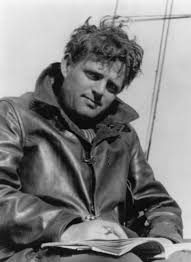
Standard

The Literary Life

H.L. Mencken

Baltimore Evening Sun/May 6, 1910

Half a dozen publishing houses which devote themselves entirely to printing the rejected manuscripts of amateur authors (always, of course, at the expense of the latter) seem to be flourishing mightily just now. Several of the most important of them make a specialty of bad poetry. How many books of ghastly doggerel they have put forth during the past year is beyond accurate computation, but the number probably exceeds 400. These books are always well printed and artistically bound, and no doubt the authors pay the bills willingly. The usual charge for printing such a volume is about $300, which leaves the publisher a profit of $100 or $150, but on occasion he will shade his price a bit.

Other publishing houses seem to prefer bad novels to bad poetry, probably because it is possible to charge the author more for the printing. The actual cost of setting up, printing and binding 1,000 copies of a novel of ordinary size is about $500, but the egotistic amateur who seeks to inflict his work upon the world usually has to pay $750 or $1,000. For that investment he gets the entire edition of his work. Very often, perhaps, he materially diminishes the net cost of it by forcing copies upon his friends and upon the booksellers of his town. But, despite that, there must be a huge cavity in his pocket-book at the end of his adventure.

Chasing The Poet

Some of these fool-chasing publishers do not trust to chance for the appearance of clients, but go after them in an organized and effective manner. Whenever the name of a new bard appears in the magazines, or even in the daily papers, they send him a cordial letter, praising his work effusively and suggesting that a whole book of it would delight the country’s cognoscenti. Nine times out of ten the beginner is so flattered by this suggestion that he immediately forwards a couple of pounds of manuscript to the publisher.

And then begins the effort to make him pay for the book. He is informed with delicacy that all poetry, even including such masterly stuff as he writes himself, is a dubious publishing venture, and that, in consequence, the publisher, before undertaking to give his effusions to the world, must think it over carefully. When this has soaked in, he receives a letter suggesting that the risks of the venture be shared. He asks how much his share will be. He receives in reply a long statement, showing that it will cost, let us say, $500 to print the book, and suggesting that he provide $300.

Then comes the final haggling. The poet is inflamed by the idea of printing a book; perhaps he has even announced its early appearance. The publisher now gives him his coup de gras by coming down to $250 — about $100 more than the book will actually cost. If it is at all possible for him to raise the money, the poet will do so, and his volume will be added to the thousands already in the boneyard of the Congressional Library.

Many American poets, it may be mentioned, seem able to raise the money. Poetry is no longer a vice of the penurious only, like Socialism and rushing the can. It has become, indeed, a sort of universal pestilence. There are dozens of opulent bards, male and female, and even a few who are actually millionaires.

The Amateur Novelist.

The amateur novelist is bagged in a manner much like that which suffices to ensnare the poet. If, by any chance, he gets a single short story into print, he is immediately in receipt of flattering letters from the lemon-squeezing publishers. If, on the contrary, his short stories are so bad that not even a 10-cent magazine will print them, and his novel manuscripts come back from the first-class publishers with distressing regularity — even then the lemon-squeezers strike his trail, soon or late.

In the literary weeklies they insert advertisements asking for manuscripts; by a thousand and one other devices they seek to get names and addresses of aspiring, but unsuccessful authors. Some of them even offer to buy such names and addresses, and many a publisher’s reader or magazine subeditor, doomed to read bad manuscripts for a living, ekes out his income by compiling and selling such lists.

Now and then, of course, one of these thrifty publishers nabs an author who is more than an amateur. The latter, for example, may be just emerging from a battle royal with his regular publisher, perhaps over royalties, and so he is quite ready to be convinced that he will make more by printing his book at his own expense, and taking all, instead of a small percentage, of the profit.

Poets are particularly susceptible to that sort of argument. The demand for poetry, even for first-class poetry, is very small, but it is usually difficult to convince an amateur poet, with flattering reviews before him, that his publisher’s meagre sales report is accurate. Nine times out of ten, he accuses the honorable man of swindling him and they part company in anger. He is then ripe for the lemon-squeezers.

Paying A Literary Debt.

The little Scandinavian countries have given us Ibsen and Bjornson, Brandes and Selma Lagerlof — the greatest of modern dramatists, one of the greatest of literary mad mullahs, a critic of the first rank and the foremost woman writer of the day. How have we paid up that literary debt? What contemporary English and American books have been done into Dano-Norwegian and Swedish? What English and American writers do the Danes, Swedes and Norwegians read?

A glance at a recent catalogue of the Gyldendal Publishing House, of Copenhagen, the principal establishment of its kind in Scandinavia, affords us a somewhat astonishing answer. Are the Danes reading Mark Twain, Howells, Henry James, Conrad, Moore and Meredith? Apparently not. The Americans who appear to be represented by translations are Robert Herrick, Frank Norris and Jack London! And the favorites among Englishmen seem to be Israel Zangwill and Conan Doyle, with H.G Welles and Thackeray as bad seconds!

There are no less than eight volumes of Sherlock Holmes stories on the Gyldendal list. Just before the name of Doyle stands that of Dickens. He is represented by but one book, “Oliver Twist.” The two lonesome American novels on the list are Herrick’s “The Memoirs of an American Citizen” (“En Amerikansk Borgers Erindringer”) and Norris’ “The Octopus” (“Polypen”). Supporting them is Jack London’s book of Klondike tales, under the title of “Fortaellinger fra Klondyke.” Two volumes of Zangwill’s Ghetto stories are also there — but no sign appears of “Huckleberry Finn.”

The publishers apply the high-sounding denomination of “Moderne Verdenslitteratur.” (“Modern World-Literature”) to the books of Herrick, London, Norris and Zangwill, and in the same list the works of Pierre Loti, Anatole France and Paul Bourget appear. On a separate sheet, devoted apparently to classics, and showing, among other books, the poems of Heine, there appears one volume of James Fenimore Cooper’s Indian fustian and Thackeray’s “Book of Snobs.” The latter, which becomes, in Danish, “Bogen om Snobberne,” has the honor of a special paragraph, in which it is praised as “a classical book” and “one of the best-known in English literature.” But how about “Vanity Fair,” “Pendennis” and “Henry Esmond?” Alas, they are not there! 

Standard

Pole Sitting and Golf

H.L. Mencken

Press of Atlantic City/August 30, 1929

The best psychologist in these parts is the Hon. William F. F. Broening, LL.B., imperial wizard of the Moose and, so I hear everywhere, the next Governor and Captain-General of the Maryland Free State. Long before anyone else paid any heed to the polesitter, he was out visiting the first champion and making a speech that will probably live as long as Lincoln’s harangue at Gettyburg. His intuitions in such matters are singularly apt and searching. It took him only ten seconds to perceive that pole-sitting would fetch Baltimore, and it took him only a minute or two more to reach the ringside. Has Baltimore got columns of valuable publicity out of the new Olimpiad? Then Dr. Broening has got the same. 

When I speak of this publicity as valuable I simply accept the local standard, formulated officially by the experts in this art and mystery. If it profits us to send out news that a new soap factory is to be opened on Locust Point, or that the Tall Cedars of Lebanon are to hold a parade, then why shouldn’t it profit us to send out the pioneers still bubbles and festers in Baltimore’s infantry? Dr. Broening, in his historic speech, was quite right, it takes more than mere patience to sit on a pole for ten days. It takes, for one thing, moral courage, for the prevailing moves are against it. It takes toughness, especially posteriori. Above all, it takes self-reliance.

When these high qualities appear in the young it is not time for the judicious to cough sadly behind their hands, it is time for them to get out their best jugs and make whoopee. For what the phenomenon has to teach, speaking concretely, is that the young are still sufficiently limber to leap from under the steam-roller. With playgrounds everywhere, manned by hordes of assiduous ma’ms, they yet prefer to make their own games even at the cost of wet skins, stiff knees and parental glares. Let us rejoice that this is so—that some, at least, escape the uplift. For one boy on a pole, contemplating the world with easy independence, is worth a thousand in a squad, laboriously drilling to pedagogical commands.

That the sport looks idiotic to most persons on the ground is a fact of no consequence, for that is how all sports look to those who take no hand in them. I confess that to me, at least, it seems a great deal less idiotic than golf. I can imagine myself, to serve some great public end, sitting on a pole in my back yard, but I can’t imagine myself playing golf even to save the republic from the Japs. Golf happens to be my pet abomination.

It not only seems idiotic to me; it also seems shameful. When I hear of a friend devoting an afternoon to it, with so many pleasant saloons open and willing. I am affected as I’d be if I heard that he had been converted at a Methodist revival. I regard it as an attentat against human dignity. It is a disgrace to the human race.

But this, of course, is only a prejudice, and fundamentally irrational. No doubt it is possible, given the right attitude of mind, to play golf with decency, just as it is possible to spit at a mark with decency. Maybe my low opinion of the game is due to a subconscious blood thirstiness—a secret resentment of the fact that it so seldom kills. All I can say on this point is that I am aware of no regret when I hear that some fat and elderly golfer, making an obscene show of himself in the hot sun, has staggered, turned blue and barged into heaven, to the relief of his heirs and assigns. If there were more such fatalities on the links, the game would better justify its existence. But even if a dead wagon followed every foursome I’d still not play it.

In any case, pole sitting is better, if only because it is not done at country clubs and in grotesque and unsightly costumes. The pole sitter pursues his chosen folly on his private estate, in the manner of a gentleman, and does not rig himself out like a movie actor on a holiday. If candidates for high office choose to come and make speeches to him, he hears them with dignity, but does not commit himself. He does invite them to join him. He does not talk pole sitting. He joins no club. If he is absurd, then it is only in the sense that everyone who follows undeviatingly a difficult course is absurd. If he is laughed at, then so was Columbus laughed at, and St. Simeon Stylites, and Lindbergh and Coolidge. 

Human beings, in fact, spend a great deal of their time laughing at one another. Every man seems absurd to his neighbor, not only in his diversions, but also in his sober labors. My own favorite object of mirth is one of the most austere and venerable figures in our society, to wit, the judge. If I frequent courtrooms very little, it is only because I have a high theoretical respect for his office, and so do not want to be tempted to laugh at him. That temptation, in his actual presence, is almost irresistible. There he sits for hour after hour, listening to brawling shysters, murkily dozing his way through obvious perjury, contemplating a roomful of smelly loafers, and sadly scratching himself as he wonders what his wife is going to have for dinner, all the while longing horribly for a drink. If he is not a comic figure, then there is none in this world.

Years ago, when I had literary ambitions, I blocked out a one-act play about a judge. Now that I am too old to write it I may as well give it away. The scene is a courtroom, and the learned judge is on the bench, gaping wearily at his customers. They are of the usual sort—witnesses trying to remember what the lawyers told them to say, policemen sweating in their padded uniforms, newspaper readers and tobacco chewers, and long ranks of dirty and idiotic old men, come in to get warm. In front of the judge a witness is being examined by a lawyer. To one side 12 jurymen snooze quietly. The place smells like an all-night trolley car on a winter night. 

The judge, unable to concentrate his attention upon the case at bar, groans wheezily. It is a dreadful life, and he knows it. Of a sudden the opposition lawyer objects to a question put to the witness, and the judge has to pull himself together. The point raised is new to him. In fact, it goes far beyond his law. He decides in loud, peremptory tones, notes the exception, and resumes his bitter meditations. What a life! What a finish for a man who was once a gay dog, with the thirst of an archbishop and an arm for every neck! What a reward for long years of toil and privation! A tear rolls down the judge’s nose. 

As he shakes it off his eyes sweep the courtroom, and a strange thrill runs through him. There, on the last seat, sandwiched between a police sergeant and a professional bondsman, is the loveliest cutie ever seen! There, in the midst of the muck, is romance ineffable! The judge shoots his cuffs out of his gown, twirls his moustache, permits a soapy, encouraging smirk to cover his judicial glower, and gives a genial cough. How thrilled the cutie will be when she sees that he notices her! What a day in a poor girl’s life! What an episode to remember—the handsome and amiable judge, the soft exchanges of glances, “Maude Muller” all over again. He coughs a bit louder. 

The cutie, glancing up, sees him looking at her. Paralyzed with fright, she leaps out of her seat, climbs over the police sergeant, and flees the courtroom. 

Maybe this play won’t seem as sad to you as it does to me. If so, forget it. But don’t forget that all of us are poor fish, and that the distance between the judge and a polesitter is not, after all, very great. All of us, in this world, play the parts of melancholy clowns, and appear ridiculous to the other clowns. If your taste in humor is bitter, try to picture to yourself an elderly and somewhat rheumy man, weighting nearly 200 pounds and full of all sorts of rare and valuable learning—picture such a man sitting in his underclothes on a hot, sticky night, writing such stuff as the foregoing. Yet the kingdom of Heaven is full of such fellows, and others swarm in Hell. 

The pole-sitters are no better and no worse. They are less dignified than judges, but more rational. They don’t know much, but what they know is true—that there are fewer flies in the air than on the ground, that hard boards grow softer when one is used to them, that people are easily entertained and easily gulled, that a statesman making a speech is a gruesome spectacle, that sitting on a pole is a great deal better than going to school. A judge knows more, but very little of it is true; his mind, if he sticks to his trade, becomes a junkheap of lugubrious nonsense. He, too, sits on a pole, but it teaches him nothing.

Standard

Money Could Be Made to Talk Louder Than It Does

Ring Lardner

Duluth News Tribune/January 23,1921

I have about given up hope of getting any answer to all the letters I been writing to Pres. Harding, and it begins to look like he either had the writers cramps from signing caddie’s cards and the doctors is keeping his condition a secret, either that or he never got my letters as I didn’t put down no St. number and maybe the mail carrier in Marion don’t know which is his house. But whatever the trouble is, the time has past for monkey business and I and my friends has decided to appeal to the voters to go to the front in my behalf and they will not only be doing me a favor but themselfs as well, because if the people don’t step in and make my fight their fight, the pres. elect is lible to surround himself with the same kind of male help we been enjoying for the past 8 yrs, and the coming administration will be another dud.

Therefore I and my friends request all right thinking Americans to write to their congressmen in words of one syllable and ask them to bring pressures to bare on Mr. Harding to apt. me to one of the cabinet positions, and it don’t matter which one though I would prefer secy. of the treasury or one of the 3 others that I been after. But he don’t pay no tension to me, namely secy. of State or Agriculture or post master gen.

In the past few wks. I have give the public some idear of my qualifications for the last 3 named portfolios and it will not be necessary to go over them again, so at present I will content myself with a few words in regards to the treasury dept. In the first place the dutys of the secy. of that dept. now days is different than former yrs. when he was just supposed to see that they wasn’t no money stole out of the treasury. If that was all he had to do now his job would be a good deal like the man that kicks goals from touchdowns at Yale. Dame Rumor hath it that the treasury is as clean as Washington’s record in the world serious and the vaults in the treasury bldg. is like a poker game in the press club—full of I.O.Us.


 How I Qualify


So the secy. don’t half to be a watch dog just now and that is why I don’t see no sense in appointing Gen. Dawes to this portfolio, as with all due respects to the Gen. he has always worked in a bank that had money in it, and stick him in the treasury and he would be a lost soul just like the Phillies signing up Bill Donovan as mgr. because he can handle ball players. The man that is needed as head of the treasury dept. now is not the man that is use to taking care of money but the man that is use to being without it.

Brothers, I am that man.

Now I don’t want nobody to think from that remark that I don’t pay my bills some way another, because I generally always manage to scrap up enough to tend to them when they fall due, like for inst. our piano which we bought it on monthly installments and I haven’t missed a payment in 18 yrs. That is just the pt. I am trying to make, namely that where Gen. Dawes has probably always got a few berrys in his kick, why they’s whole wks. at a time when I don’t half to take nothing out of my pants pockets nights but my comb and brush, but just the same my creditors always leaves my door satisfied, provided they come with 5 or 6 mos. rations. Sometimes we half to borrow last June’s wages back from the cook lady and other times the mail man happens to come along with a check that I just write down my name on the back of it and hand it to whoever has been standing longest in line, which once in a wile reachs way out in the front yard and people going by thinks we are haveing a big funeral or something.

But as I say, I get it when I got to have it to pay my debts and I would get it a whole lot easier to pay the country’s debts because they’s a way a govt. can get money that if a private citizen done it he would go south for several winters, and that is what I will explain in a few wds.

Of course as far as the U. S. is conserned, borring is out of the ? as they’s nobody to borrow off from. And when you can’t borrow and people can’t pay their income tax till the brokers has wore out their voice hollering more margin, why in a crisis like this a man like I that can think of a scheme like I have thought of is a better man than you are Gen. Dawes or any of the others that has been mentioned for this high office.

My scheme can be told in 2 words namely:

More mints.

I would hop on a train and every town we went through that advertised free factory sights I would jump off and start a mint and you wouldn’t half to build them all new neither. You can buy some at a bargain that use to be used to make juleps. And until we had made money enough to carry us over the present shortages. I would run some of them double time and call them “double mints” and keep some of them open evenings and call them “after dinner mints.”

 Chicken Feed at First

Of coarse the money you make in mints is all chicken food and for the present we would half to pay the country’s debts in dimes and quarters and etc. but only till I have time to get another scheme working in regards to currency. They tell me that the reason the govt. is shy of currency is acct. of the high price of paper and printers wages and every piece of paper money the govt. puts out costs them more than its worth.

Well, they was a plumber resting in the house the other day and wile he was here the idear flashed on me and I asked him to let me take a $20 bill a minute and he let me take a federal reserve note for that amt. and sure enough it was just like I remembered it. They was a picture of Cleveland on one side of it and the other side showed a train and a aeroplane and a automobile and a big steam boat and a little tug boat and what any of them things had got to do with $20 is a misery to me, unlest the automobile was a taxi which you could see it wasn’t because the driver was looking ahead.

So I seen my idear was O.K and if put in operation the govt. could at lease break even on currency and probably make a good profit and I haven’t had time to work out the details but I will give a outline of the scheme so as you can see what I am getting at.

In the 1st place they’s no sense making bills now days in denominations like1$ and $5 and $20 and etc. what they should ought to be is $1.10, $5.50, $22, $27.50 and so on up. Then instead of sticking pictures on them that don’t mean nothing, I would have pictures of the different things that can be boughten for the amt. of the bill and whatever articles the govt advertised this way, why somebody would half to pay for the advertisement just like it was in a magazine or a newspaper.

Like for the inst on a $1.10 bill on the side where they usually have a picture of Cleveland or somebody, I would have a picture of man that only gets $1.10 per hr. like a U.S senator or a window wiper or something. On the other side they would be a picture of a man getting a shave in the hotel, an order of spinach and whatever else you can buy for $1.10 which I can’t think of nothing just now. 

On one side of the $5.50 bill would be a picture of a $5.50 per hr. man, say a plasterer or a man that puts up screens. On the advertising side they would be pictures of a ticket to the Follies, five lumps of coal, a lower berth from one town to another like Minneapolis to St. Paul, a safety razor, and etc.

The $22 bill would show on one side a skilled labor that earns $22 per hr. like a hat check boy. The other side would have pictures of a silk shirt, a pair of shoes, and etc.

And so on up to the big bills like the $5,000 bill which I would have on one side of it a picture of one of the white Sox that has involuntarily retired from baseball and the other side would be all margin, an ad of some brokerage firm.

Advertising rates would be more on the smaller bills on acct. of the differents in circulation, but where could they be a better medium especially when the public began to pay premiums for the bills that has pictures of their favorite ball player or plumber. And don’t forget that my autograph would be on every bill as secy. of the treasury.

These is the kind of idears I would bring into the treasury dept. gents, and if you want these kind of brains in that dept. or any other dept. write to your nearest congressman and tell him to get busy in my behalf. And if Mr. Harding asks him what kind of a man I am personly, tell him to say my handicap at great neck is an eagle 30.

Standard